New Hyundai NEXO fuel cell SUV 2018 review
Key specs
Model: Hyundai NEXO
Price: £65,000 (est)
Engine: Hydrogen fuel cell stack with 40kW electric motor
Power/torque: 152bhp/395Nm
0-62mph: 9.7 seconds
Top speed: 111mph
Range: 400 miles
Economy/CO2: 93.7km/kg, 0g/km
On sale: January 2019
So why should the NEXO be more successful than previous efforts? Hyundai claims the key factor here is durability. The ix35’s fuel cell stack was only given a life cycle of five years before a replacement is required, whereas the NEXO’s stack lasts twice as long. That not only means consumers can be more confident in the product, but should also boosts residuals and therefore makes the NEXO a more favourable proposition for leasing.
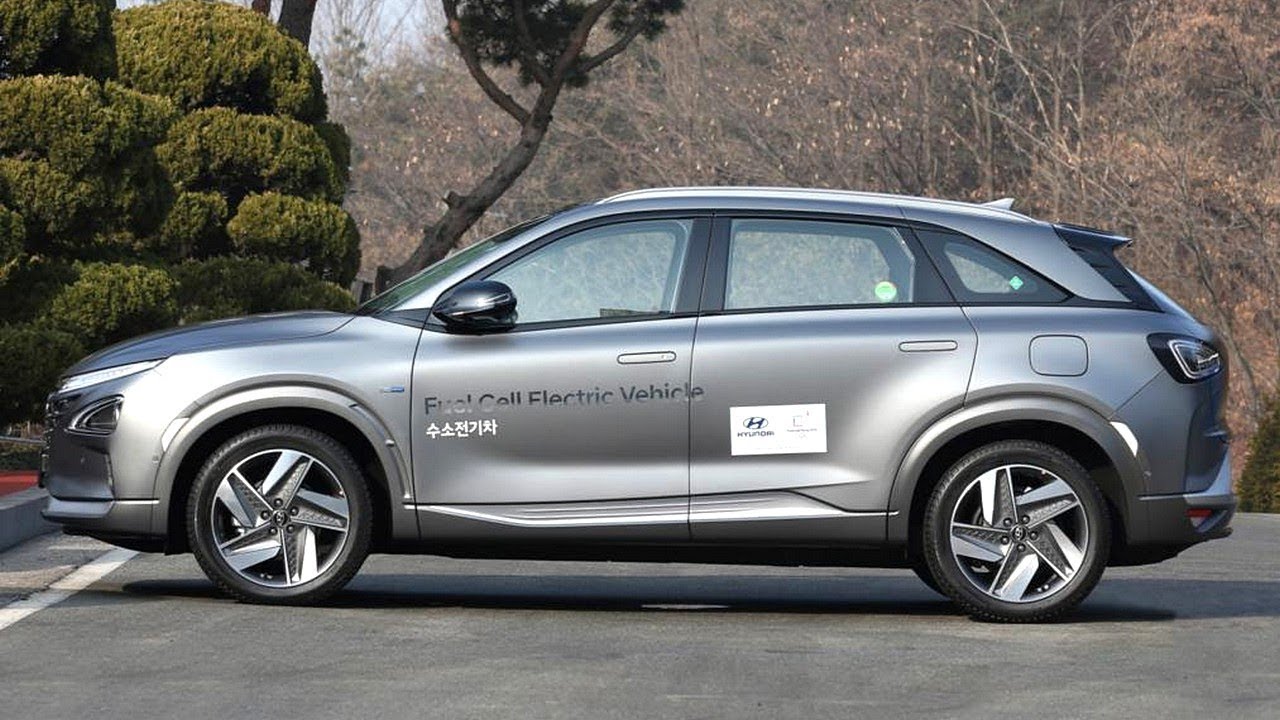
Another selling point is the NEXO’s unique styling. The ix35’s FCEV’s £53,000 pricetag was difficult to swallow because, well, it looked like an ix35. But the Audi Q5-sized NEXO, with its swoopy shape, flush-fitting door handles and crystal-like head and tail-lamps, gives off a classy and distinctive look.
That bespoke feel extends to the cabin, which is unlike any Hyundai currently in production. The dash is dominated by a slick and intuitive 12.3-inch infotainment screen, whose features can be controlled either via touch or with a rotary dial mounted on the centre console. That console is a button-heavy slab of plastic, but its location makes operating the NEXO’s long list of features an absolute doddle. Elsewhere, material quality feels a cut above other Hyundais, but it’s still a fair way behind what this sort of money would get you in the conventional premium SUV market.
Alongside the generous equipment list, the NEXO is also crammed full of advanced safety systems. Hyundai has used the model as its test-bed for Level 4 autonomous driving tech, but even the example we’re driving here can brake, accelerate and steer for you on motorways. There are cameras on the door mirrors that relay a view of the rear blind spots on the instrument display when you indicate, too. It can even be parked remotely via the key, although this function wasn’t working on our early production car.
Impressively, given the size of the hydrogen tanks underneath the floor the NEXO, there’s little compromise to be found in terms of space. Head and legroom in the rear is perfectly good, even for six footers, and while the 471-litre boot isn’t that deep, it’s plenty big enough for most families’ needs. There’s a decent amount of cabin storage, too.
The NEXO isn’t all about the bits you can see, though; it also debuts a new generation of fuel cell stack. System efficiency is up by five per cent to 60 per cent, but the new stack is also 15kg lighter and more compact than before. As well as the huge durability improvement, there’s also a chunk more power – the total system output is up to 152bhp. The range quoted at 500 miles on the NEDC cycle, which should translate to around 400 miles in the real-world.
One really satisfying feature of this hydrogen powertrain is it actually purifies the air it takes in and releases, with the clever air filter catching 99.9 per cent of particulate matter. It’s hardly going to solve Beijing’s smog problem overnight, but a few hundred of these things operating in inner city locations could make a difference to air quality. Like all hydrogen cars, the NEXO can also power your home; Hyundai says there’s enough energy in one tank for the NEXO to power the average house for three consecutive days.
Despite the trickery going on underneath, the NEXO feels much like a normal electric car to drive. There’s no gears or steps in the power delivery to speak of, it’s just a simple stab of the ‘D’ button on the centre console and a smooth, near-silent glide away from a standstill; 0-62mph is taken care of in a decent 9.7 seconds, and it feels sprightly enough off the line for what’s likely a two-tonne SUV. However, in the same way as a typical EV performance tails off noticeably at motorway speeds. Still, there’s enough poke to satisfy the average motorist.

Информация по комментариям в разработке