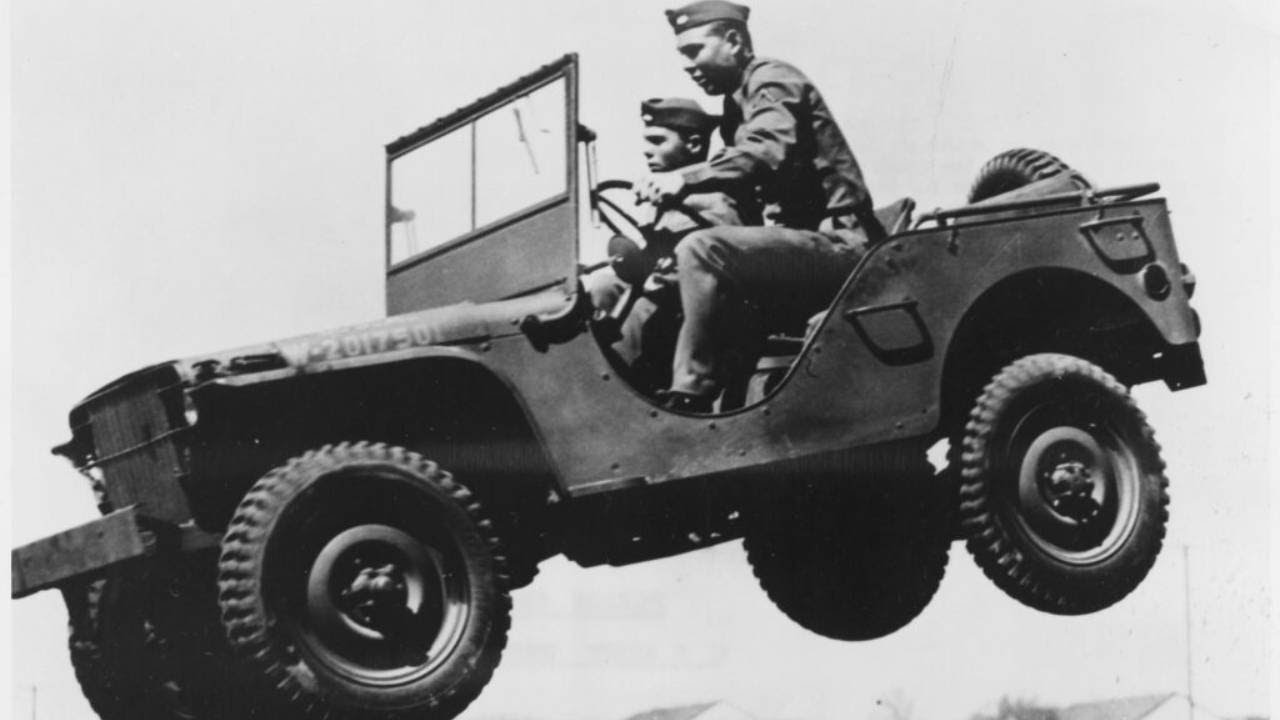
When World War II erupted, no one could have predicted that a small, quarter-ton reconnaissance vehicle would become one of the most vital tools of the Allied war effort. The Jeep, born from a desperate need for a lightweight, all-purpose military vehicle, evolved into the most versatile weapon of the war—a mechanical companion that carried soldiers, supplies, and hope across every front from North Africa’s deserts to the jungles of Burma and the beaches of Normandy.
Designed under immense pressure in 1940, the Jeep was a triumph of simplicity and practicality. It wasn’t fast, armored, or heavily armed—but it was reliable, rugged, and easy to repair anywhere, by anyone. Over 640,000 Jeeps were produced during the war, roughly one for every 25 American servicemembers. No other vehicle matched its ubiquity or its importance. Built primarily by Willys and Ford, the Jeep became the beating heart of Allied mobility, its low cost and high reliability making it one of the most cost-effective machines of the conflict.
Jeeps delivered ammunition under fire, evacuated the wounded, carried commanders to the front, and hauled everything from anti-tank guns to generals. They became command posts, radio stations, ambulances, and weapons platforms. On D-Day, Jeeps rolled off landing craft through surf and shellfire, ferrying supplies and men through chaos. In the Pacific, they navigated muddy jungle trails. In North Africa, they roared through the desert, dust trailing behind columns of advancing Allied troops.
Special forces turned the Jeep into an icon of unconventional warfare. The British SAS and American OSS mounted machine guns and raided deep behind enemy lines, their Jeeps bristling with firepower. They struck Axis airfields, strafed parked aircraft, and disappeared into the desert night. To these raiders, the Jeep was more than transport—it was freedom, speed, and surprise embodied in steel.
The Jeep’s impact extended far beyond the battlefield. It became a cultural symbol of resilience and adaptability. War correspondents like Ernie Pyle wrote of sleeping in Jeeps, traveling in them to the front lines, and relying on them for survival. Cartoonist Bill Mauldin featured them in his famous “Willie and Joe” sketches, immortalizing the vehicle in the minds of GIs and the public alike. The Jeep became shorthand for the common soldier’s struggle and spirit—a symbol of the ordinary hero who kept moving no matter the odds.
After the war, the Jeep’s influence only grew. Surplus vehicles flooded civilian markets, helping farmers, builders, and adventurers rebuild and explore a postwar world. Its simple, reliable design inspired a new automotive category—the utility vehicle—eventually evolving into the modern SUV. In factories, the Jeep’s mass production techniques set new standards for efficiency and standardization. Its DNA can still be found in vehicles across the world today.
Yet, at the heart of the Jeep’s story are the men who drove, repaired, and relied on it. Soldiers formed deep bonds with their vehicles—naming them, patching them together with scrap parts, and trusting them with their lives. Mechanics took pride in keeping them running with whatever tools were at hand. Wounded troops remembered the Jeep ambulances that carried them from the battlefield to safety. Officers valued its mobility and visibility, while reconnaissance crews trusted it to get them out of ambushes alive.
Every scratch, dent, and mud stain told a story of endurance. The Jeep wasn’t glamorous or powerful, but it was there—always there—doing the job without complaint. It became a symbol of reliability in an unreliable world, an embodiment of American ingenuity and adaptability.
Today, the World War II Jeep remains a lasting icon—a machine that transcended its purpose to become a legend. It represented not just a technological triumph, but a philosophy: that simplicity, durability, and creativity could win wars. It was the soldier’s best friend, a rolling lifeline that carried the Allies to victory, and a reminder that sometimes the smallest tools make the biggest difference.
From the beaches of Normandy to the streets of Berlin, the little Jeep that could became the vehicle that did—and in doing so, earned its place as the most versatile weapon of World War II.

Информация по комментариям в разработке