By Kathleen Berger, Executive Producer of Science and Technology
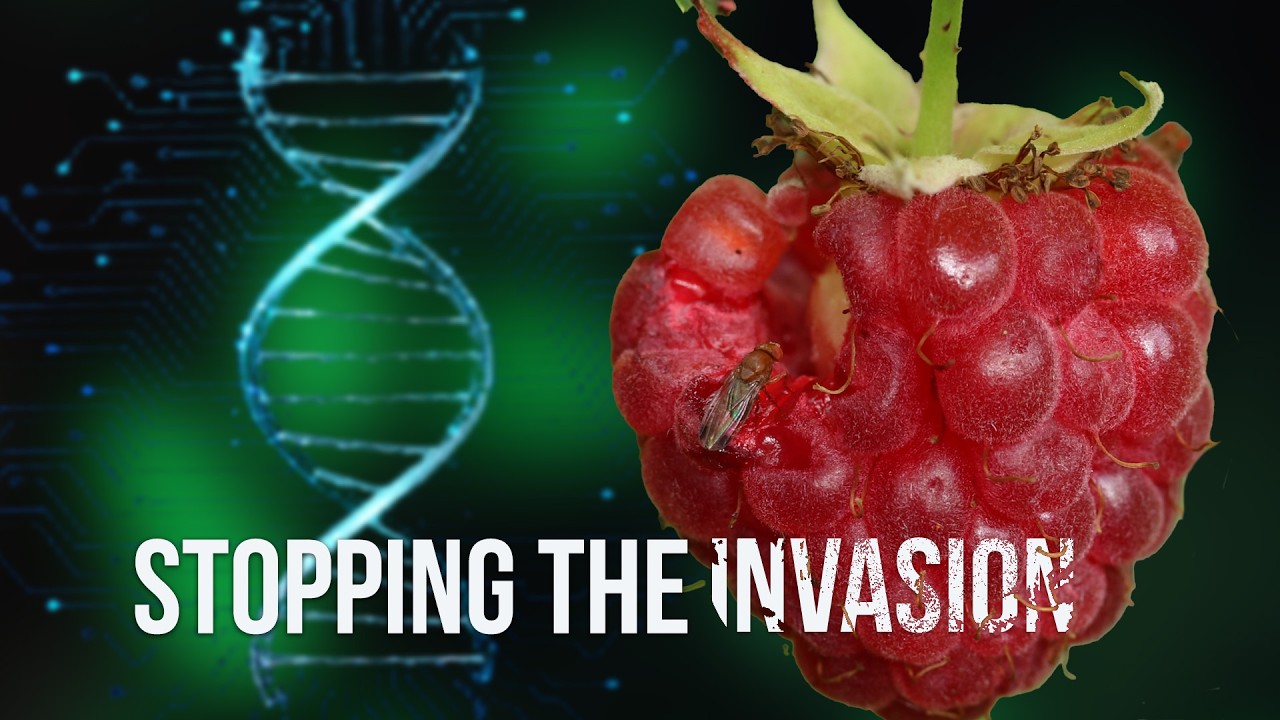
Stopping the threat of an invasive and destructive fruit fly may take an army of the gene-edited species. The new troops would be released into the fields and could become heroes by saving fruit crops. The technology behind the idea is considered an evolution in pest control, carried out by St. Louis-based biotech company Agragene.
The spotted wing drosophila (SWD) is the threat to fruit growers in the United States. This fruit fly made its way from Southeast Asia in 2008, likely traveling on fruit shipments. First detected in California raspberry fields, the insect rapidly spread to other states, causing hundreds of millions of dollars in damage each year.
“It’s here now. Wherever you see berries being grown, you find the spotted wing drosophila infesting fruit,” said Stephanie Gamez, R&D Director at Agragene.
Through her research in California, Gamez became an expert on this invasive fruit fly. So, when she was asked to join St. Louis–based Agragene as the director of research and development (R&D), Gamez packed up her lab and took thousands of her very own spotted wing drosophila on the trip to St. Louis from San Diego.
“Thousands, over 10,000 flies,” she said. “My precious spotted wing drosophila lines that were completely sterile. They were precious. That was the product that would make the company in St. Louis.”
An army of gene-edited sterile males became the new hope for stopping the threat. When released into the environment, Gamez said the sterilized males would mate with wild females, resulting in a fertility dead end. Gamez and the Agragene team use a precision-guided sterile insect technique.
“It’s a new technology built off an old technology,” said Bryan Witherbee, CEO of Agragene. “The sterile insect technique has been around for 50 to 60 years. It’s been used by the government to basically decrease the population of invasive species. What we’ve done is reinvented it. Basically, we’re using CRISPR–Cas9 technology to do editing of flies DNA in order to make it sterile.”
“The product that we are trying to sell is the edit that makes the male sterile,” said Gamez. The precision sterile insect technique is a CRISPR-based system. CRISPR technology is using molecular scissors to target and cut DNA at specific target sites. So, if we put that in the fruit fly, or spotted wing drosophila, in our case, and we generate these flies that have these tools, these molecular scissors, and we mate them together, we make instantly sterile insect males.”
Gamez helped the research team transition from the lab into contained field testing, releasing the gene-edited flies on berry farms in California and Oregon. The testing was successful, launching more trials under the technology’s new name, KNOCKOUT SWD.
The precision genetic methods are considered efficient and environmentally friendly. Currently, growers rely on pesticides to protect crops from the fruit flies, but pesticides kill helpful insects.
“Important insects like pollinators, bees, that are critical for blueberries, small fruit,” said Gamez. “This technology is a platform technology, meaning you can apply it to almost any insect. As long as you can insert it in those bugs, and you get sterile males, you’re good.”
#SpottedWingDrosophila
#CRISPR
#GeneEditing
#Biotechnology
#PestControl
#InvasiveSpecies
#AgTech
#SustainableFarming
#SterileInsectTechnique
#FoodSecurity
#BerryFarming
#ScienceInnovation


![Эффект Джанибекова [Veritasium]](https://i.ytimg.com/vi/N9HlQ-XVnFk/maxresdefault.jpg)







![Лампа накаливания — возможно, лучшее изобретение [Veritasium]](https://i.ytimg.com/vi/JstcTHp-IKM/maxresdefault.jpg)



Информация по комментариям в разработке