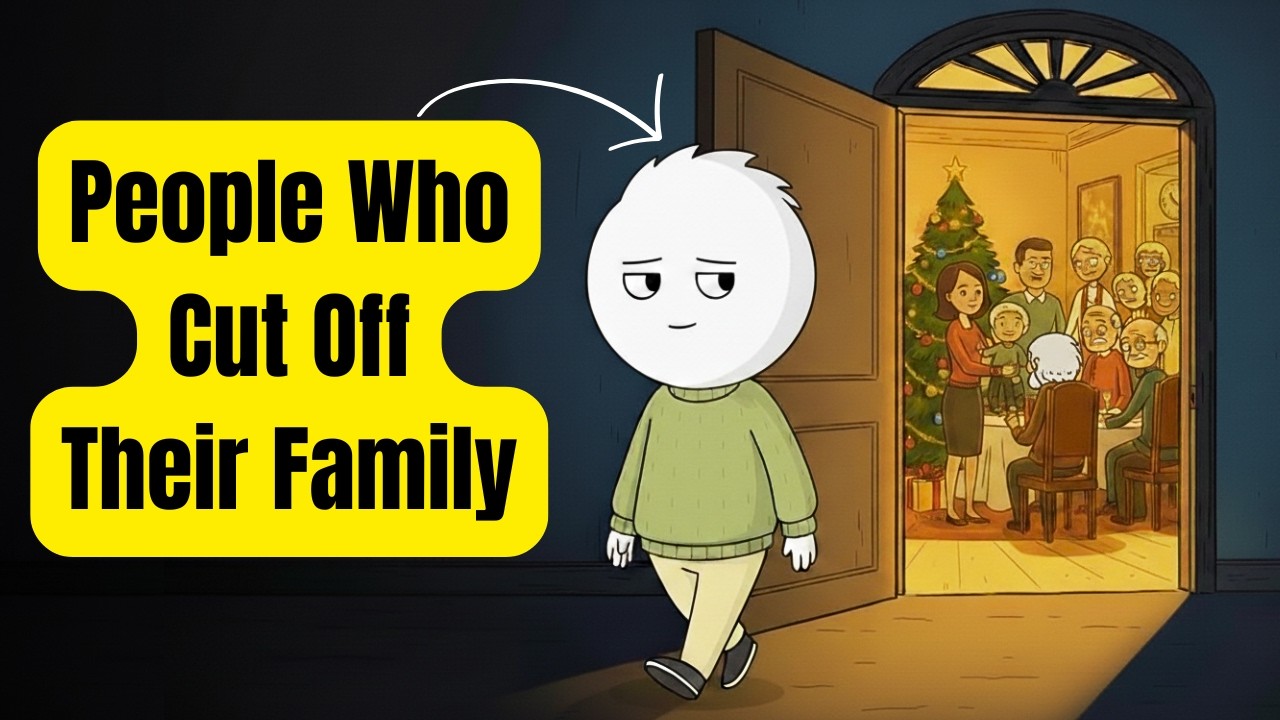
Understanding the psychology of people who cut off their family is complex and deeply emotional. In this video, we explore the real psychological reasons why some individuals choose family estrangement, why people decide to cut ties with parents or relatives, and what happens mentally and emotionally when someone distances themselves from family.
Family relationships are often seen as permanent, yet many people experience situations where toxic family dynamics, childhood trauma, or long-term conflict lead them to go no contact with family members. This video breaks down the psychology behind family estrangement, including the emotional triggers, personality factors, and coping mechanisms involved.
You’ll learn how family conflict, narcissistic parents, emotional abuse, unresolved trauma, and toxic relationships can influence someone’s decision to cut off family completely. We also examine the mental health side of estrangement, including how boundaries, self-protection, and psychological survival can shape these decisions.
Whether you're trying to understand why people cut off their parents, researching family estrangement psychology, or exploring the effects of toxic family relationships, this video provides insight into the emotional and psychological patterns behind these difficult choices.
📌 Topics Covered in This Video:
Psychology of cutting off family
Why people go no contact with parents
The impact of toxic family relationships
Family estrangement and mental health
Childhood trauma and family boundaries
Emotional abuse in families
Coping with family conflict
Healing after family estrangement
This discussion is intended to help people better understand human behavior, family psychology, emotional boundaries, and the difficult decision to distance yourself from relatives.
If you are interested in psychology, human behavior, toxic relationships, mental health, and family dynamics, this video will give you a deeper perspective on why some people ultimately choose to cut off their family.
References:
Pillemer, K. (2020). Fault Lines: Fractured Families and How to Mend Them. Avery/Penguin Random House.
Pillemer, K. (2020). Cornell Family Reconciliation Project, the research behind Fault Lines involved a nationally representative survey of over 1,300 Americans on family estrangement.
Linehan, M. M. (1993). Cognitive-Behavioral Treatment of Borderline Personality Disorder. Guilford Press. (foundational work establishing the concept of the invalidating environment and its developmental impact)
The emotional experiences described in this video are drawn from a broad body of qualitative research on family estrangement and are consistent with findings in the field. For a full breakdown of sources, see above.
Want tools, tips & insights to grow your YouTube channel? Check out 1of10, a powerful YouTube helper platform: 👉 https://1of10.com/?via=psychology
If you’d like to support the channel and help me continue making more videos, you can do so by becoming a channel member! Your support genuinely helps and is greatly appreciated! Click 'Join' or Click Here To Become a Member: / @psychologyissimplified
If you’re serious about improving focus, energy, sleep, and mental clarity, I recommend this 20-file “7-Day Reset” bundle It includes 10 step-by-step reset guides + 10 matching planners covering stress, dopamine balance, digital detox, self-love, and mind decluttering: https://whop.com/reset-lab-0de5/ultim... Check out the full playlist on behavioral psychology here: • The Psychology of
Disclaimer: This channel is created for educational and informational purposes only. It is not intended to replace professional psychological, medical, or therapeutic advice.
#familyestrangement #toxicfamily








Информация по комментариям в разработке