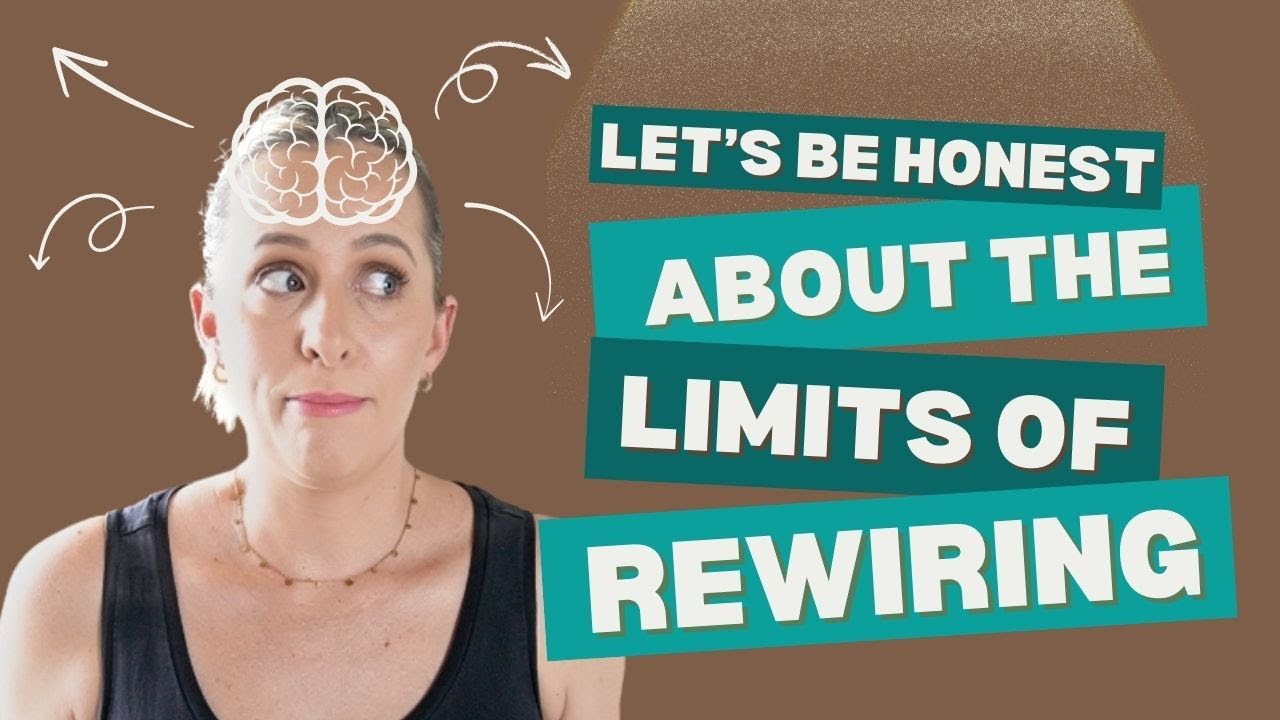
We’re often told that neuroplasticity means the brain can become anything if we try hard enough. That idea sounds hopeful. It’s also wrong. And for many people, quietly harmful.
In this episode, I clarify what neuroplasticity actually is and what it isn’t.
Your brain can change its connections in response to experience. It can strengthen skills, build coping strategies, and learn new patterns.
What it cannot do is erase core wiring or neurodevelopmental architecture.
Autistic brains don’t become neurotypical.
ADHD brains don’t turn into calm, linear machines.
Sensitive nervous systems don’t become robust through force.
And that isn’t failure - it’s architecture.
From here on, I’ll be teaching how to work with your brain rather than demanding impossible transformations from it. Meaningful change starts with respecting the structure you’re already living in.
Research referenced in this episode:
Neuroplasticity allows the brain to change through experience — primarily by strengthening, weakening, and reweighting neural connections — but it does not remove core neurodevelopmental wiring or temperament. Evidence from neuroscience and psychology shows that skills, habits, and regulation can improve across the lifespan, while baseline sensory sensitivity, cognitive style, and processing traits remain strongly constrained.
Neuroplasticity involves synaptic, structural, and network-level change — not unlimited rewiring
https://www.mdpi.com/2076-3425/13/12/...
Core neurodevelopmental traits in autism and ADHD are stable across the lifespan, with adaptation occurring via strategy and environment rather than normalization
https://pmc.ncbi.nlm.nih.gov/articles...
Stress impairs learning and plasticity; safety and support enhance adaptive change
https://www.ncbi.nlm.nih.gov/pmc/arti...
Differences in plasticity patterns in autistic brains (heterogeneous findings across studies)
https://pmc.ncbi.nlm.nih.gov/articles...
Models emphasizing accommodation over correction in ADHD and autism
https://www.frontiersin.org/articles/...
About the channel
Change of Mind is a long-form podcast and video channel exploring neuroscience, busy lives, caregiving, neurodiversity, and how humans actually change - in real life, not theory.
Hosted by Johanna Kate, a registered nurse with experience across healthcare, neuroscience, leadership, and motherhood. Expect thoughtful conversations, evidence-informed insights, and the kind of nuance that might just change your mind.
Disclaimer
This content is for educational and informational purposes only. It does not constitute medical, nursing, or mental health advice and is not a substitute for professional care. Always consult your healthcare provider for guidance tailored to your individual needs. While I’m a registered nurse with experience in operating theatres, mental health, neuroscience, and motherhood, the content shared here reflects general information and personal insights - not clinical recommendations.
Listen to the podcast
Spotify: https://open.spotify.com/show/6YuybHk...
Follow & connect
Instagram Profile: / thisisjohannakate
Instagram Show: / changeofmindpodcast
Work With Me
https://johannakate.com.au
YouTube: You’re already here — welcome, stay curious.
#changeofmind #neuroscience #neurodiversity #disabilityparenting #mentalload #burnoutprevention #autismacceptance #assumecapacity #podcast #longformconversation #softrewiring #sciencesis

Информация по комментариям в разработке