Petrol gas diesel Scarcity crisis shortage in Nepal. India Blocked 2015
Petrol gas diesel Scarcity crisis shortage in Nepal. India Blocked 2015
The 2015 Nepal fuel crisis, which began on 23 September 2015, is an economic and humanitarian crisis which has severely affected Nepal and its economy. As a landlocked nation, Nepal imports all of its petroleum supplies from neighboring countries, with India normally providing over half of its supply. Roughly 300 fuel trucks enter from India on a normal day, but this has dwindled to a sporadic passage of 5–10 fuel trucks daily since the start of the crisis, though shipments of perishables like fruits and vegetables have generally been allowed to pass.The government of Nepal has accused India of outright treachery and of imposing an undeclared blockade. India has denied the allegations, stating the supply shortages have been imposed by Madheshi protesters within Nepal, and that India has no role in it.
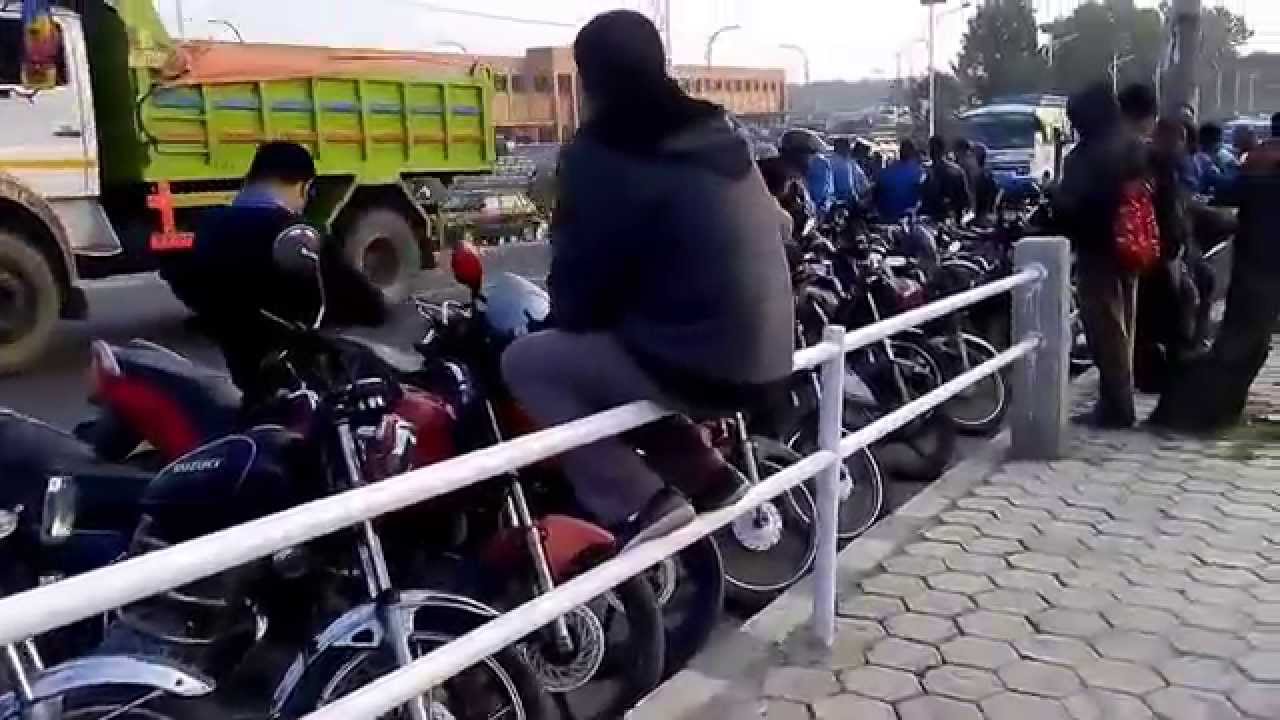
The blockade has caused the only international airport to deny foreign carriers fuel, contributing to isolating the landlocked nation from the outside world at a time when the country is still reeling from ongoing landslides blocking border trade with China following the devastating 2015 Nepal earthquake. Meanwhile, none of the $4 billion of internationally donated quake relief funds to the Nepali government have been dispersed to survivors even after many months, causing anger among Nepalis and international agencies alike.The Nepali government has imposed a ban on fueling private automobiles including public transport and taxis.Some 2,000 factories are shutdown as of 1 October.The Nepal Oil Corporation alleged and sued Indian Oil Corporation for not allowing the majority of trucks to enter Nepal. The Unofficial "Indian Blockade" has forced Nepalese to ride bikes and also carpooling.
The Government of India denied imposing a blockade, stating that the truck drivers coming from India were not entering Nepal due to safety concerns resulting from the violent protests. India's Ministry of External Affairs stated that the border obstructions were a result of "unrest, protests and demonstrations on the Nepalese side, by sections of their population." The Government of Nepal contested India's claim, stating that there were no major security concerns that would prevent the trucks from entering Nepal. Nepal's spokesperson Laxmi Prasad Dhakal argued that the Madheshi protests had been happening since past few months, and Indian trucks had been entering Nepal until Sept 23rd without any problems.
On 1 October, Indian minister Sushma Swaraj officially denied Nepal's accusations. India's spokesperson Vikas Swarup pointed out that India had sent 4,310 trucks to the border, where they had been stranded. He argued that from there onwards, it was Nepal's responsibility to ensure that the trucks entered Nepal safely.[29] On the other hand, it is reported that the vehicles weren't allowed to enter Nepal by the Indian side thus resulting in long queues of Nepalese trucks stranded for days Inside the Indian border. The Indian Oil Corporation reportedly refused to fill the Nepalese trucks following instructions from higher authorities.
On 6 October, the Madheshi-centric Nepal Sadbhawana Party criticized the Nepali media reports blaming the blockade on India. Its President Rajendra Mahato stated that the blockade had been done by the Madheshi people, and that India had nothing to do with it.[30] The Indians alleged that the Maoists, who dominate the Nepali politics, were promoting a false propaganda against India.[31] An editorial in the Nepali Times has claimed the Indian blockade is no longer about the Madhes and the constitution, but rather that India also seems to be opposed to KP Oli replacing Sushil Koirala as prime minister, and has a whole host of demands on security and other issues that we haven’t even heard about.
There is no gas, no vegetable supplies, no fuel for vehicles, no fuel for airlines, and life is about frozen. We don't want this type of friendship.(In reference to 1950 Indo-Nepal friendship treaty) —Khadga Prasad Oli UML Chair & Prime minister-designate of Nepal
Nepal has lobbied the United Nations on the obstruction.
On 28 October, the Nepal Oil Corporation and PetroChina signed an agreement to import fuel from China,[35] the first fuel agreement ever between the two nations. China also pledged to donate 1,300,000 L (290,000 imp gal; 340,000 US gal) of fuel to Nepal. Nepal is planning to import a third of its fuel from China.Humanitarian crisis.

Информация по комментариям в разработке