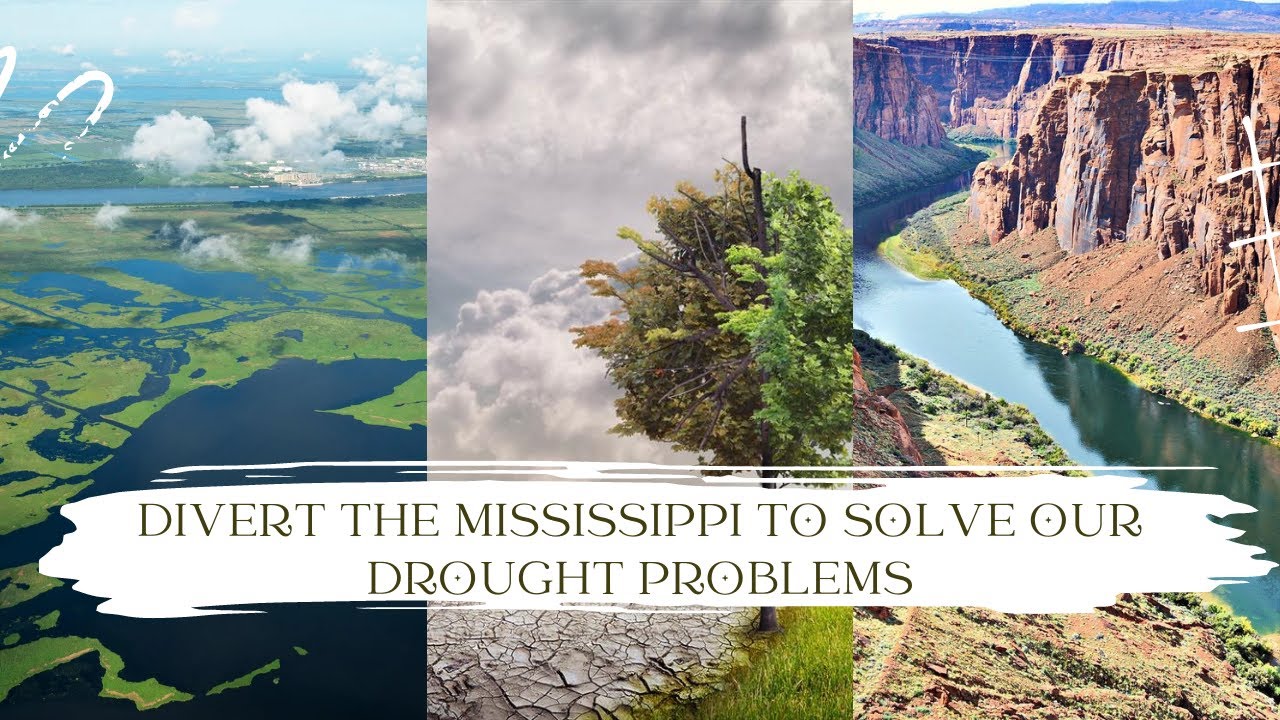
Divert the Mississippi River to solve our drought problems Lake Mead and the American drought
With the western United States in the grip of a megadrought — believed to be the worst in at least 1,200 years — some desert dwellers are setting their sights on siphoning freshwater resources from the Midwest. A heated exchange on the matter has been playing out all summer in the letters section of The Desert Sun, a daily newspaper serving Palm Springs and Coachella Valley. The stream of letters kicked off in late June, when the newspaper published a letter from a Las Vegas resident calling to divert the Mississippi River and pipe it into the Colorado River. The June 22 letter, entitled "An idea for solving West's drought: Let's divert the Mississippi River water to the Colorado", suggested the idea would be a "fantastic way to usher in a new decade for the Southwest," to which others agreed. The West is dry, and we didn't plan well enough. We need a system to move water from the Midwest," one writer argues. There are too many plausible solutions to endure mandatory conservation," David B. Clark, an engineer from Las Vegas, concluded. When floods, tornadoes hit the Midwest, the West helps pay. So why can't we have some water?" is the question " First off remember this is the United States, not a group of independent countries," the writer declares. We could fill Lake Powell in less than a year with an aqueduct from Mississippi River" is the title of another letter by a California resident. The best solution would be for the U.S. Army Corps of Engineers to build an aqueduct from the Old River Control Structure on the Mississippi to Lake Powell, fill it, and then send more water from there down the Colorado to fill lake Mead," a San Leandro resident suggests. " Within a year and eight months of the aqueduct’s finish, both reservoirs would be filled and most of the Southwest’s water problems would be gone."
It wasn't long before Midwesterners starting writing The Desert Sun with letters of their own. I will save you some time by informing you that it is not going to happen because the local citizenry here doesn't want you to have that water," wrote Red Wing resident Paul Cofell. "There are very, very many people living along the Mississippi River and around the Great Lakes that really, really don't like California or Californians." Let's be really clear here," wrote Margaret Melville, of Cedarburg, Wisconsin, in another letter. " As a resident of Wisconsin, a state that borders the river, let me say: This is never gonna happen." posed in the title of a letter from a Palm Springs resident. "We can't have our cake and eat it too," Melville continued. "People think they should be able to live anywhere they want, even if it's a desert environment." Water usage in America's hottest desert
In May, the statewide average water usage in California was 91 gallons per person per day, the Desert Sun reported in July.
However, an average of 352 gallons per person per day was recorded by the water company serving Bermuda Dunes and a corner of La Quinta. An average of 273 gallons per person per day was recorded in Palm Springs and Cathedral City. The average water usage by Minnesotans? Fifty-two gallons per day, according to the Minnesota Department of Natural Resources, so maybe Palm Springs needs to lay off watering its lawns, and scrap some of its 124 golf courses.
The Mississippi River already provides drinking water for 20 million Americans," U.S. Rep. Betty McCollum (MN-04) weighed in on Twitter. "Pressures like this make it even more urgent & necessary to have federal coordination up & down the river corridor." Proposals to haul Minnesota's water to the southwest have been discussed before, although quickly rejected. In 2019, a Lakeville company pitched the idea of drilling wells in Dakota County and shipping hundreds of millions of gallons of groundwater annually out west via rail.
The DNR said, after reviewing the request, there'd be "virtually no scenario" where an appropriation permit would be granted for such a project.BMTN Note: Weather events in isolation can't always be pinned on climate change, but the broader trend of increasingly severe weather and record-breaking extremes seen in Minnesota and across the globe can be attributed directly to the rapidly warming climate caused by human activity. The IPCC has warned that Earth is "firmly on track toward an unlivable world," and says greenhouse gas emissions must be halved by 2030 in order to limit warming to 1.5C, which would prevent the most catastrophic effects on humankind. You can read more here.

Информация по комментариям в разработке