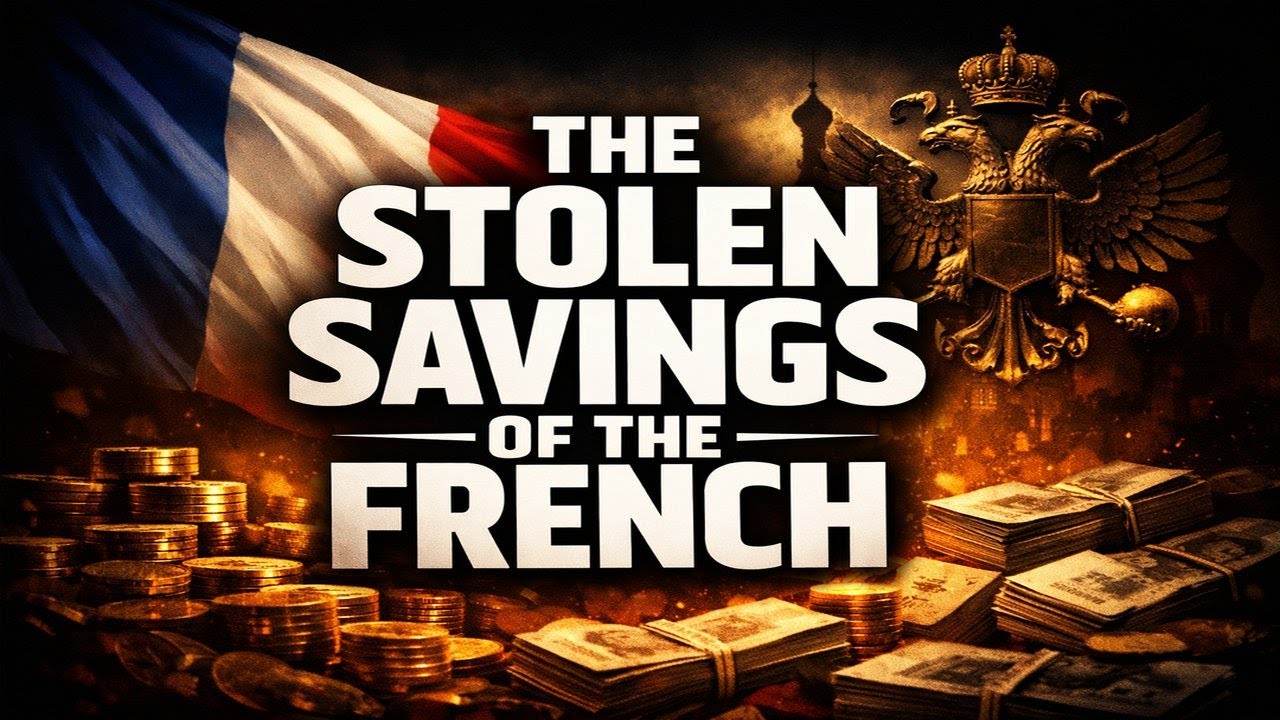
Discover the little-known story of a financial mechanism that is both fascinating and tragic, in which French savings financed the ambitions of a declining empire. In this video, dive into the heart of Franco-Russian relations between 1880 and the early 1930s, revealing how a complex system of imperial debts transformed the economic landscape of both nations.
First, we invite you to explore the meticulously woven architecture that united France and Russia at the end of the 19th century. Understand the political and economic framework of the time: a Russia facing major industrial and financial challenges under the reigns of Alexander III and Nicholas II, while France, freshly restored after the 1870 war, was seeking alternative investment opportunities. The determination of French banks and the state to support Russian industrialization generated an unprecedented flow of capital. Through diplomatic archives, we will highlight the crucial role played by major banks in the syndication and management of Russian loans, contextualizing their impact on French savings and the lower middle classes, who were becoming key players in this process.
Then, this video will immerse you in the financial mechanisms behind these Russian loans. Originating in high finance, the securities issued in gold francs or gold rubles directly reached French savers, from the urban lower middle class to the liberal professions, all attracted by appealing interest rates. We will reveal the distribution channels put in place by the banks, from advertising campaigns in national newspapers to savings banks, as well as stockbrokers who managed to transform the image of Russian loans into quasi-secure investments.
Despite the apparent success, we will soon analyze the limits that were already visible before 1914. This period of economic euphoria quickly descended into difficulties as Russia became increasingly dependent on French capital. Through testimonies and statistics, we will highlight the vulnerabilities that were deepening within savings portfolios and the early warning signs that foreshadowed an impending storm.
The First World War marked a decisive turning point in this financial saga. The transformation of Russian debt, coupled with the revolutions of 1917, disrupted the established order. We will discuss the decree repudiating the debts and the brutal impact on French bondholders, whose dreams of returns on investment turned into financial nightmares. Through this historical sequence, we will emphasize the mechanisms of diplomatic relations that blocked any favorable outcome for the bondholders.
Next, a journey through the turmoil of the interwar period will shed light on the complexity of financial negotiations with the USSR. While billions of gold francs remained in limbo, the French state faced years of refusal to recognize the debt. We will meet the actors involved in creating bondholders’ associations that fought for financial justice on a front that seemed hopeless. Through archives and testimonies, we will reveal how these organizations tried to make their voices heard in a changing French political landscape, while exposing the internal tensions that intensified in the face of this crisis of values.
Finally, this video will offer a historical assessment of the consequences of this economic saga. We will examine how the late management of these debts deeply marked the French collective memory and how the imprints of that era continue to shape contemporary debates on sovereign debt management. Serving as a warning of the inherent fragilities of foreign investment, this story will highlight the inadequacy of the legal protections available to savers at the time—a historical lesson that still resonates sharply today.
Throughout this exploration, we invite you to reflect on the role of the state, banks, and savers in a system where geopolitical stakes took precedence over individual financial security. Together, let’s discover how this page of history continues to influence 21st-century economic policies and what we can learn from it for the future. Don’t miss this captivating immersion into the financial history of France and Russia, a saga of alliance, dependence, and betrayal that resonates beyond time. Subscribe so you don’t miss the next part of this series.

Информация по комментариям в разработке