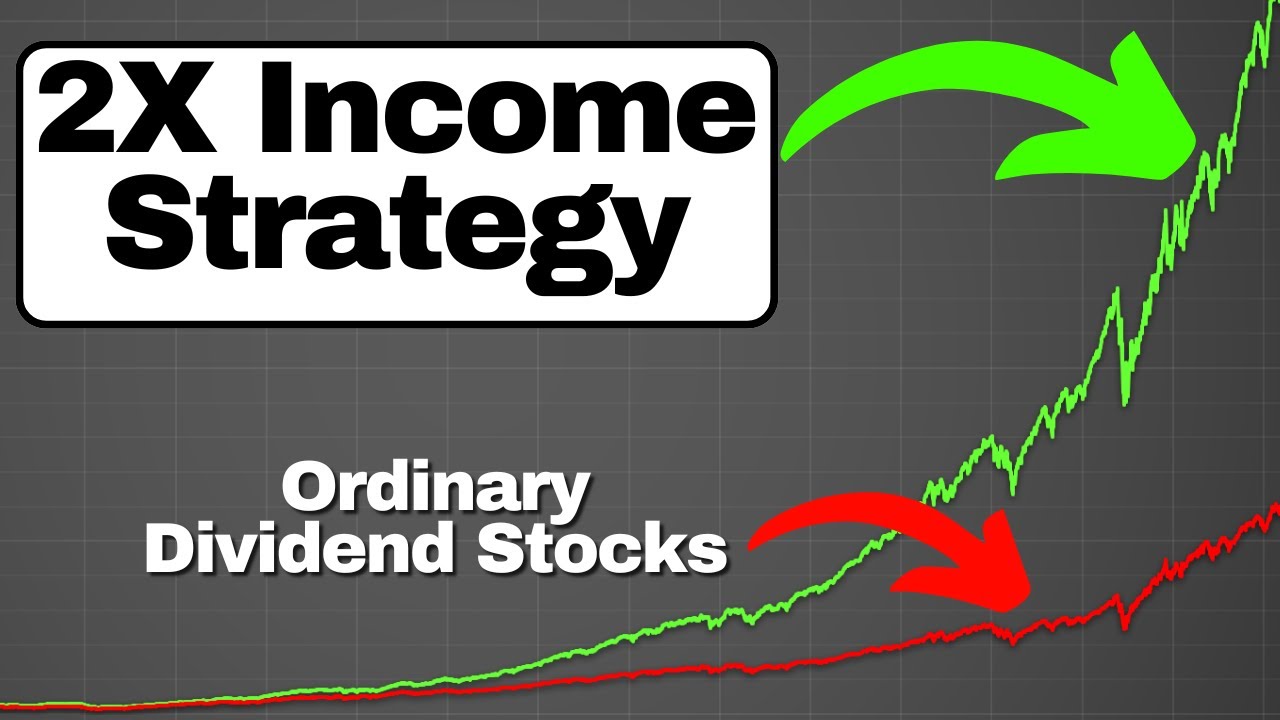
In this video we are talking about dividend stocks, but more specifically simple investment strategy that you can implement immediately to DOUBLE your dividend income overnight. When you sell options, specifically when you sell covered calls on your dividend stocks for income, you can safely create the same level of annual income with the covered call, thereby doubling your income.
----------------------------------------------------------------------------------------
JOIN THE PATREON COMMUNITY!
➡ / averagejoeinvestor
WANT ACCESS TO ALL OF MY SPREADSHEETS I USE ON THE CHANNEL ALONG WITH THE MONTHLY DIVIDEND STOCK SPREADSHEET AND INSTANT AWARENESS OF CHANGES TO MY PORTFOLIO? JOIN THE PATREON COMMUNITY!
----------------------------------------------------------------------------------------
➡ / averagejoeinvestor
You can also Work with Joe 1 ON 1!
Want to increase your option selling knowledge and get started!
----------------------------------------------------------------------------------------
🔴 Partner With Me - [email protected]
----------------------------------------------------------------------------------------
Need a GREAT Dividend Tracker for your portfolio? Here is what I use and it is EXCELLENT:
The Dividend Tracker: https://thedividendtracker.com/?ref=l...
----------------------------------------------------------------------------------------
This communication/content is for informational purposes only and is not intended as personalized investment advice, tax, accounting or legal advice, as an offer or solicitation of an offer to buy or sell, or as an endorsement of any company, security, fund, or other securities or non-securities offering. This communication should not be relied upon for purposes of transacting in securities or other investment vehicles.
----------------------------------------------------------------------------------------
A covered call is an options trading strategy where an investor holding a long position in a stock simultaneously sells (or "writes") call options on the same stock. This approach is used to generate income from the premiums received for selling the call options. Below is an overview of how covered calls work, their advantages, risks, and examples.
How Covered Calls Work
Structure: For every 100 shares of stock owned, the investor sells one call option. The stock ownership acts as "cover" because the seller can deliver the shares if the buyer exercises the option.
Income Generation: The seller earns a premium upfront for writing the call option, which provides immediate cash flow.
Obligation: If the stock price exceeds the strike price of the option, the seller must sell their shares at the strike price, forfeiting potential gains above that level.
Advantages
Income Stream: Covered calls generate income through premiums, which can supplement dividends or other portfolio returns.
Risk Reduction: The premium received offers a buffer against small declines in the stock price.
Neutral Market Strategy: Ideal for stocks expected to remain flat or experience modest price changes in the near term.
Risks
Limited Upside: If the stock price rises significantly above the strike price, profits are capped at that level, and additional gains are forfeited.
Example
Assume you own 100 shares of XYZ stock purchased at $50 per share:
You sell a $55-strike call option for $4 per share premium.
If XYZ rises to $55, you earn $59 per share ($55 from selling + $4 premium), achieving an 18% return.
However, if XYZ falls to $40, you incur a loss reduced by the $4 premium, resulting in a net loss of $6 per share.
Covered calls are well-suited for investors with a neutral or slightly bullish outlook on a stock and who seek to generate income while holding their shares long-term. However, they require careful consideration of market conditions and strike prices to balance risks and rewards effectively.
The risks associated with covered calls include the following:
1. Opportunity Cost
One of the primary risks is the limited upside potential. If the stock price rises significantly above the strike price, you are obligated to sell your shares at the strike price, missing out on additional gains. This can be frustrating in a strong bull market or for stocks with high growth potential.
2. Price Decline
While the premium received provides some downside protection, it may not fully offset losses if the stock price declines substantially. The investor bears the full downside risk of stock ownership below the breakeven point (purchase price minus premium).
3. Assignment Risk
If the stock price exceeds the strike price, the buyer may exercise their option, requiring you to sell your shares. This could lead to unwanted tax consequences or force you to sell shares you intended to hold long-term.

Информация по комментариям в разработке