#abbaith #folksong #content #music #slovenia #creativity
More about the podcast: • Slovenian Folk Music
Check other videos: • Slovenian folk song Nabirale so liešnike
• Видео
• Slovenian folk song Vandrovček
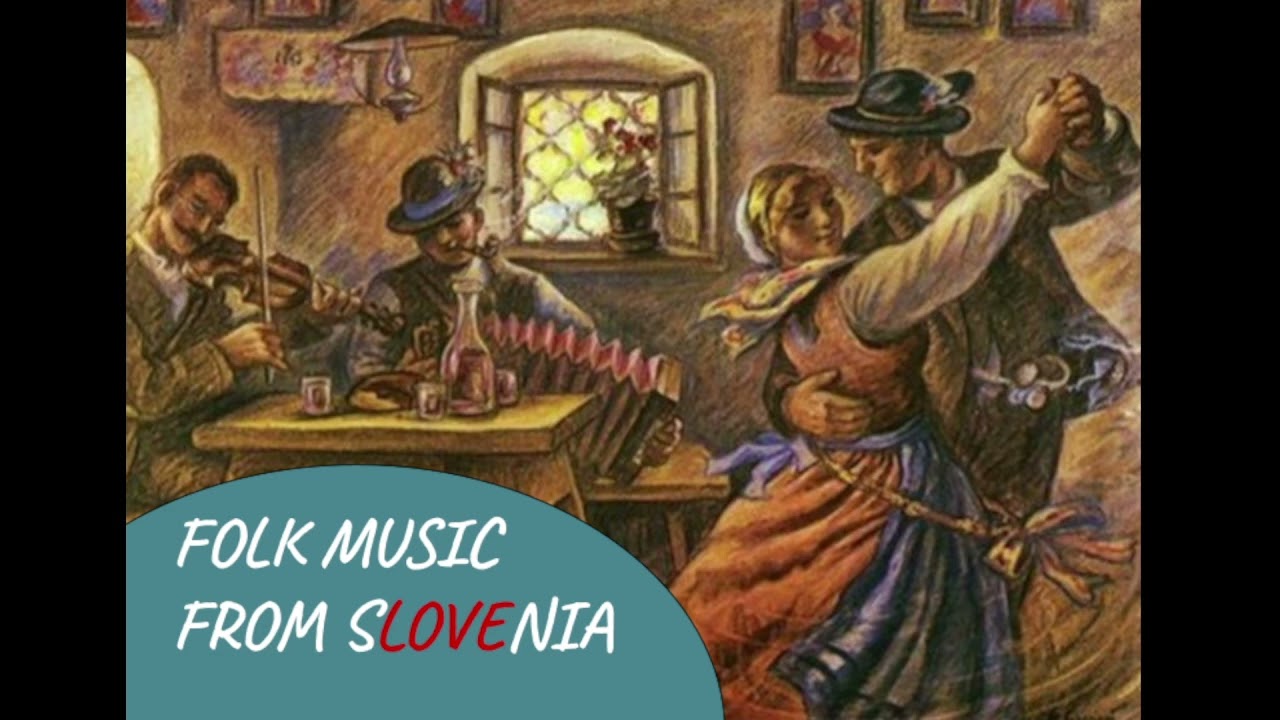
Slovenian folk song from Carinthia, recorded in 1955
Slovenian Multipart Singing
Introduction
The Slovenian saying “Trije Slovenci, pevski zbor” that means “three Slovenians make a choir”, shows how multipart singing is close to Slovenian’s music sensitivity. There are only few areas in Slovenia where people sing otherwise.
In the past, Slovenian multipart singing was different from the singing we know today. There are only few records and testimonies; however, these ascertain that in the Slovenian tradition it has always been sung in the form of multipart singing.
Historic Overview of Traditional Singing in Slovenia
The first historically proved written record on multipart singing among Slovenians dates back to the 14th century. It is a fragment of a thanksgiving hymn which was sung during a traditional rite of the crowning of a Carinthian Duke on a Duke’s Stone in Zollfeld (in Slovenian: Gosposvetsko polje), Austria. This fragment was preserved in a German manuscript (Vrčon 1998:187). Another fragment, namely a passage from an old Eastern song from the 15th century, is preserved in the Monastery of Stična. A stanza of a carol written by Primož Trubar, the third oldest written record, has been preserved from the 16th century. Thanks to counter-reformists’ records we can nowadays deduce how it was sung at that time. In the same period, first Slovenian song-books containing one-part liturgical songs were printed.
At the beginning of the 20th century some scholars supported the theory of an ancient form of unison folk singing, supposedly spread everywhere among Slovenians under the influence of Bavarian-German practice (Vrčon 1998:191).
Further research disproved this theory. There is, in fact, much more evidence supporting the opposite (Mav 1929:82, Tomc 1929:5) arising from investigations conducted at the end of 20th century. These investigations rejected previous folklorists’ claims about the influence of German-speaking culture on Slovenian folk singing. According to Vodušek that influence can only be observed in typical rhythms and metres, but not in melodic features (Vodušek 2003c:54).
Multipart Singing in Slovenian Traditional Songs
In Slovenian traditions, unison singing appears only in a few cases such as rare ritual songs as well as in Porabje (Hungary) and Prekmurje singing practice that has been influenced by the Hungarian folk song (Dravec 1957).
Slovenian traditional songs are performed mostly in two parts in parallel thirds or sixths (or octaves). The two parts move freely. It is often impossible to determine whether the leading melody is sung by the higher or the lower part. Women and men sing in separate groups. They sing together only during festivities. In two-part singing in thirds the leading part is the lower part, while in sixths the leading melody is taken up by the higher part. Singers often change the leading function of the two parts without knowing which part performs the leading melody. In those cases the melody ends in a third thus creating a sense of an unfinished musical thought.
Three-part singing is typically male. However, there is also female three-part singing is present. The middle part (the baritone part in a men’s group) leads the melody, the accompanying higher part is in a third on the top of the leading part, while the harmonic bases and the activity of the lower part (the bass) depends basically on the singers’ capacity to create the lower part.
Today, group singing is heavily influenced by organised choir singing and as a result, the leading melody is most frequently performed by the highest part.
In the Upper Savinja valley, three-part singing is called “co-peti”, meaning to add an accompanying part below. In the past, three-part singing was typical of young rural men, which gave raise to the so-called “young men’s singing” (“fantovsko petje”). It started with a leading soloist singer, usually one of the best singers of the group, who was then followed by an accompanying higher part and by the lowest part performed by the rest of the group.
More: https://www.mdw.ac.at/ive/emm/?PageId=141
About the channel:
YouTube channel led by a Slovenian creator — writer, musician, poet, composer, and conductor — sharing a rich mix of music, literature and culture.
Check the main channel themes:
-🎶 Highlights of contemporary Slovenian creativity (Music of young Slovenian composers)
-🎻 Patriotic and folk music from Slovenia
-🎶 Classical music
-😌 Relaxing music (1–2 hour meditative tracks designed for studying or reflection)
-🎚 Slovenian christian music (Christian hymns, Christmas music)








Информация по комментариям в разработке