Hariraja (r. c. 1193–1194 CE ) was a king from the Chahamana (Chauhan) dynasty who ruled parts of his ancestral kingdom (in present-day Rajasthan, India) for a brief period, before being defeated by the Ghurids. After the Ghurid invaders defeated his brother Prithviraja III in 1192 CE, he dethroned his nephew Govindaraja IV, who had been appointed as a vassal ruler by the Ghurids.
Hariraja was a son of the Chahamana king Someshvara and queen Karpuradevi. He and his elder brother Prithviraja III were born in Gujarat, where their father Someshvara was brought up at the Chaulukya court by his maternal relatives.[1] Prithviraja ascended the Chahamana throne after Someshvara's death, but his reign ended in 1192 CE with a Ghurid conquest of the kingdom. The Ghurids appointed Prithviraja's son Govindaraja IV as a vassal ruler in return for a heavy tribute.
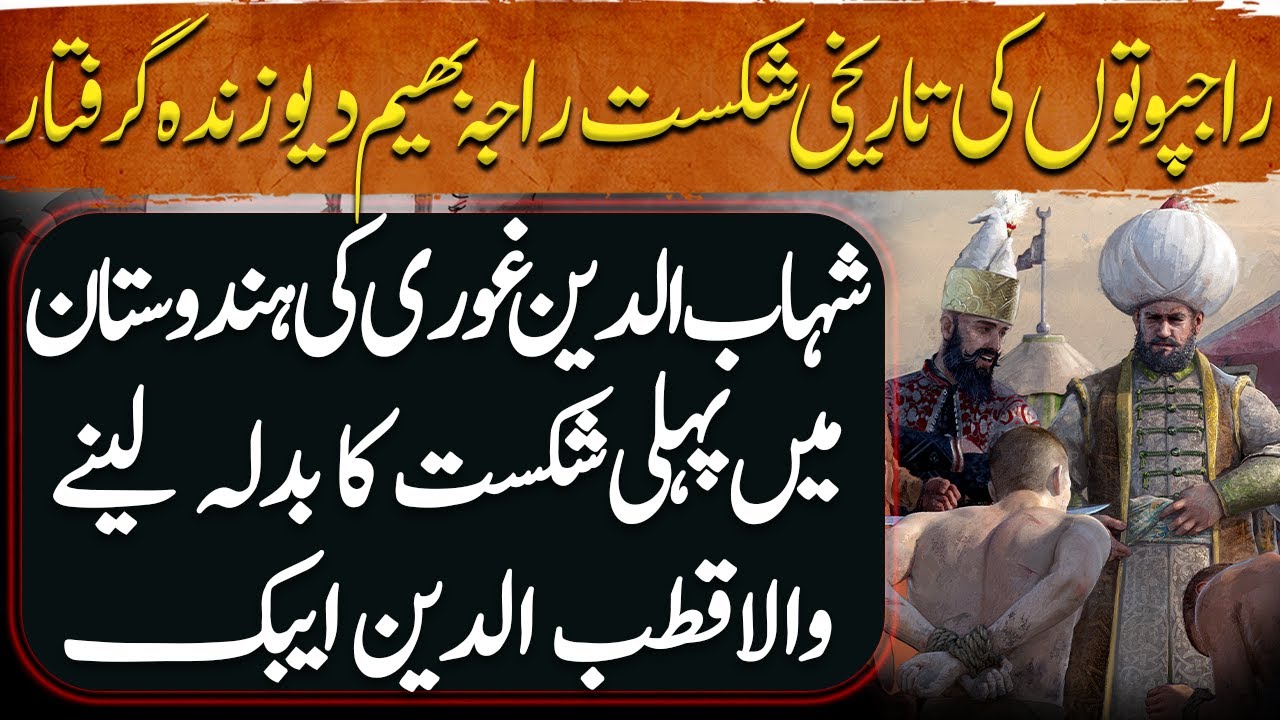
Hariraja revolted against the Ghurid rule in the Chahamana capital Ajmer, forcing Govindaraja to take shelter in the Ranthambore Fort. When the Ghurid governor Qutb al-Din Aibak heard about this, he rushed from Delhi to Ranthambore.[3] Hariraja made a retreat, knowing that he would not be able to defeat the Ghurid army.
While the Ghurids were busy fighting other Hindu dynasties such as the Gahadavalas, Hariraja once again invaded Ajmer in 1193 CE. This time, he managed to recapture Ajmer, and became the new Chahamana king, with support from Prithviraja's former general Skanda.[5] Subsequently, Hariraja sent a force led by Jatira (called Jihtar or Jhitar in Muslim accounts) to capture Delhi. However, this force had to retreat in fear of a larger Ghurid army. As Jatira's force was returning to Delhi, Hariraja set out from Ajmer with another army in its support. The Ghurids decisively defeated the Chahamana forces in the ensuing battle.
According to the 16th-century Muslim historian Firishta, Hariraja and Jaitra were killed in this battle. However, the near-contemporary 13th-century source Taj-ul-Maasir states that Jaitra "sacrificed himself in the flames of a fire". Hammira Mahakavya by the Jain scholar Nayacandra Suri also states that Hariraja had to fall back to Ajmer, where he determined that any further resistance against the Ghurids was fruitless. As a result, he and his family then committed suicide by self-immolation.
Hariraja's queen was Pratapadevi, as attested by an 1194 CE Tantoti inscription.
In 1178 CE, the Ghurid king Muhammad of Ghor invaded the Chaulukya kingdom, but was defeated. This battle took place during the reign of Bhima's predecessor Mularaja II, although some Muslim chronicles wrongly assign it to Bhima's reign.
In the mid-1190s CE, the Ghurids defeated the Chahamanas and other Hindu kings of northern India. According to the medieval Muslim historians, in 1197 CE, the Ghurid general Qutb al-Din Aibak marched to Nahrwala (that is, the Chalukya capital Anahilapataka). He defeated the Chaulukya army on 4 February 1197 CE. The 13th century Muslim historian Hasan Nizami boasts that the Chaulukyas lost 50,000 men in this battle. The 16th century chronicler Firishta gives the numbers as 15,000 killed and 20,000 captured.
According to the Muslim chronicles, the Chaulukya army was led by Rai Karan, Wallan and Darabaras in this battle.[7] Darabaras can be identified with Dharavarsha, the Paramara chief of Abu, who was a feudatory of Bhima. Wallan is probably a corruption of Pahlan, which itself is a corruption of Prahaladana (the brother of Dharavarsha). The identification of Rai Karan is not certain. Some scholars have identified him with Kirtipala, a ruler of the Javalipura Chahamana branch. However, this identification is not tenable on chronological grounds.[8] D. R. Bhandarkar identified Rai Karan as the Naddula Chahamana ruler Kelhana, but this is also chronologically incorrect, as Kelhana died around 1193 CE.[9] R. B. Singh identified him as Kelhana's successor Jayatasimha.[10] According to the Muslim historians, Rai Karan managed to escape after the battle.
The Ghurids then entered Anahilapataka, and plundered the town. This sacking of Anahliapataka was witnessed by the Jain scholar Jinapati Suri in 1197 CE. According to Firishta, Qutb al-Din appointed a governor in the Chaulukya capital before leaving for Ajmer.[7] Subsequently, the Chaulukyas restored their power in Gujarat, but there is very little information about how this happened. There are some references to Bhima's generals Lavanaprasada and Shridhara having achieved military successes against the Ghurids (called "Turushka" and "Hammira"). It is known that Bhima was in control of Anahilapataka by 1201 CE.
#SiegeofKanauj
#SeigeofBanaras
#SultanGhori

Информация по комментариям в разработке