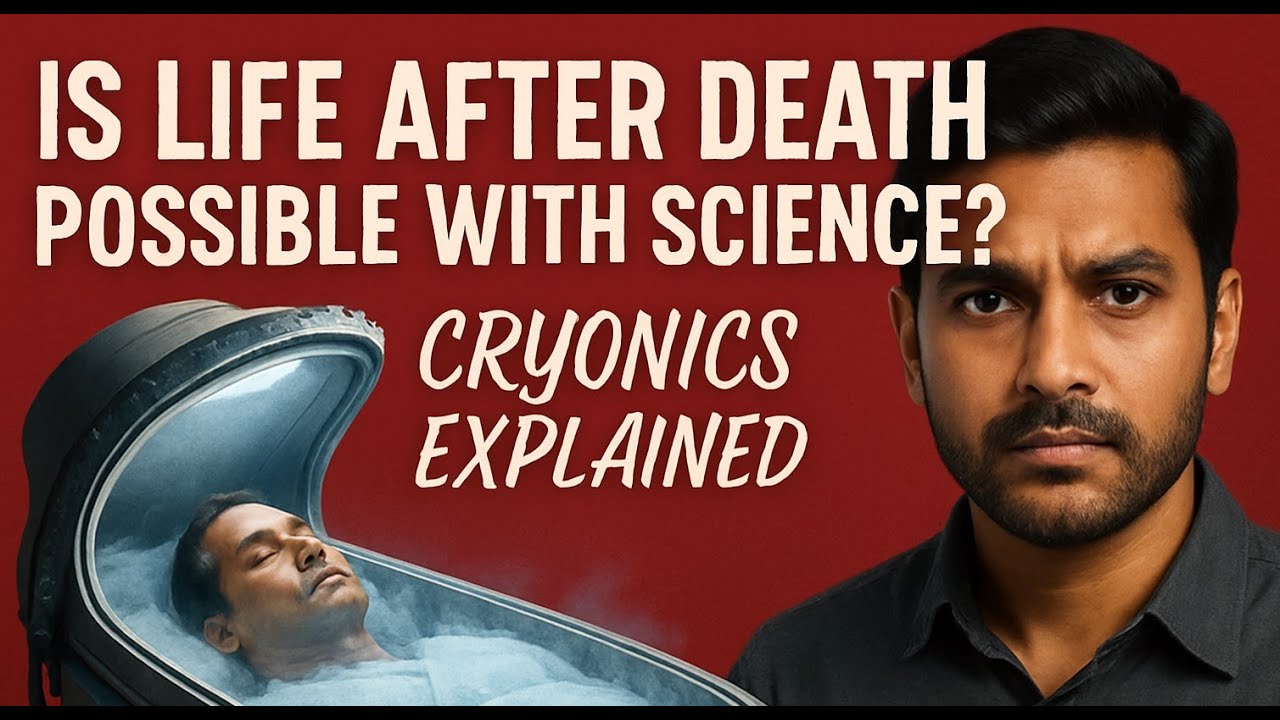
The concept of life after death through scientific means, particularly cryonics, is a topic of intense debate and speculation. Cryonics is the practice of preserving a human body or brain at extremely low temperatures with the hope of future revival when medical technology advances to the point where such revival becomes possible. While it is an intriguing idea, it remains a controversial and largely unproven field within the scientific community.
What is Cryonics?
Cryonics involves the preservation of a person's body or brain immediately after legal death using cryoprotectants and cooling to subzero temperatures (typically around -196°C) [1]. The goal is to maintain the structural integrity of the brain—especially the neural networks that encode memory and personality—so that future medical technologies, such as nanotechnology, could potentially restore the individual to life [2].
The process begins as soon as a person is declared legally dead. The body is cooled rapidly to prevent decomposition, and cryoprotectants are introduced to prevent ice crystal formation, which can cause severe cellular damage. The preserved body is then stored in a cryogenic dewar filled with liquid nitrogen for long-term preservation The process begins as soon as a person is declared legally dead. The body is cooled rapidly to prevent decomposition, and cryoprotectants are introduced to prevent ice crystal formation, which can cause severe cellular damage. The preserved body is then stored in a cryogenic dewar filled with liquid nitrogen for long-term preservation [3].
Cryogenic storage facility with multiple large dewars containing cryopreserved human remains, operated by Alcor Life Extension Foundation.
Cryogenic storage facility preserving human remains for potential future revival.
Is Life After Death Possible with Cryonics?
The central question is whether cryonics can truly lead to a revival. At present, no human has been successfully revived from cryopreservation, and the scientific community remains skeptical about the feasibility of the process. Critics argue that the damage caused during the preservation process—such as cellular degradation, ice formation, and the effects of cryoprotectants—makes it highly unlikely that a person could be restored to a functional, conscious state [1].
Moreover, the brain is an incredibly complex organ, and even if the physical structure is preserved, the question of whether the original consciousness, personality, and memories can be reconstructed remains unanswered. Some proponents of cryonics, however, argue that future advancements in neuroscience, nanotechnology, and artificial intelligence could allow for the reconstruction of the brain's information and the revival of the individual [2].
Challenges and Ethical Considerations
Cryonics faces significant scientific, legal, and ethical challenges. Scientifically, the preservation of complex organs like the brain without irreversible damage is extremely difficult. Ethically, the practice raises questions about the definition of death, the rights of the deceased, and the societal implications of potentially reviving individuals centuries later [1].
Legally, cryonics is not universally accepted. In some countries, it is not recognized as a valid method of body disposal, and in others, it is subject to strict regulations. The long-term viability of cryonics companies is also a concern, as the cost of cryopreservation and storage is high, and there is no guarantee that these organizations will still exist when future revival technologies emerge [3].
The Cost and Accessibility of Cryonics
The cost of cryonics varies depending on the organization and the type of preservation (whole body or neuro-only). As of 2025, the price for full-body cryopreservation can range from
200
,
000
t
o
200,000to250,000, while neuro-only preservation (of the brain) is slightly less expensive. Most people finance cryonics through life insurance policies, as the cost is typically beyond the reach of most individuals [2].
Despite the high cost, the number of people opting for cryonics has been growing, especially among those interested in life extension and futurism. Organizations like Alcor, the Cryonics Institute, and Tomorrow.Bio are leading the way in cryopreservation technology and advocacy [2].
The Future of Cryonics
While the success of cryonics is uncertain, its proponents argue that it is a scientific experiment with the potential to redefine the boundaries of life and death. As with many groundbreaking scientific endeavors, the outcomes of cryonics may not be known for decades or even centuries. Until then, it remains a speculative but fascinating area of research and exploration.
Frozen brain preservation for potential future revival.
Frozen brain preservation for potential future revival.
Cryopreserved individuals stored in futuristic containers, awaiting revival.
Cryopreserved individuals stored in futuristic containers, awaiting revival.

Информация по комментариям в разработке