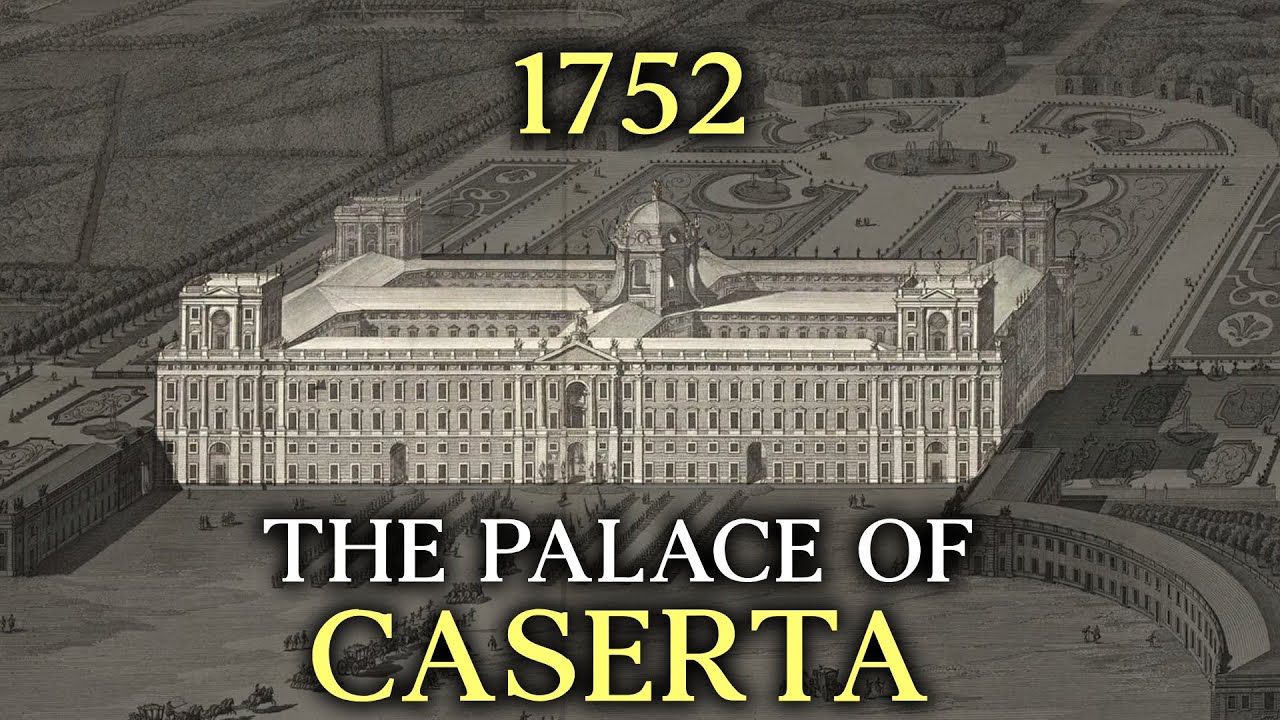
Europe’s largest royal palace isn’t in Paris or Vienna, but in the flat fields north of Naples — a brick-and-marble giant ordered by a young Bourbon king who wanted something bigger than Versailles and far away from his own angry capital. In the seventeen-fifties, Charles of Bourbon pointed at a swamp and said, “Here,” and from that moment Caserta began to swallow money, stone, and human lives on a scale his kingdom could barely afford.
This film follows the whole arc: the king who dreamed of outshining France and quietly building himself a fortress against revolt, the stonecutters and peasants who fought the marshy ground and paid the price in higher taxes and broken bodies, the invisible servants who slept in attic dorms while nobles danced under frescoed ceilings, the revolutions and Napoleonic kings who marched through without ever really seeing the people who kept the palace running, the refugees and Allied generals who turned Caserta into a World War Two headquarters and surrender chamber, and the exhausted curators and conservators today who battle leaks, bureaucracy, and neglect to stop this “too big to save, too beautiful to lose” mansion from collapsing.
Before we begin—drop a comment: if you could step into the Palace of Caserta at any moment in its life, when would it be? The day Charles first signed the decree in a muddy field, a winter night when servants raced up hidden stairs while balls glittered below, the spring of nineteen forty-five when German officers signed Italy’s surrender under Bourbon chandeliers, or a modern morning with restorers on the scaffolding, fighting to keep one more ceiling from falling? Is Caserta a monument to royal greatness… or a warning about what enormous dreams really cost?
If you love deep-dive history, royal architecture, and the real human stories buried inside “Europe’s largest mansion,” hit like and subscribe. Your support keeps these long, carefully researched histories alive.
Copyright & Fair Use Disclaimer
• This video is a non-commercial, educational history documentary created for commentary, criticism and research.
• Some archival photos and footage are used under the principles of Fair Use (Section 107, U.S. Copyright Act) for purposes such as criticism, comment, news reporting, teaching, scholarship, and research.
#Caserta #Italy #EuropeanHistory #PalaceOfCaserta #Architecture













Информация по комментариям в разработке