Margaret Alice Murray (13th July 1863 – 13th November 1963) was an Anglo-Indian Egyptologist, archaeologist, anthropologist, historian and folklorist.
After being taken ill herself, she was went to recuperate in Glastonbury, Somerset, and became interested in Glastonbury Abbey and the folklore surrounding it.
Connecting it to the legendary figure of King Arthur and to the idea that the Holy Grail had been brought there by Joseph of Aramathea.
Murray's interest in folklore led her to develop an interest in the witch trials of early modern Europe.
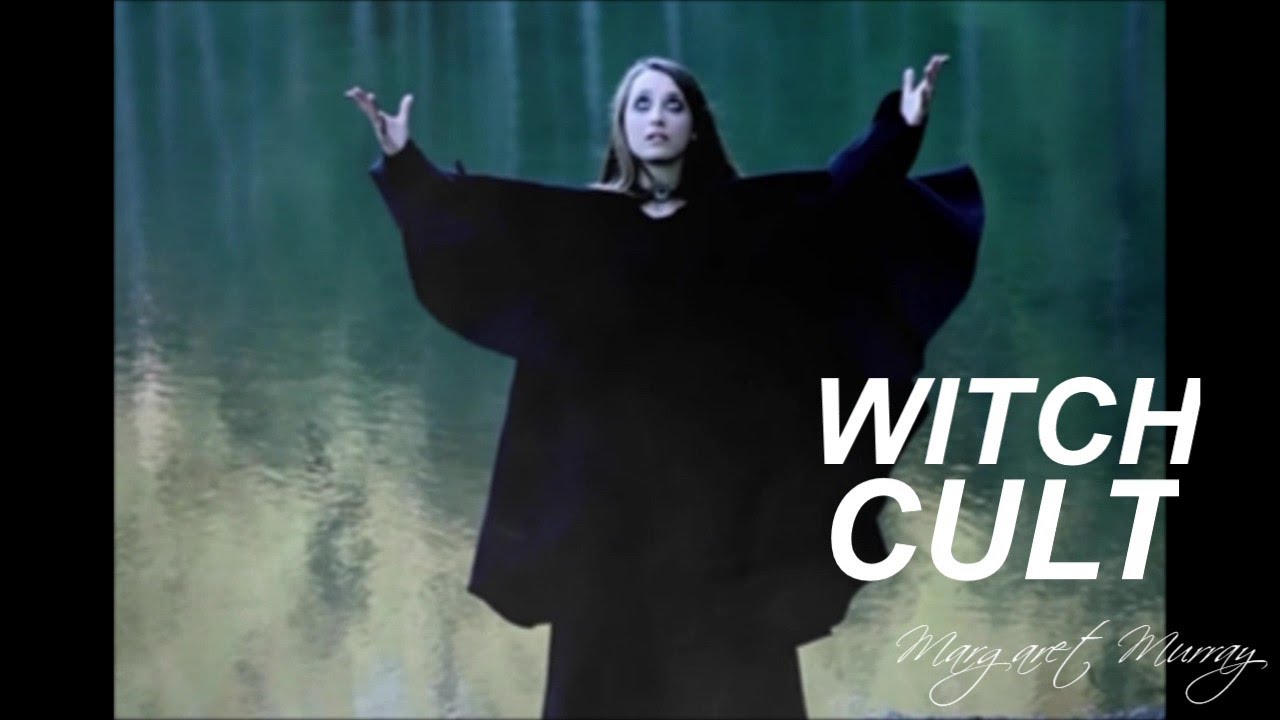
In 1917, she published a paper in Folklore, the journal of the Folklore Society, in which she first articulated view that the witches persecuted in European history were actually followers of ‘a definite religion with beliefs, ritual, and organisation as highly developed as that of any cult in the end.’
Murray joined the Folklore Society in February 1927, and was elected to the society's council a month later, although she stood down in 1929.
But in 1953, Murray was appointed to the presidency of the Folklore Society.
In The Witch-Cult in Western Europe (1921), Murray made a distinction between:
Operative Witchcraft, which referred to the performance of charms and spells with any purpose.
Ritual Witchcraft, by which she meant the ancient religion of Western Europe, a fertility-based faith that she also termed the Dianic cult.
She claimed that the cult had very probably once been devoted to the worship of both a male deity and a Mother Goddess.
But that the male deity appears to have superseded that of the female once recorded.
Murray claimed that the figure referred to as the Devil in the trial accounts was the witches' god, to whom the witches offered their prayers.
The horned god represented the cycle of seasons and harvests.
It was believed that he died and periodically returned to life.
That at the witches' meetings, the god would be personified, usually by a man or at times by a woman or an animal.
When a human personified this entity, Murray claimed that they were usually dressed plainly, though they appeared in full costume for the witches' Sabbaths.
That the religion was largely passed down hereditary lines.
Murray described the religion as being divided into covens containing thirteen members, led by a coven officer who was often termed the ‘Devil’ in the trial accounts, but who was accountable to a ‘Grand Master’.
According to Murray, the records of the coven were kept in a secret book, with the coven also disciplining its members, even executing those deemed traitors.
Describing this witch-cult as a joyous religion, she claimed that the two primary festivals that it celebrated were on May Eve and November Eve, although that other dates of religious observation were the winter and summer solstices, and Easter.
These magical rites were performed both for malevolence and benevolence.
Deeming Ritual Witchcraft to be a fertility cult, Murray suggested that many of its rites were designed to ensure fertility and rain-making.
She claimed that there were four types of sacrifice performed by the witches:
Blood-sacrifice, in which the neophyte writes their name in blood;
The sacrifice of animals;
The sacrifice of a non-Christian child to procure magical powers;
The sacrifice of the witches' god by fire to ensure fertility.
Murray's witch cult theories greatly influenced Gerald Gardner.
Providing the blueprint for the contemporary Pagan religion of Wicca, with Murray being referred to as The Grandmother of Wicca.
Given her academic standing Murray’s work was initially well received by many academics.
Nevertheless, Murray's theories never received support from experts in the early modern witch trials, and from her early publications onward many of her ideas were challenged by those who highlighted her factual errors and methodological failings.

Информация по комментариям в разработке