Logo video2dn
  • Сохранить видео с ютуба
  • Категории
    • Музыка
    • Кино и Анимация
    • Автомобили
    • Животные
    • Спорт
    • Путешествия
    • Игры
    • Люди и Блоги
    • Юмор
    • Развлечения
    • Новости и Политика
    • Howto и Стиль
    • Diy своими руками
    • Образование
    • Наука и Технологии
    • Некоммерческие Организации
  • О сайте

Скачать или смотреть Why to close the door- well ventilated vs ventilation limited compartment fire (No sound)

  • Pete O
  • 2024-01-10
  • 117
Why to close the door- well ventilated vs ventilation limited compartment fire  (No sound)
firewell ventilatedventilation limitedfire sciencefire safetycompartment fire
  • ok logo

Скачать Why to close the door- well ventilated vs ventilation limited compartment fire (No sound) бесплатно в качестве 4к (2к / 1080p)

У нас вы можете скачать бесплатно Why to close the door- well ventilated vs ventilation limited compartment fire (No sound) или посмотреть видео с ютуба в максимальном доступном качестве.

Для скачивания выберите вариант из формы ниже:

  • Информация по загрузке:

Cкачать музыку Why to close the door- well ventilated vs ventilation limited compartment fire (No sound) бесплатно в формате MP3:

Если иконки загрузки не отобразились, ПОЖАЛУЙСТА, НАЖМИТЕ ЗДЕСЬ или обновите страницу
Если у вас возникли трудности с загрузкой, пожалуйста, свяжитесь с нами по контактам, указанным в нижней части страницы.
Спасибо за использование сервиса video2dn.com

Описание к видео Why to close the door- well ventilated vs ventilation limited compartment fire (No sound)

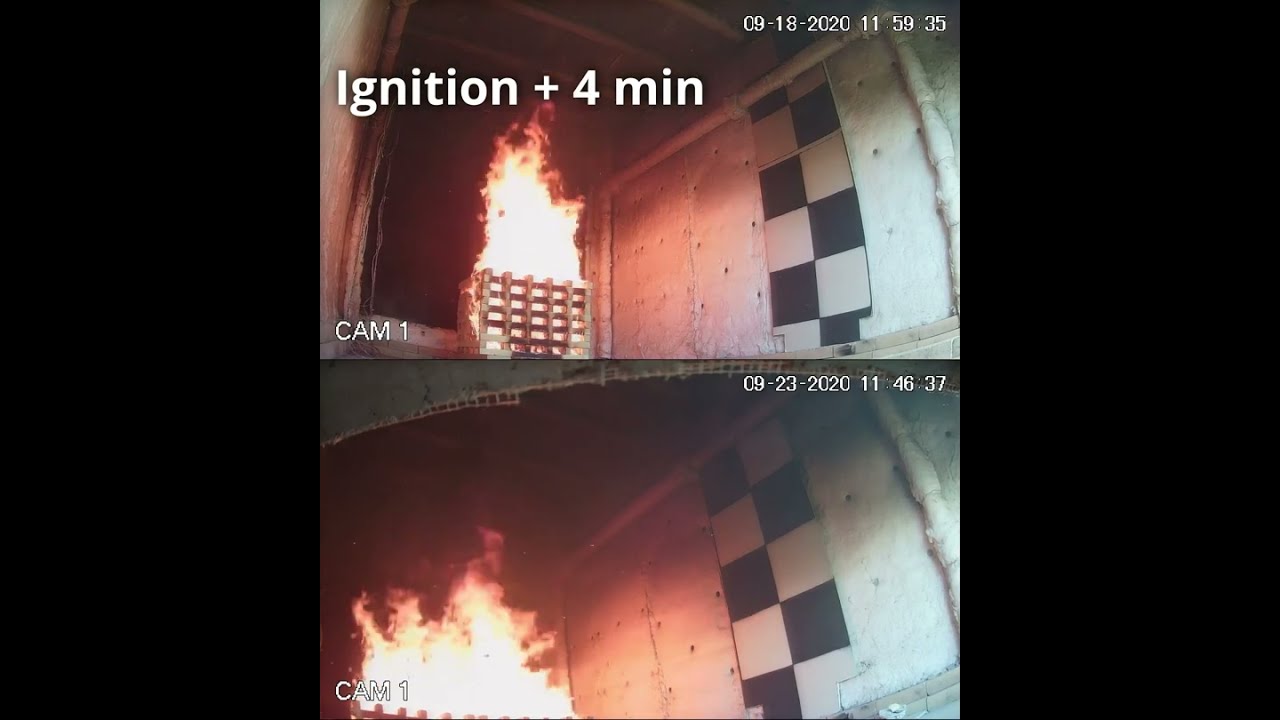
Side by side video extracted from large scale compartment fire experiments showing the difference closing the door will make on fire growth and compartment temperatures. Sorry there is no sound, the cameras used were CCTV ones with video only.

The door wasn't air tight, but still cut down fresh air enough that the fire burned out in about a minute after the door closed, while limiting the temperature.

For the fire with the door left open, it burned until all fuel was gone; the CCTV camera didn't survive but was sacrificed for science.

For context, this is based on standard procedures for a fire on the ship, where you evacuate people and close the doors behind you. A smoke alarm was in the fire compartment, and the door was closed several minutes after the alarm activated to simulate the time it may take for people to evacuate. If the compartment was unoccupied and the door is normally closed the fire wouldn't have grown as large and would have self-extinguished sooner.

This also limits the spread of smoke into other compartments and passageways, so helps with evacuation, limits the fire getting bigger, and buys time while you use a fitted system or get an attack team ready.

Keeping the fire from growing and smoke from spreading is particularly important on a ship as you run out of places to go with fresh air, and abandoning ship can be dangerous. This is why ships are designed to be compartmentalized, and have smoke detectors, fitted systems as well as hoses and training for the crew as there isn't a fire department coming in 10 minutes.

These two fires were done to test out the fire setup for the experiment, so aren't identical, but is a good demonstration behind the why, and a lot more interesting then talking about the theory.

The fire was a standard wood crib set up (using two cribs), with a peak heat release rate of approx 500 kW. Two different configurations are shown in the video but had minimal impact on the fire growth rates or overall heat output for the purpose of this demonstration. The two cribs on top of each other was more dramatic, but didn't give even heating along the back wall (which was the purpose of the main experiment). It was pretty cool though, but I also didn't want to keep replacing the ceiling insulation either ;)

Multi media excerpt taken out of the result of the MASc from the University of Waterloo "Investigation on the implications of passive fire barriers on the fire fighting tactics of the Royal Canadian Navy". The fire is in a coverted 20 foot sea container that is lined with high temperature ceramic insulation on a cement board and a fire brick floor. The back wall is in a steel frame so you can bolt in different steel, wood/drywall or other setups to test them to fire exposures. The rear room is fully instrumented with thermocouples, and can be monitored for air flow, gas monitoring and other data points. The fire compartment shown in the video has 4 thermocouple tree (one in each corner) as well as additional thermocouples on the ceiling. Off the shelf CCTV cameras, DSLR camera and an IR camera were also used to get some video and photos.

See the full thesis at:
https://uwspace.uwaterloo.ca/handle/10012/...

To support the idea of Open Data, the temperature data from the large scale testing and the small scale test results have been made available on ’Scholars Portal Dataverse’ under

”Replication Data for: MASc Investigation on the implications of passive fire barriers on the fire fighting tactics of the Royal Canadian Navy by Peter John O’Hagan”

Please refer to https://dataverse.scholarsportal.info/

Комментарии

Информация по комментариям в разработке

Похожие видео

  • О нас
  • Контакты
  • Отказ от ответственности - Disclaimer
  • Условия использования сайта - TOS
  • Политика конфиденциальности

video2dn Copyright © 2023 - 2025

Контакты для правообладателей [email protected]