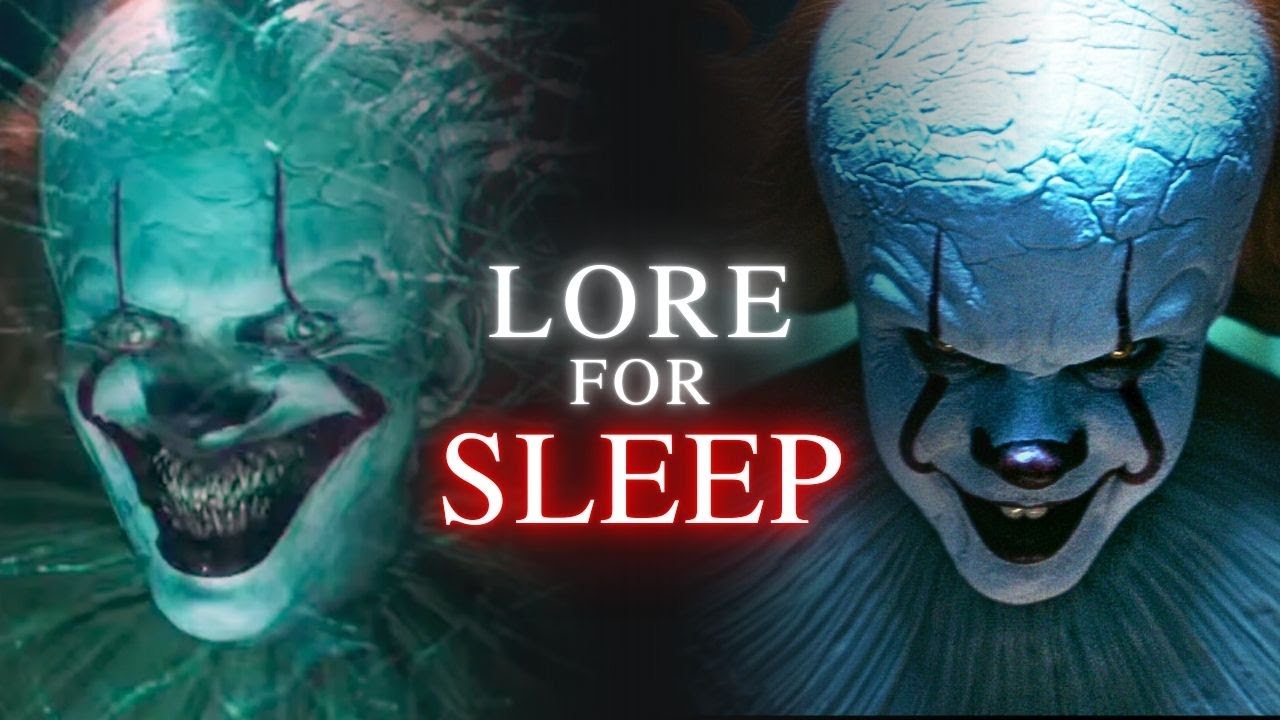
Tonight, we are drifting through every major form of Pennywise, the creature known as IT, told slowly, like flipping through an old scrapbook that should have been burned years ago.
Because Pennywise is not one monster.
It is a cosmic predator that wears shapes the way we wear clothes.
It studies what a person cannot bear to see, then steps into that fear like it has always lived there.
Sometimes it appears as something iconic, like the Dancing Clown in the storm drain.
Sometimes it is smaller and crueler, a voice from a sink, a face in a painting, a familiar person wearing the wrong smile.
And behind all of it, always, is the same hidden truth.
A glow no human mind can hold.
A light that does not comfort.
The Deadlights.
In this “Lore for Sleep” journey, we trace Pennywise through its forms across the Derry cycle, from the earliest historical manifestations to the Losers Club encounters, and into the adult returns where nostalgia becomes a trap.
You will hear about the spider shape in the lair, the hybrid clown-spider body, the leper that embodies disease fear, the werewolf pulled from old movies, the living painting woman, the Paul Bunyan statue, the vampire, the mummy, the creature in the water, and all the disguises that turn ordinary life into quiet dread.
This is not fast horror.
This is a calm catalog of shapes.
A slow walk through the masks.
So get comfortable.
Let your breathing stay steady.
Pennywise is only a story tonight.
And you can fall asleep before the next shape even arrives.
⸻
TOPICS COVERED
• The Deadlights as Pennywise’s true essence and the “real” IT behind every mask
• The spider-like manifestation in the sewer lair and why humans interpret it that way
• The clown-headed arachnid hybrid as a bridge between familiar and incomprehensible
• Early historical forms in Derry’s long memory, including tribal-era visions like the Gloo moose
• Disease and cultural-erasure themed manifestations: infected settlers, diseased priests, “leper baby” imagery
• 1908 era forms and lures: the Skeleton Man, carnival disguises, “young boy” deception
• Bob Gray connections: using familiar faces and abandonment as a weapon
• Pennywise the Dancing Clown: the iconic bait-mask and its child-focused friendliness
• The switch from lure to predator: the toothy transformation, the sudden monster-mouth reveal
• Domestic “comfort” traps: fake families, warm homes, nostalgia that turns into a cage
• Public-space paranoia forms: store crowds, neighbors staring, authority disguises that feel wrong
• Religious imagery twists: living statues, sacred symbols turned into stalking shapes
• Rot and corpse-haunt forms: zombified friends, dead kids, partial bodies, guilt-based apparitions
• Eddie’s germ-fear suite: leper variations, diseased drifter approach, escalating contamination imagery
• Ben’s history-haunt suite: ironworks disaster figures, headless and burnt pursuers, library dread
• Stanley’s uncanny-art suite: Judith / flute lady painting emergence and distortion variants
• Classic monster-movie masks: werewolf, mummy, Dracula, Frankenstein-style creature, Black Lagoon creature
• Giant landmark terror: Paul Bunyan statue and oversized Americana becoming hostile
• Water and canal predators: shark/Jaws-style form, piranhas, leeches, drowning-pull illusions
• Sky and cosmic manipulation: the moon-face urging violence, celestial persuasion as a “soft command”
• Self-image attacks: dolls, mirrors, fake versions of friends, loved ones used as blades
• Beverly-centered trauma forms: Mrs. Kersh, witch transformation, blood eruption as isolation and fear made visible
• Adult return distortions: resort morphs (leper, mummy, Judith) and “memory wearing a new face”
• The closing idea: Pennywise’s endless adaptability, and why the cycle feels unbreakable
⸻
If your mind keeps replaying images, let them float past like streetlights through a car window.
Pennywise changes shape, but you do not have to follow.
The storm drain can stay in the book.
The painting can stay on the wall.
And the Deadlights can stay far away from your dreams.
Good night.

Информация по комментариям в разработке