January 1991. The skies over the Middle East ignite.
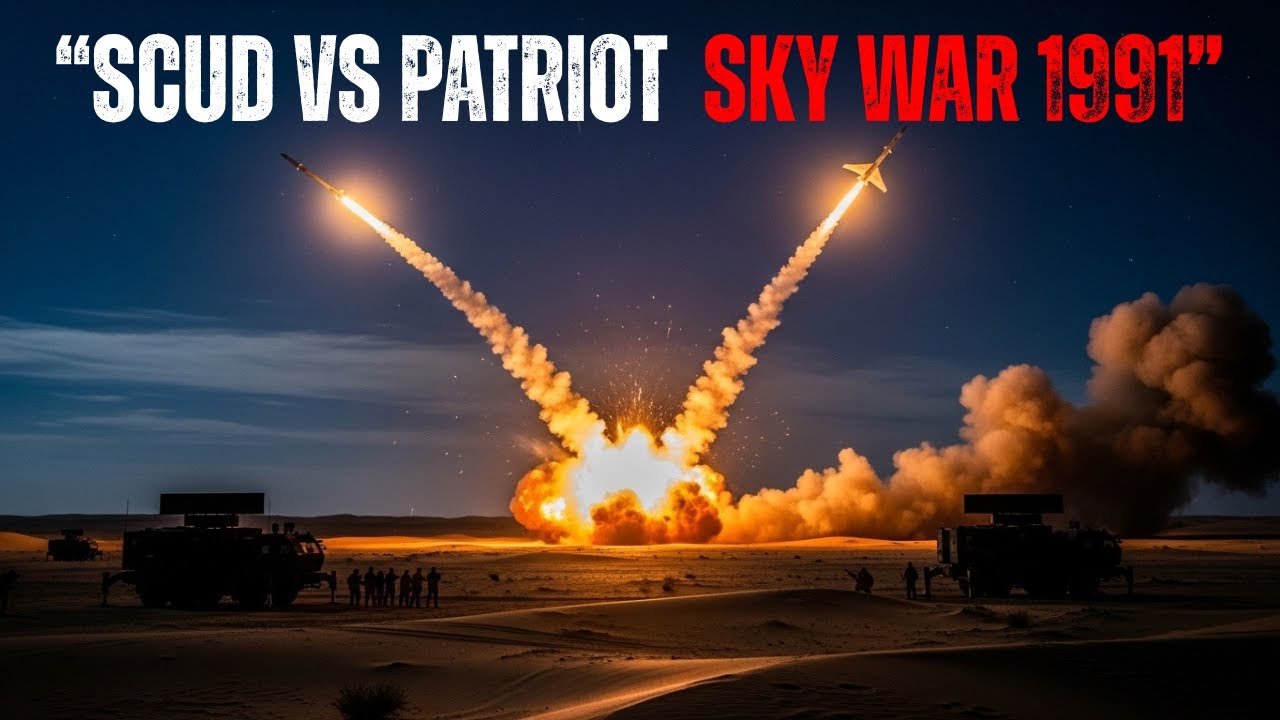
As coalition forces drive Saddam Hussein’s army from Kuwait, a new kind of war unfolds above the desert — a battle not fought between soldiers face-to-face, but between two machines locked in a deadly race against time: the Soviet-built Scud and the American Patriot.
The Scud-B, born from the ashes of the German V-2 rocket, was a weapon of terror — crude, unstable, and terrifyingly unpredictable. Modified by Iraqi engineers into the longer-range Al-Hussein, it carried not just explosives, but fear itself, raining down on cities hundreds of kilometers away. Every launch was a political message… and every impact a reminder that war could reach anyone, anywhere.
Across the desert, American and coalition troops scrambled to respond. The Patriot Missile Defense System — still new, still untested in real combat — was deployed in a desperate bid to protect civilians and soldiers alike. Its radar scanned the night sky, hunting for the faint signature of an incoming Scud. Every intercept attempt was a test of precision, timing, and courage.
For the men on the ground — the radar operators, the maintenance crews, the soldiers sleeping beneath the thunder of engines — the battle was personal. Each launch alarm meant seconds to react. Each failed intercept meant lives lost. When a Scud struck the U.S. Army barracks in Dhahran, killing 28 soldiers, it shattered illusions of invincibility and reminded the world that no defense is ever perfect.
Behind every missile launch and intercept were human hands — engineers who designed, soldiers who operated, and families who waited. It was a technological duel, but also a human story: of bravery under fire, of men and women trusting machines to protect them, and of a generation learning that even the most advanced systems are only as strong as the people behind them.
From the deserts of Iraq to the streets of Riyadh and Tel Aviv, this was the moment modern missile defense was born — forged in panic, tested in blood, and refined by sacrifice.
The legacy of the Scud vs Patriot battle still echoes today, in every missile shield and radar array that guards the skies. It was not a perfect victory — but it was the beginning of a promise: that someday, technology might save lives instead of taking them.
And for those who stood watch in that uncertain night sky — their courage, their vigilance, and their silent endurance remain a testament to every soldier who faces the unseen threat above.
Their struggle may be forgotten by time, but their duty shaped the way the world defends itself today.

Информация по комментариям в разработке