Viladimir Putin Is Hero or Zero | CurrentCrafter
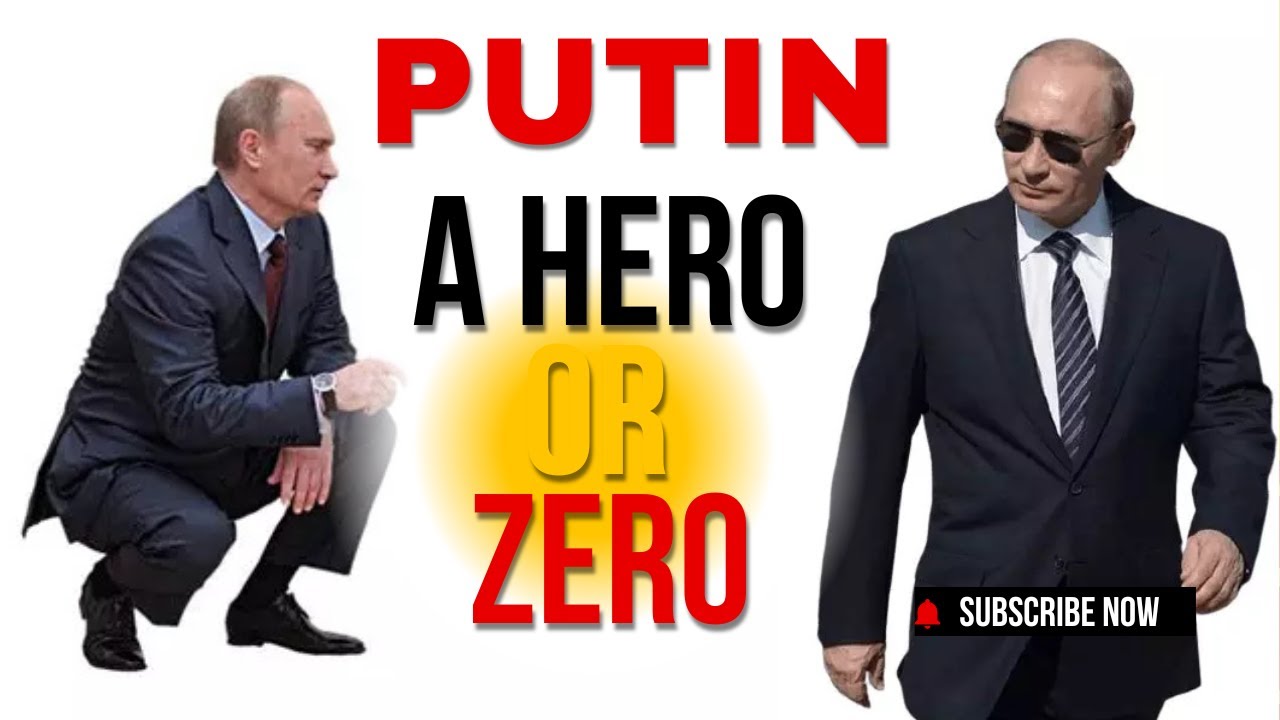
The script discusses Vladimir Putin's controversial leadership, examining his rise to power, military actions in Chechnya, and subsequent invasions of Georgia, Crimea, and Ukraine. It questions whether he is a hero or villain, highlighting the impact of his decisions on Russia and neighboring countries, and the lack of accountability for his actions.
Highlights:
00:15 The perception of Russian President Putin oscillates between being viewed as a hero or a villain, influenced by various historical events during his tenure. Understanding these events is crucial to forming an informed opinion about his leadership.
-Putin's early political career began when he was involved in St. Petersburg's local politics, which included overseeing wheat imports amid corruption allegations. His rise in the political hierarchy was marked by these early challenges.
-The fall of the Soviet Union left Russia grappling with economic turmoil and loss of superpower status, which drove the public's desire for a strong leader. This context plays a crucial role in evaluating Putin's subsequent actions.
-The conflict in Chechnya significantly shaped Putin's reputation, with his rise to power following Russia's military defeats creating a narrative of strength. This backdrop is essential for understanding his actions.
06:18 Putin's rise to power was significantly influenced by the Second Chechen War, which he leveraged to present himself as a strong leader capable of restoring order in Russia. The war, marked by violence and destruction, ultimately helped him gain public support and political legitimacy.
-The Second Chechen War began as a response to Chechen fighters invading Dagestan, highlighting the complex socio-political dynamics in the region. This conflict was pivotal for Putin's political ascent.
-Putin's reaction to the September 1999 bombings in Moscow, which he attributed to Chechens, played a crucial role in shaping public perception of him as a decisive leader. His vow to punish terrorists solidified his image.
-The eventual installation of a pro-Russian leader in Chechnya and the systematic elimination of Chechen resistance underscored Putin's strategy to consolidate power. This brutality was portrayed as a victory that reassured the Russian populace.
12:39 Evidence suggests that Vladimir Putin orchestrated bombings in Russia to consolidate his power. The incidents involved manipulation and suppression of investigations, pointing to a broader strategy to eliminate opposition.
-Two FSB agents arrested for planting bombs in Ryazan highlighted the suspicious circumstances surrounding the bombings. Their eventual release fueled public distrust and media speculation.
-Alexander Litvinenko's book, 'Blowing Up Russia,' claimed the bombings were a fraud used to elevate Putin's political status. His assassination in London significantly impacted Russia-UK relations.
-Investigators trying to uncover the truth about the bombings faced mysterious deaths, indicating a systematic effort to silence dissent. This atmosphere of fear reinforced the public's suspicions.
18:42 Putin's military strategies in Syria and Ukraine reveal a pattern of aggression and siege tactics aimed at breaking the enemy's will. His experiences shape his approach to warfare, demonstrating continuity in his methods over time.
-The heavy civilian toll in Syria, with 8,000 deaths in three years, highlights the devastating impact of Putin's military tactics on innocent lives. This strategy involves extensive bombing campaigns.
-Putin's approach in Ukraine mirrors his earlier tactics used in Syria, showcasing a consistent method of laying siege to urban areas. This method starves inhabitants and forces capitulation.
-Putin's grip on power is further solidified by his relationships with wealthy oligarchs, who benefit from government contracts. This connection is critical for maintaining his authority in Russia.
24:48 Putin's leadership style is criticized for being egoistic and ambitious, which leads to chaos and a significant divide between the rich and poor in Russia. A true leader prepares successors and fosters a capable team, unlike Putin.
-The disparity in wealth distribution in Russia is stark, with 110 billionaires holding a significant portion of the nation's wealth, contributing to societal imbalance.
-The impact of Putin's wealth and power on global standing is noted, as Russian billionaires possess more assets abroad than many world leaders, reinforcing their influence.
-Putin's lack of a succession plan is highlighted as a failure of leadership, contrasting with historical figures like Nelson Mandela who effectively prepared successors.

Информация по комментариям в разработке