Created by InShot
https://v.inshot.com/invite
My YouTube Channel link:
/ @kalachakra5988
My Facebook Page link:
/ laxminarayana.p.3
My Instagram link:
https://instagram.com/laxminarayanabh...
#EiffelTowerSummitTour #MtTitlis #LeaningTowerofPisa #MirjanFort #BruhadisvaraTempleThanjavur #BidarFort #KalaburagiFort #GavisiddeshwaraMuttKoppala #ShreeMahadevaTempleItagi #ShreeTarakeshwaraTempleHanagal #SreeUmaMadhukeshwaraTempleBanavasi #StPetersChurchMalmo #TheLittleMermaidandtheCanalTourCopenhagen #ScenicSwedishTrainJourneyfromOslotoStockholm
********
SCANDINAVIA & the BALTICS TOUR: Part ELEVEN – Vigeland Sculpture Park, Oslo 13.07.2025
Hi friends,
After our Oslo City Rounds, we proceeded to visit the Vigeland Sculpture Park located within Frogner Park, in the west end borough of Frogner in Oslo.
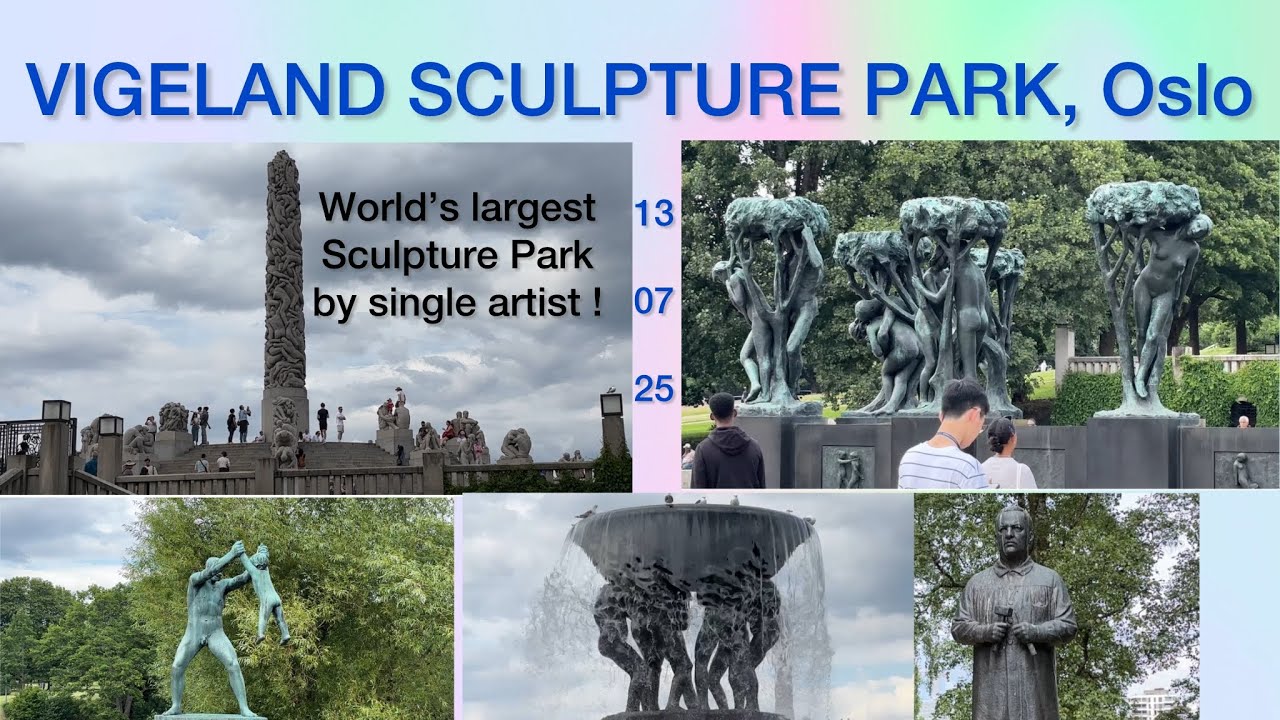
Vigeland Sculpture Park is Oslo’s top most tourist attraction receiving more than one million visitors annually. It is the largest sculpture park in the world by a single artist Gustav Vigeland. With more than 200 statues to look at, the entrance to Vigeland Sculpture Park is free, and it is open all year round, making it a must-visit attraction in Oslo.
Vigeland Sculpture Park is an open exhibition that showcases the amazing work of Gustav Vigeland, a Norwegian sculptor, in a 80 acre area within the Frogner Park. There are about 212 granite and bronze statues he created over two decades. He also designed the architectural setting and landscape of the entire park. The sculptures are placed on a 850 metre long axis which is then divided into 5 main units: Main Entrance, The Bridge [with children’s playground], The Fountain, The Monolith Plateau, and The Wheel of Life.
The statues are raw and naked figures. As bizarre as they may look, the statues of Vigeland Sculpture Park depict human condition from birth to death. If one notices closely on each of these statues, there’s a lot of emotions – fear, joy, anguish, anger, revenge; and each of these statues tells a story about life.
Before I proceed further, there is a need to differentiate between ‘Nudity & Nakedness’ – while nakedness is natural, nudity is artistic; while nakedness may look ignoble, nudity lifts up the base instincts to a higher level of refinement of senses leading to sublime appreciation.
The statues has men, women and children portrayed in different ages with varied emotions. The Bridge is 100 metres long and 15 metres wide and was originally built in 1914. Gustav later re-designed the bridge during 1925-1933 and added his signature of 58 sculptures that are made of bronze. These sculptures include a variety of emotions rendered by children, men and women and their relationships.
It was in 1924 the location for the fountain was finalised. Surrounded with 20 tree groups on the sides, the centre of the fountain depicts six people carrying a large vessel. If you notice closely, the tree groups contains figure of a man depicting his life from cradle to grave.
The most captivating part of the park is the Monolith, a 46 ft high imposing column located at the highest point of the park. The Monolith contains 121 colossal human figures braided together carved out of a single piece of stone. The Monolith is surrounded by various 36 granite statues that depict cycle of life. It took 10 months for Gustav to do the design, 3 stone carvers and 14 years to finish this masterpiece.
About Gustav Vigeland [April 11, 1869 – March 12, 1943]:
Gustav Vigeland, born as Adolf Gustav Thorsen, is the most celebrated sculptor in Norway. Gustav Vigeland occupies a special position among Norwegian sculptors, both in the power of his creative imagination and in his productivity. He moved to Oslo as a teenager and made a significant impact on the city, most notably by creating Vigeland Park. He made his debut at the Autumn Exhibition in 1889 and went on to make a remarkable number of critically acclaimed sculptures and monuments.
He conceived the idea of creating an outdoor park for his sculptures in 1914, and full plans were agreed by 1931. Vigeland also convinced the City of Oslo to build him a home and studio, where he lived and worked for the rest of his life. In return, he promised to donate all his works to the city in the future, and indeed after his death, his home was turned into the Vigeland Museum.
At the farthest end is located ‘The wheel of Life’ which is a symbol of eternity and is here executed as a garland of women, children and men holding on to each other. In a sense, this sculpture sums up the dramatic theme of the entire park: Man's journey from cradle to grave, through happiness and grief, through fantasy, hope and wishes of eternity."

Информация по комментариям в разработке