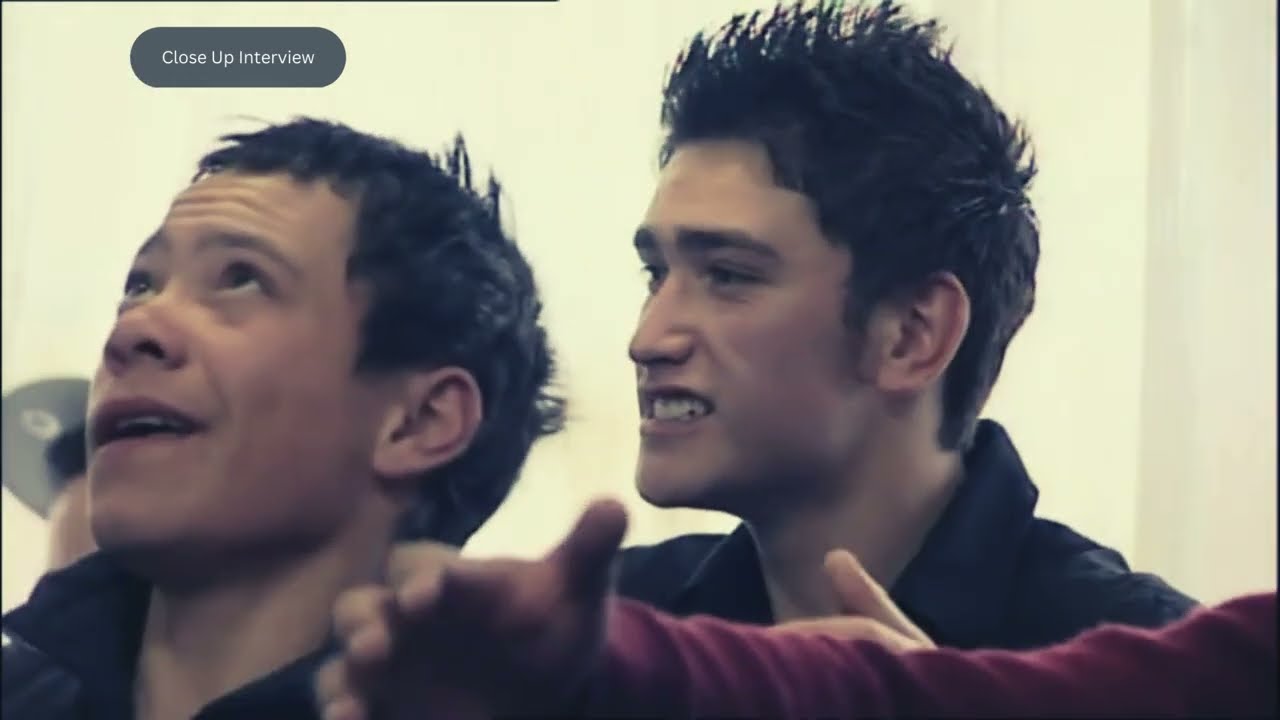
I found this in the archives last year while going through some personal learning during a period where the people around me were very toxic. As a lifelong learner, the first step I took was to ensure that I wasn’t the toxic one before I refocused and validated myself. Among other materials that helped affirm my authentic nature, I discovered this interview.
This interview was conducted in my final year of high school. I had caught the attention of many in my community due to a transformation I had undergone that was unprecedented for those around me. I had been in foster care since I was three years old. My parent was violent towards me, neglected my needs, and thus CYFS removed me from her care. She tried to raise me on her own without any support. Growing up without her father, she struggled to develop healthy connections with men. I know she loves me, and I am committed to honoring her memory. I met my father only twice before he passed away when I was 12. My mother died over a decade later.
I entered care and moved through various homes right up until my last year of high school. During that time, I experienced malice, betrayal, tyranny and greed throughout different schools and foster homes. I was sexually active by age 5 with various partners both in and out of care until I reached 9, when I realized it was wrong and not normal. From ages 9 to 12, I was around a considerable amount of prostitution while living in and out of different homes. I was kicked out of schools, and would smash cars and houses out of anger.
Despite being neglected, I also experienced a fair degree of acceptance, validation, commitment, and generosity throughout my upbringing. My uncles and aunties were my saving grace. I struggled academically until I turned 12. Living with my uncle Fred changed everything for me. He taught discipline and how to be successful in whatever I pursued. In the year I spent with him, I advanced my guitar and piano skills, performed with a band at the Smoke Free Request, participated in kapahaka, and won many chess tournaments, including a national title. I played rugby and water polo and represented my school in 100m sprints, recording times of 11.6 seconds. I excelled academically being put in the top streams and placing top of the class. I devoured science books that year and even read an autobiography of Ernest Rutherford. I developed a strong love for science and decided that I wanted to attend the all-boys boarding school in the South Island that Rutherford had attended, one of the top 5 schools in the country. I applied for an academic scholarship and was awarded it due to my IQ score being 140 at the time. Unfortunately, once I began boarding there, I struggled to manage my toxic tendencies, which led me into a life of crime. I was placed into an academically accelerated class, two years ahead of my peers. However, my behavior in the hostel prompted my social worker to send me to a more indigenous environment to reconnect with my identity. This setting was also a boys' boarding school, but it embraced Catholic and Māori values. I spent three years in that environment, boarding in the first year and, in the second year, I embraced my criminal side, switching to being a day student for more freedom. I still attended school daily to keep my academic options open. Tired of being under someone else's control, I chose to sleep and live on the streets. My criminal pursuits kept me alive, and my intelligence helped me excel in that world. I built networks and a strong street reputation, attended parties, engaged with gangs, and was hyperactive with women. By the end of my second high school year, police were familiar with me, and many of my victims were innocent community members. I was arrested for stealing a car, which led to a police chase until the car crashed. I was reprimanded and during the ride to the cells the officer said "You're better than this." The following morning, I went straight to the foster care facility and requested a foster home. In my third year of high school, I transformed. I decided to change schools. The indigenous school lacked government support for the sciences. No resources for my passion for science, so I transferred to the larger local Feilding High School. This video reflects my journey at Feilding High School.
Serving as a reminder of the many challenges you face in life, we can overcome difficulties that are beyond what many are accustomed to. Trauma is a gift that helps grow our understanding of human nature, and goes much deeper than what most people are comfortable exploring. This realization reinforces that trauma is often misunderstood by many who experience little of it. Trauma teaches us to renounce greed, betrayal, tyranny, and malice and to live with acceptance, validation, commitment and generosity. Those who don't experience much trauma stay greedy and never learn acceptance. I hope this video inspires you when you next experience trauma.

Информация по комментариям в разработке