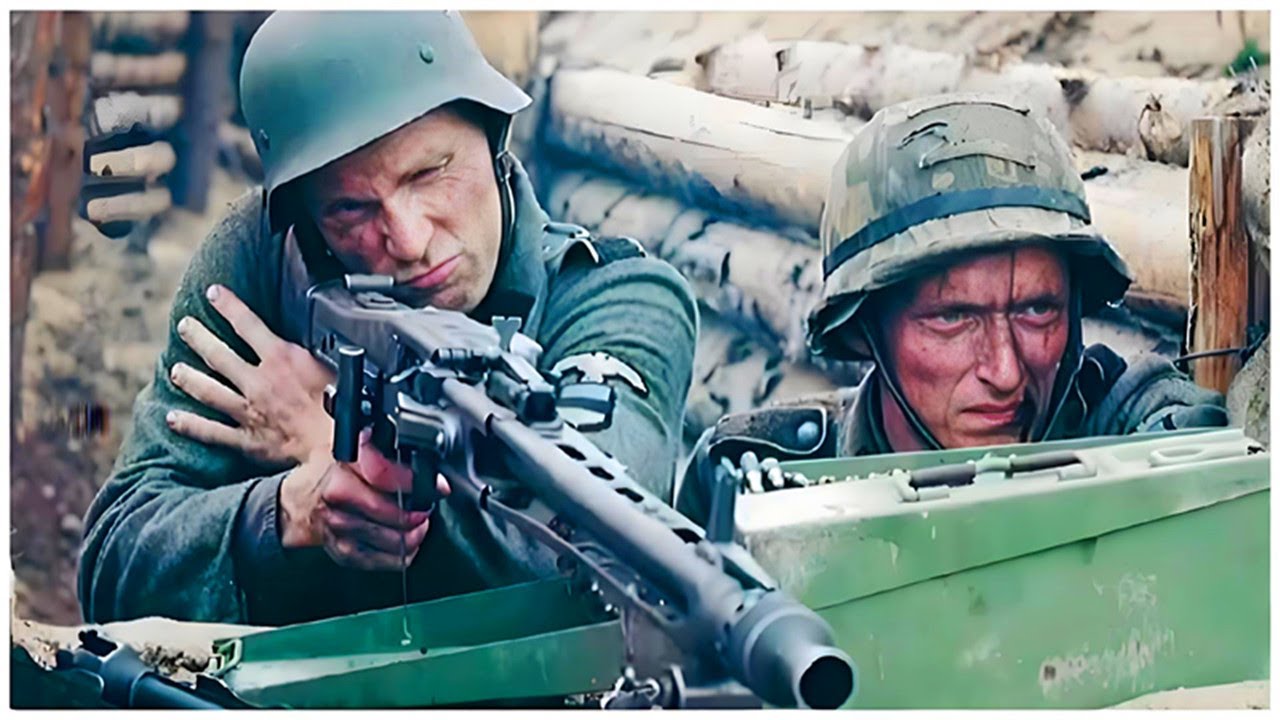
In 1944 ...... a series of battles were fought between German forces and the Soviet Leningrad Front for the Isthmus of Narva.In July the Soviets captured Narva, an ancient city that had served as a demarcation line between Russia and the Western world for nine centuries. Behind Narva, the Tannenberg Line was the last line of defense for the Estonian capital of Tallinn, and a group of young Estonians in their early 20s volunteered for the 20th Division of the Waffen-SS Pro-Guard, and began to fight against Soviet armored forces on the Eastern Front, fighting against Soviet occupation.
This was not the first time that Estonia had been reduced to a battleground where East and West, Germans and Slavs, were at war. The battle had been going on for more than seven hundred years, counting from the Great Ice Battle at Lake Chud, and the Estonians caught in the middle were inevitably wrapped up in both sides and became victims of history. ......
By September, with Finland announcing the cessation of military cooperation with Germany and the signing of the Moscow Armistice, the German army, with its back against the wall, decided to withdraw from Estonia. Soviet troops followed the Germans all the way to Tallinn, the capital of Estonia, and the soldiers of the Red Army in Estonia (Russianized Estonians) witnessed that the blue, black and white tricolor flag, which symbolized the independence of the Estonian nation, was finally destroyed by the Germans on September 18th, when the Germans withdrew from the city of Tallinn, after four days of flying the symbol of Tallinn, the Hermann Tower. , it was finally replaced on September 22 by the red flag of the Soviet Union. ......
The capture of Tallinn was not the last battle between the Soviets and Germans in Estonia. ...... In November, in the muddy, dense forests of Saaremaa Island, Estonian soldiers held their own against the fire of German ships and expelled the last of the Estonian German troops. The large-scale war was finally over, but peace and freedom had not yet come to this tiny country, and the wounds inflicted by the war were still hard to heal. ......
This, then, was the year 1944 for the Estonians.
Directed by Elmo Newgarnon, written by Leo Kunnas, starring Caspar Wilberg and Christian Uxcurla
/ @cloud52theater

Информация по комментариям в разработке