Blue Lei - M. Beamer, R. Alex Anderson (1940). Anderson and Beamer were twin luminaries of the Hawaiian musical scene back in the day. In fact, Anderson had a very long life, and kept churning out both words and music for as long as he was around. I’m no authority on Hawaiian music, but I suspect that this tune is pretty well known over there. A search through youtube and archive.org produces the following list of recordings: Royal Hawaiian Serenaders, Napua, Noelani Mahoe, Daphne Walker, The Kahauanu Lake Trio, Bill Akamuhou, Andy Cummings’ Hawaiian Serenaders, George Archer and the Pagans, George Kainapau.
My source: R. Alex Anderson's Famous Songs of Hawaii, a great collection. This tune was written for the 1937 Paramount movie "Waikiki Wedding" starring Bing Crosby, Bob Burns, Shirley Ross and Martha Raye. Copyright 1940, 1969 by Alex Anderson Music Inc.
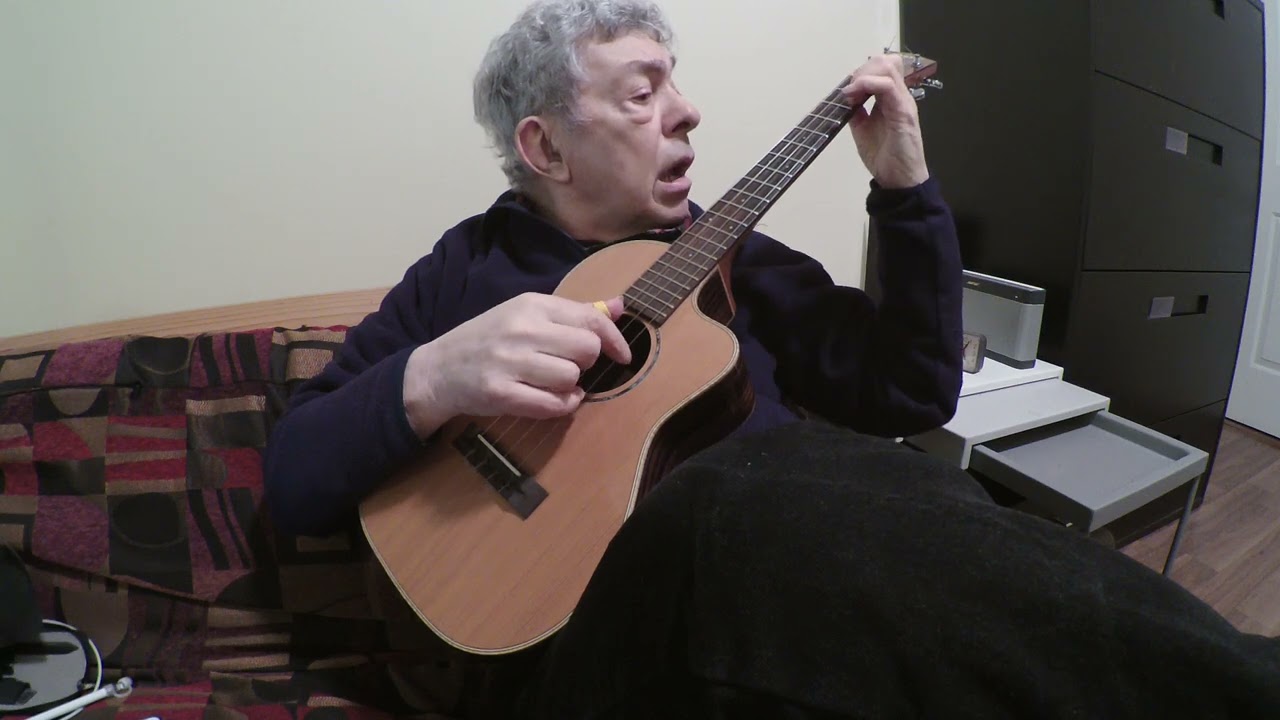
Actually, I first heard this song as covered by a near-neighbour, the Canadian jazz vocalist Diane Nalini, who did a marvelous, swinging version of it. Diane enjoys the further distinction of playing an LFdM uke (Luis Feu de Mesquita), who also happens to be the builder of my go-to tenor. That said, I should mention that I’m using my Pono baritone here, because the tenor key is uncomfortable for my voice.
I recorded this song a few years ago, but what you’ve got here represents a complete overhaul. For one thing, when I first learned the tune, I set it in the key of Bb. What was I even thinking? Anyhow, the tenor uke arrangement is now in A, which means that the baritone pitch is E. There’s an 8-bar verse to set things up, into a 32-bar A-B-A-C chorus, to which I’ve added a few bars to conclude. I would say the main thing to notice here is: the melody is no picnic. As breezy and carefree as things sound, a perfect day at the beach and all that, the tune is replete with chromatic passing tones and, even more difficult, with leaps onto notes placed a semitone below the normal, or diatonic, scale degrees. So try it out, but I’d say this is not one for amateurs. Taking the beginning of page 2 as “bar 1” (the first time you hear “blue lei”), check out the B# in the lead-in (“You were wearing a”), also the A# in bar 6, the diminished 7th jump to the E# in bar 21, the diminished fifth to the Fx (F sharp sharp) in the next bar, etc. So caveat cantor, as they might have said if they spoke Latin.
pdf
https://drive.google.com/file/d/1Jt5m...

Информация по комментариям в разработке