Celebrating Holi Festival in Foreign - A Colorful Experience!
Holi, also known as the Festival of Colors, is one of the most vibrant and joyous festivals celebrated in India. It marks the arrival of spring and is a time for people to come together and celebrate the triumph of good over evil, forgiveness, and new beginnings.
The festival is celebrated on the full moon day in the Hindu month of Phalguna, which falls between late February and mid-March. The celebrations usually last for two days, with the first day known as Holika Dahan and the second day as Rangwali Holi or Dhulandi.
Holika Dahan is a ritualistic bonfire that takes place on the evening before Holi. People gather around the bonfire and throw offerings into it, such as dried leaves and twigs, signifying the triumph of good over evil. It is also believed that the fire will purify the air and protect people from diseases.
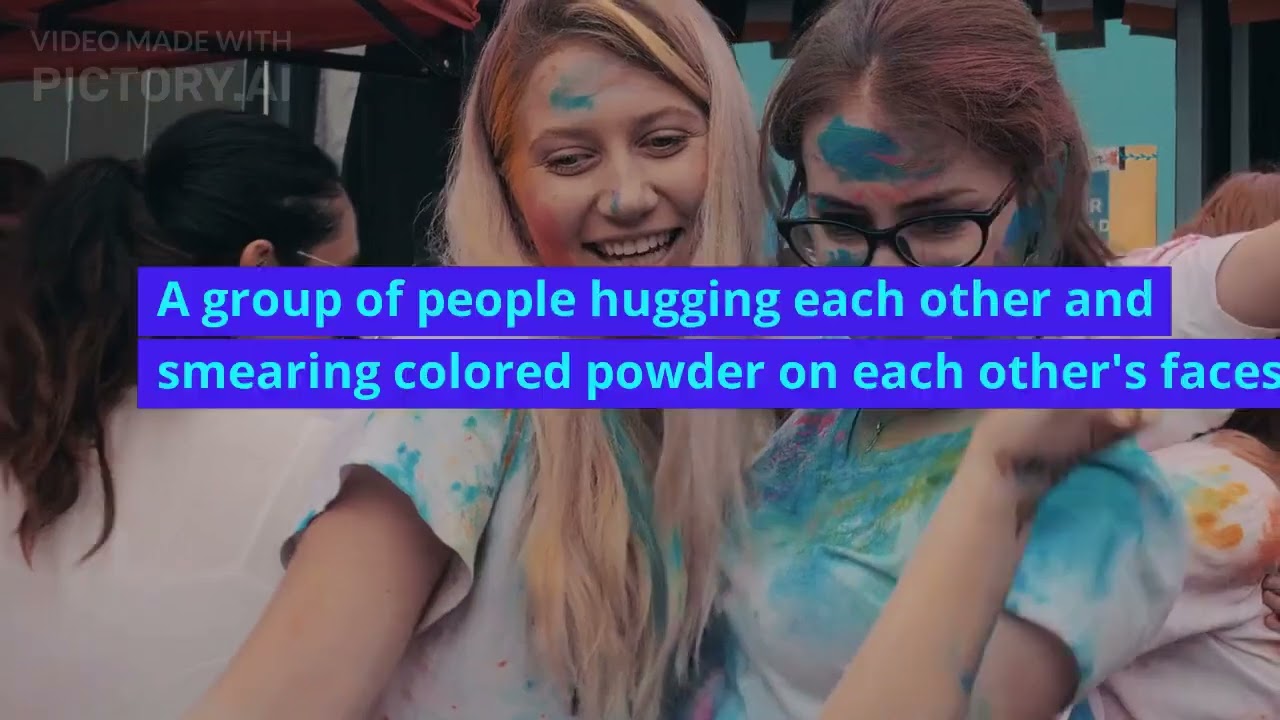
The following day, people gather on the streets and in open spaces, armed with colored powders, water guns, and buckets of colored water. They drench each other in a kaleidoscope of colors, with the air filled with laughter, music, and joy.
The colors used during Holi have a special significance. Red symbolizes love and fertility, yellow represents happiness and peace, green signifies new beginnings and harvest, and blue is associated with the god Krishna, who is believed to have loved the color.
Apart from the fun and frolic, Holi is also a time for people to come together and forget their differences. It is a time to forgive and forget, to mend broken relationships, and to spread love and harmony. The festival transcends religious and social barriers, bringing people from all walks of life together.
The festival is celebrated with great enthusiasm all over India, but some places have their own unique traditions and celebrations. In Mathura, the birthplace of Lord Krishna, Holi is celebrated for several days with processions, dances, and music. In Vrindavan, the festival is celebrated with flowers instead of colors, and in Barsana, women chase men with sticks, a tradition known as Lathmar Holi.
However, with the ongoing pandemic, the celebrations are expected to be more subdued this year, with many people opting to celebrate at home with their families. Nonetheless, the spirit of Holi remains strong, and people are finding new ways to connect and celebrate while maintaining social distancing protocols.
In conclusion, Holi is a festival that is not only a celebration of spring and colors but also a celebration of unity, forgiveness, and new beginnings. It is a time for people to come together, forget their differences, and spread love and joy. Whether you celebrate it with your family at home or with the larger community, Holi is an experience that is not to be missed!

Информация по комментариям в разработке