Music Credits:
BenSound - https://www.bensound.com/
Find out more about the MRC LMS Single Molecule Imaging Group 👉 http://ow.ly/yooS50H53cj
Video Transcript:
So, I came to the LMS in 2012, having been in a chemistry department in the U.S. for 7 years. My background is in chemical engineering and physical chemistry, but I have been doing biophysics since my Postdoc.
I came to the LMS for several reasons. I was looking for an environment where I could develop and take advantage of the tools that I had been developing for the last few years and apply them to more physiological systems and more interesting biological questions. So, for example, recent work with the Aragon lab has helped us really team up a number of postdocs and students to tease out the mechanism of an important family of enzymes called the structural maintenance of chromosome complexes, which are involved in the formation of chromosomes, in the segregation of chromosomes, in DNA repair, in DNA replication.
These are really fundamental protein complexes that structure the chromatin inside the nucleus of eukaryotic cells and regulate gene expression and are really important for the correct division of the cell. And so, thanks to the fact that we are right here next to the Aragon lab and Enrique Martinez lab, we now have access to a number of people who are working in both labs, purifying high quality complexes, high purity complexes, and using them on the single molecule machines to really investigate how these DNA loops are made, the fundamental steps of the loops, what factors block them in chromatin, something like nucleosomes, and what chromatin factors such as FACT help these motors form these chromatin loops in cells.
Having been trained as a chemical engineer and a physical chemist, I knew very little about cellular biology, and coming here has allowed me to push this RNA Mango technology to develop single molecule imaging tools in mammalian cells at a single molecule level. So, we can now track single RNA molecules with very high contrast using these tools and we can also look at small non-coding RNAs, long non-coding RNAs, both in fixed and live cells. And this has been thanks to the help and the support from many groups at the Institute. Notably, the group of Matthias Merkenschlager with whom we work very closely as well. So, pushing this technology that we initially developed in the chemistry department and applying them in a more biological setting and physiological setting has helped us learn a lot about how to use these in useful cellular systems, which is ultimately the physiological environment where these biochemical reactions take place.
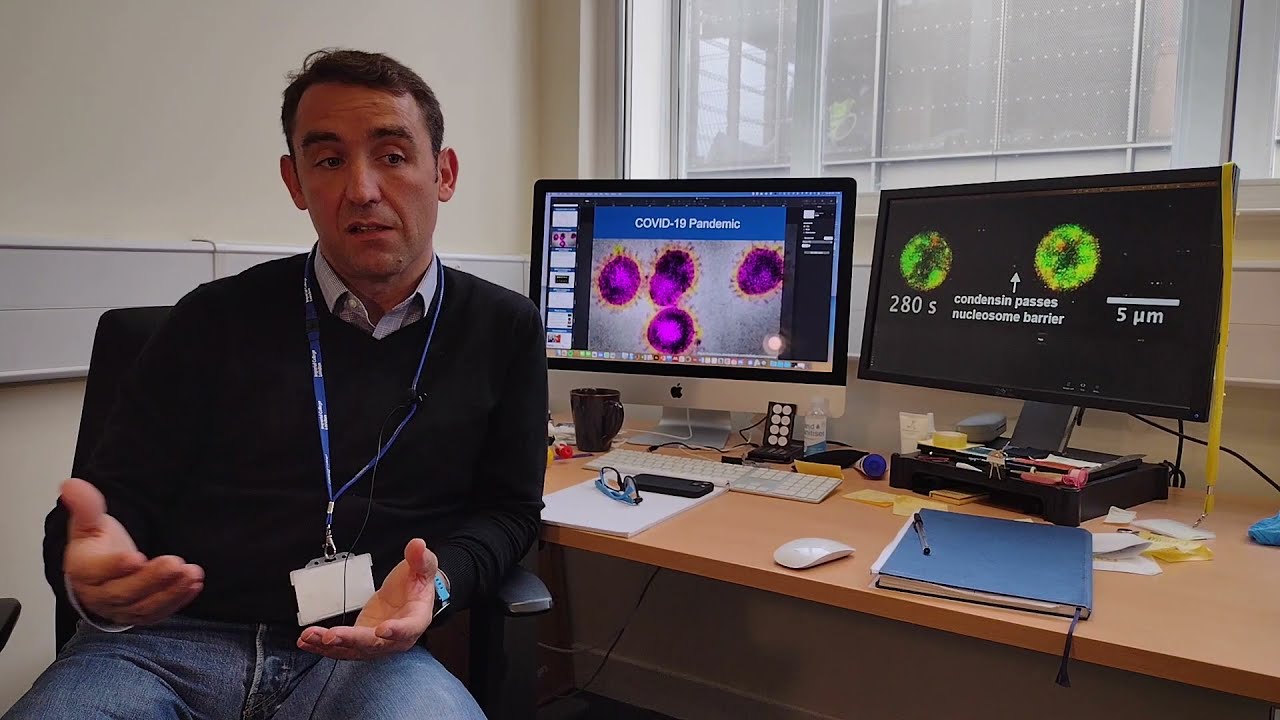
The benefits of being where we are located have transpired during the last pandemic in 2020. So, during the pandemic, we started thinking about how we could help, and it occurred to us that we can use our Mango technology and translate it into a rapid technology for detection of viral RNA. And this has been possible because we are at the interface between Imperial and the LMS, and we are located at Hammersmith Hospital, where we found the inspiration to develop this new technology that allows us to detect viral RNAs in untreated saliva samples in less than 30 minutes, which is now a technology that we are trying to translate into the clinic and commercialize for a start-up company that we recently started.

Информация по комментариям в разработке