For players of ANY background/level, break out of old patterns, attract new opportunities, and rediscover inspiration. https://swiy.co/Big_Christmas_Giveaway
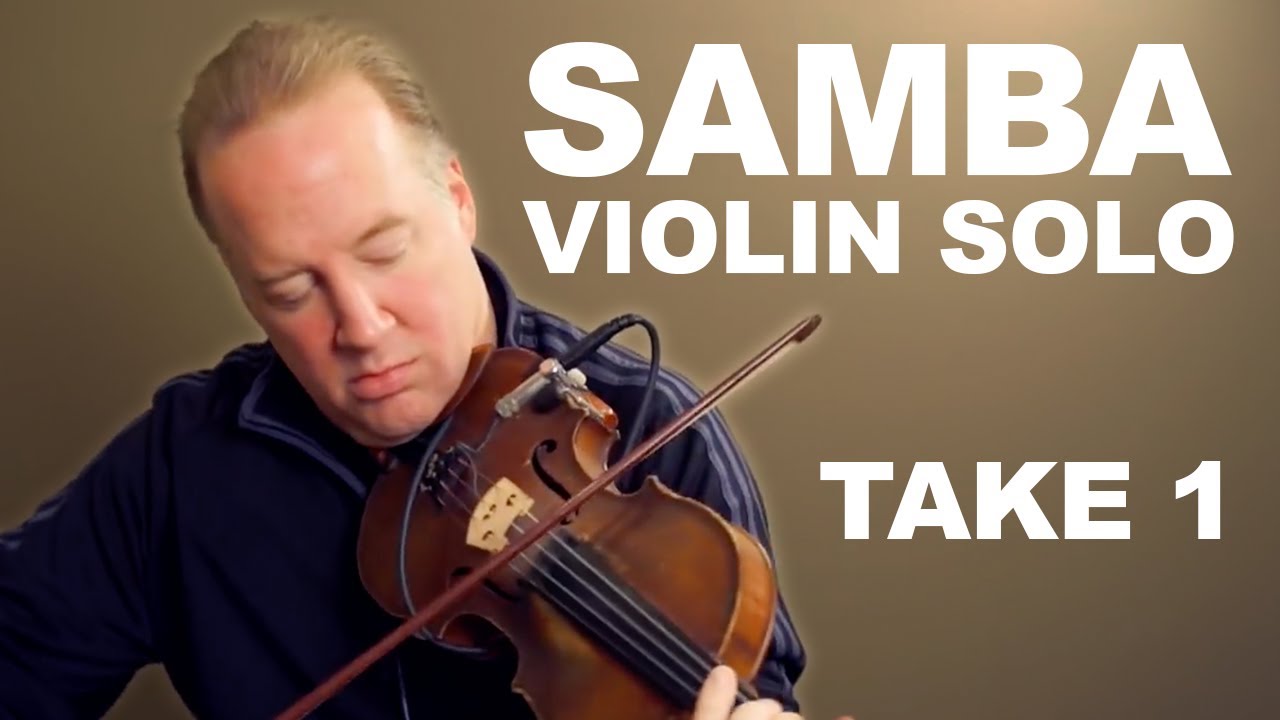
Get the transcription of the improvised violin solo on "Tristeza", plus analysis and full tutorial course here: https://christianhowes.mykajabi.com/s... "How to Play Bossa and Samba" for violin, cello and all bowed strings.
Bossas are a wonderful gateway for classical musicians to expand on their classical training.
I wanted to share a brand new free video tutorial playlist. It breaks down “How to Play Bossa and Samba” into concrete steps, and I’m especially excited for the impact it can have for string players and teachers.
To supplement this new playlist, I’ve created a new deep dive course complete with transcriptions and analysis. Academy members will all get access to the course this week. So you can get it at a discount for now here, or simply join the Academy.
First, a couple questions:
➡ you think Brazilian music has any special relevance for your and/or your students?
➡ Is playing Brazilian music easier or harder than playing music that swings (for you/your students)?
I have a theory, but I’m curious about your answers, and whether they change after you watch the video. Leave a comment underneath the video to let me know.
(Spoiler alert) Here’s what I think: There’s often a gateway style that leads classical musicians to do more. For me the gateway was rock music during high school that primed the pump to be open to modern jazz, composition, arranging, and more.
Some styles are easier for classical musicians to access and assimilate due to the relative familiarity of rhythms, harmonies, or melodies. Jazz, with it’s reliance on triplet-based swing, complex harmonies, and unfamiliar melodies, can be difficult for classical musicians.
Bossas and Sambas, like Rock, with their reliance on duple feel, may be a more logical next step to follow on Rondos, Allegrettos, and Allegros. It still offers plenty of challenges, which are complimentary to those found in rock, funk, bluegrass and other styles.
That’s my theory, and it’s why I think Bossas, Sambas, and Choros are perfect for classically trained musicians to gain fluency and creativity.
For one, they are based in duple instead of the unfamiliar triplet feel of swing.
A common problem for classical musicians when branching out is taking on too much new information at once.
For example, when you start trying to learn jazz, you’ll be confronted with a new rhythmic language, the new challenge of navigating harmony, new melodic language, and the new concept of improvisation.
Bossa/Samba or other Brazilian grooves offer enough of a rhythmic challenge without being from a different planet. if learning swing is like an English speaker learning an African spoken language, learning the rhythmic language of Brazil is more like learning a latin spoken language- there’s more of an anchor to latch onto. Students therefore experience more success and are more likely to stick with it.
This is similar with Rock music and/or some Appalachian feels. They are for similar reasons ideal “gateway” styles to other forms like Jazz. One thing which Brazilian music offers different from Rock or Bluegrass is an introduction to Latin claves and rhythmic feel, as well as more Jazzy harmonies.
Trying to learn swing feel for classical musicians is a bit like a right handed person trying to learn a new skill left handed.
#ChristianHowes #HowToPlayBossaNovaViolin #SambaViolin

Информация по комментариям в разработке