Welcome back. Our 5th video in this series is titled: Cost to Hire a Controller: Employee or Outsourced. Thank you for continuing to join us.
The salary range and total compensation package for a controller can vary based on several factors, including the location of the company, the industry it operates in, the size and complexity of the organization, as well as the qualifications and experience of the individual being hired.
We will use a salary comparison for Lancaster, Pennsylvania, a city of 57,000 where my office is located.
I am using this city because it has a reasonably low cost of living while still having a strong manufacturing base and professional workforce.
If you live in a major metropolitan market, you may need to increase these numbers by 10-25%, perhaps more.
Keep in mind that compensation packages can also be influenced by market conditions, the specific needs of the company, and the company budget to hire for the position.
Here are some key factors that can affect the pay range for a controller:
1. Education: A bachelor's degree or equivalent in accounting, finance, or a related field is typically a minimum requirement.
Many controllers have advanced degrees, such as a Master of Business Administration ( an MBA) or a Master of Accounting (a MAcc), which can command a higher salary.
2. Professional Credentials: Holding relevant professional certifications can increase a controller's earning potential.
The most common credential for controllers is the Certified Public Accountant designation, the CPA.
Other certifications, such as Certified Management Accountant (CMA) or Chartered Financial Analyst (CFA), are also to be considered advantageous.
3. Experience: Total years of experience in finance and accounting, particularly in progressively more responsible roles, will have a significant impact on compensation.
Relevant industry experience or specific expertise in areas like financial analysis, budgeting, and compliance are also valued.
4. Company Size and Complexity: Larger and more complex organizations typically offer higher salaries for controllers due to the increased responsibilities and challenges associated with managing larger financial operations.
The industry the company operates in can also influence compensation, as certain sectors require specialized knowledge.
5. Additional Benefits and Perks: In addition to base salary, compensation packages often include bonuses, profit-sharing, or stock options based on company performance.
Benefits like health insurance, retirement plans, paid time off, and professional development opportunities can also be part of the total compensation package.
Next, we will provide salary ranges for a Controller in Central Pennsylvania.
To accumulate data for salary ranges we turned to two sources: .
These two sources are used by HR professionals I know and trust.
We combined salary data for the job position and leaned toward the more conservative set of numbers.
As always, we recommend working with an HR professional to have salary research reports, job qualification requirements, desired work history, technical skills and soft skills complied for your job position requirements.
As I move through the explanations, we will show images with the data being discussed highlighted in medium blue, just like you see here.
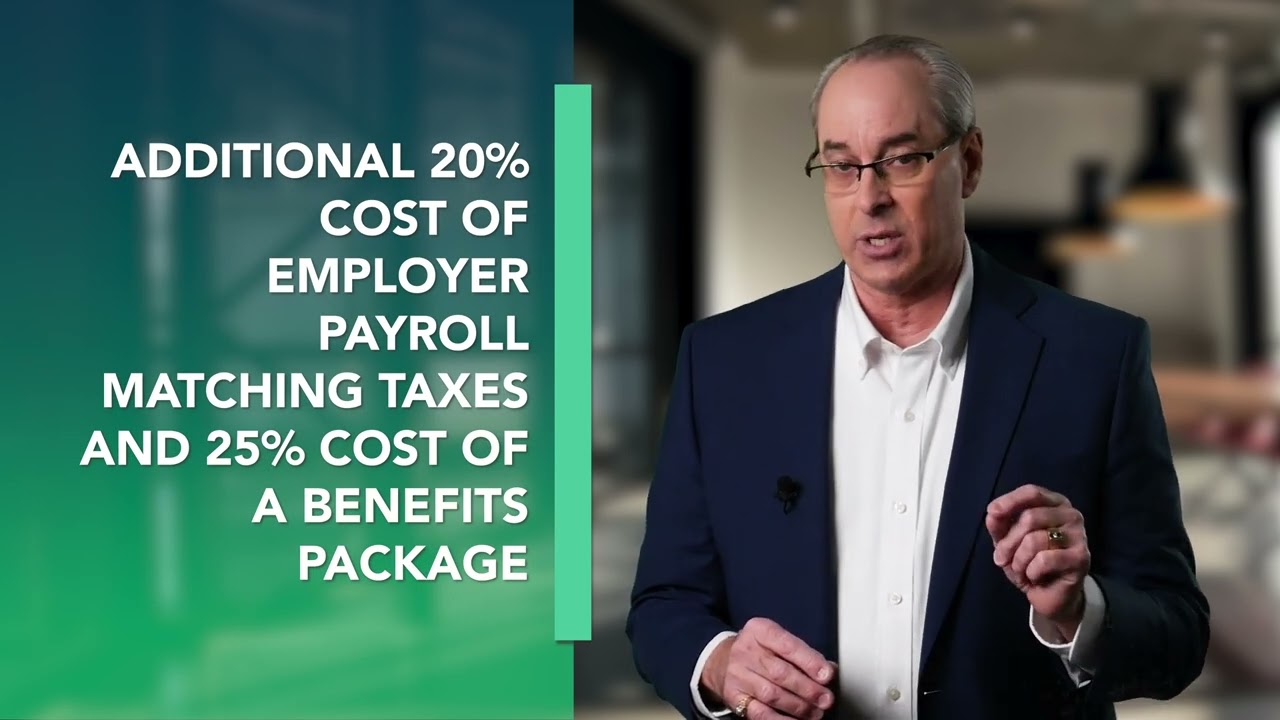
We are making the assumption with each of these examples that the salary amount will have 45% added to it.
This is to cover the additional 20% cost of employer payroll matching taxes and 25% cost of a benefits package.
Of course, these amounts will vary from company to company and state to state.
First, we review an Entry-Level Controller. They are projected to receive $70,000 - $100,000 per year as a salary.
The addition of benefits and employer costs bring the total cost to the company of the $70,000 salary plus 45% additional to $101,500 per year: an equivalent of $48.80 an hour.
The $100,000 salary plus 45% totals $145,000; an equivalent of $69.71 an hour.
Next, a Mid-Level Controller, having 5-10 years of experience, is projected to receive a salary of $100,000 - $150,000 per year.
The addition of benefits and employer costs bring the total cost to the company of the $100,000 salary plus 45% to $145,000, an equivalent of $69.71 an hour.
The $150,000 salary plus 45% is a projected total cost to the company of $217,000, an equivalent of $104.57 an hour.
Looking next to a Senior Controller having 10+ years of experience, possibly with an MBA, CPA or similar credentials is projected to receive a $150,000 - $250,000 salary per year.
The addition of benefits and employer costs bring the total cost to the company for the $150,000 salary plus 45% to $217,000, an equivalent of $104.57 an hour.
The $250,000 salary plus 45% results in a projected $362,500 , an equivalent of $174.28 an hour.

Информация по комментариям в разработке