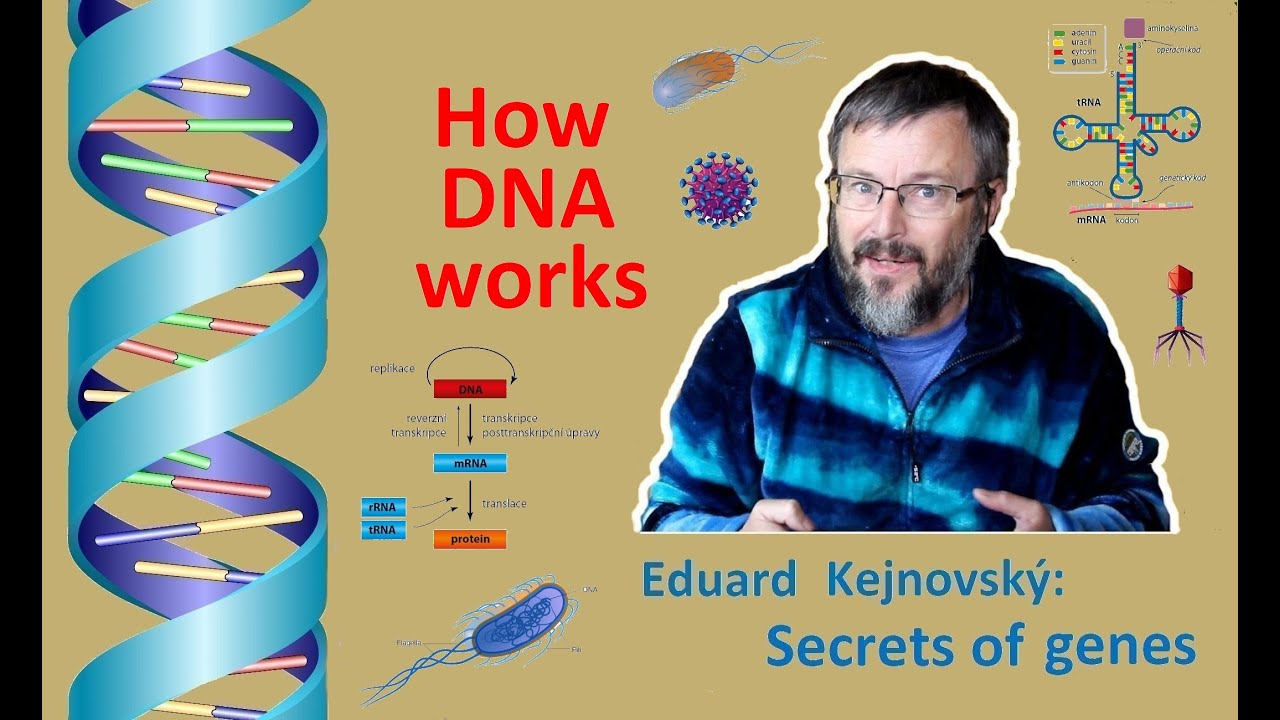
How do genes work? What is DNA made of? How is the genetic information stored in DNA realized?
This video was originally created in Czech and has been dubbed into English using AI-generated voice technology and AI-based lip sync.
The 18th episode of a series on genetics and evolution, covering a wide range of topics from the origin of life on Earth to the human genome. Keywords: Genes, genetics, epigenetics, genetic code, DNA, RNA, protein, evolution, origin of life, life, virus, bacteria, biology, thermodynamics, Darwin, microorganism, panspermia, black smokers, Cambrian explosion, cyanobacteria, photosynthesis, molecular biology, polyploidization, repetition, microsatellites, transposons, telomeres, centromeres, GMOs, promiscuous DNA, horizontal gene transfer, evolution and the human genome, microbiome, holobiont, genes and environment, Neanderthals, Denisovans, epigenetics, genetic fingerprinting, advantages of hereditary diseases, milestones in genetics – Mendel's and Morgan's laws, jumping genes or transposons, DNA as hereditary material, DNA double helix, deciphering the genetic code, restriction endonucleases, DNA sequencing, PCR, genome editing. Methods of reading genomes. Human genetic variability. Genomics and other -omics. Archaeology and DNA. The influence of thinking on DNA. Genes and sports. Genes and our tastes. Humanization of humans. Longevity genes. Mendel, Darwin, Lamarck. Genetic engineering. CRISPR-Cas9, eugenics. Bacterial genes in the human genome. Faster evolution in the tropics. RNA obelisks. Evolution – continuous or in leaps? Evolution of complexity. Reading the koala genome. Gene therapy. The most common hereditary diseases.
Информация по комментариям в разработке