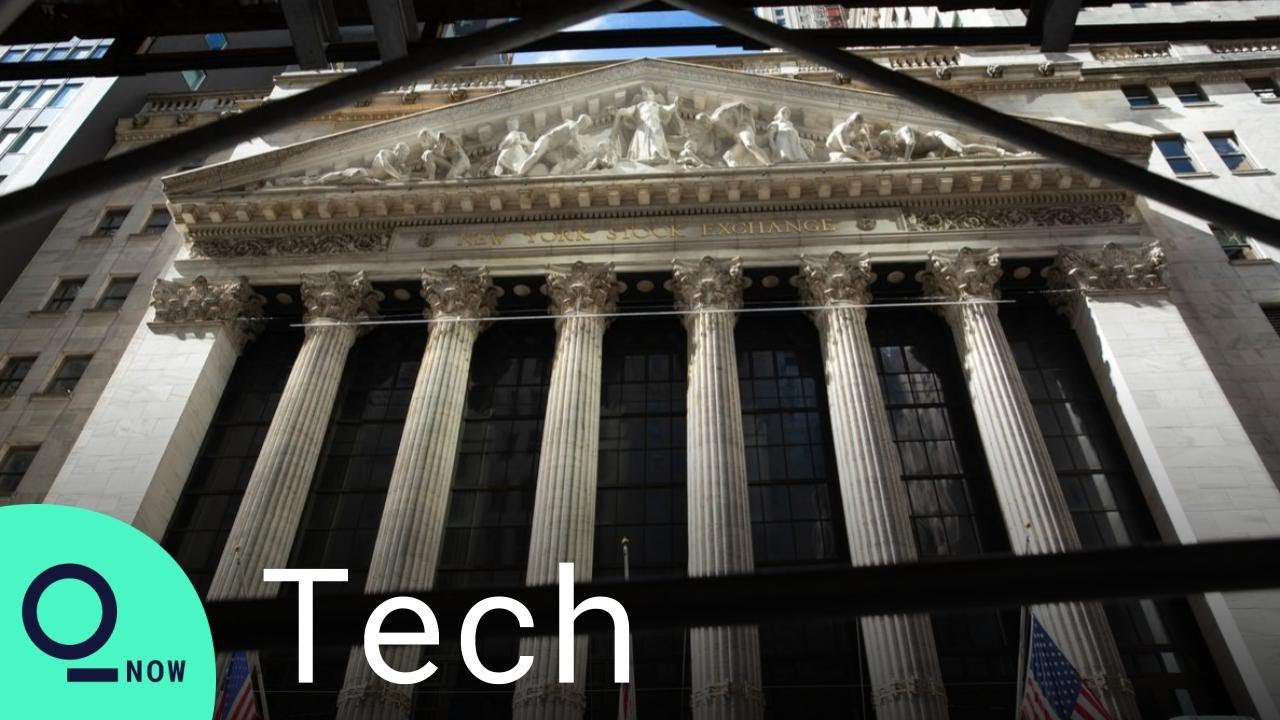
China’s state-owned telecommunications companies declined in Hong Kong after the New York Stock Exchange said it’s delisting them to comply with a U.S. executive order that sanctioned companies identified as affiliated with the Chinese military.
Shares of China Mobile Ltd., the largest of the three, fell as much as 4.5% on Monday to their lowest level since 2006, while China Telecom Corp. dropped 5.6%. The two posted their biggest intraday losses since mid-November. China Unicom Hong Kong Ltd. slipped 3.8%. The stocks pared most of those losses later in the day.
The American depositary receipts of the three firms will be suspended from trading between Jan. 7 and Jan. 11, and the process of delisting them has started, NYSE said. The nation’s oil majors including CNOOC Ltd. also fell on concerns they will be targeted next for delisting in the U.S.
“It’s largely a blow to sentiment” that could be temporary, said Mark Huang, an analyst at Bright Smart Securities in Hong Kong. “Though the ADRs are not exceptionally large, there’s some impact on fundraising. Some passive index tracking funds may be selling to avert risk. More importantly, this is another reason to dump telecoms and pursue outperforming sectors.”
NYSE’s move followed an order by U.S. President Donald Trump in November barring American investments in Chinese firms owned or controlled by the military, in a bid to pressure Beijing over what it views as abusive business practices. China’s securities regulator said given the small amount of U.S.-traded shares at each of the three phone companies, the impact on them would be limited and they are well positioned to handle any fallout.
The U.S. considers the three as Communist Chinese military companies, which are controlled by or affiliated with the Chinese military or a ministry of the Chinese government, as well as providing services for those bodies, according to the National Defense Authorization Act for Fiscal Year 1999 and its amendments. These firms directly support the Chinese military, intelligence and security apparatuses and aid in their development and modernization, Trump said in his executive order.
In a December article, Secretary of State Michael Pompeo discussed how U.S. investors are funding “malign PRC companies” on major indexes such as MSCI and FTSE.
The delisting is more of a symbolic blow amid heightened geopolitical friction between the world’s two largest economies, as they are thinly traded on the NYSE. The companies also get almost all of their revenue from China.
The decision “may impose short term selling pressure on the stocks,” Citigroup Inc. said in a research report. “However, Chinese telcos’ operations are mainly domestic focused and their sound fundamentals along with recovery trends and positive cash flows will not be affected by the delisting, in our view.”
The ADRs total less than 20 billion yuan ($3.1 billion) and account for at most 2.2% of the total shares each, the China Securities Regulatory Commission said in a statement Sunday. China Telecom has 800 million yuan of ADRs and China Unicom has about 1.2 billion yuan.
“The recent move by some political forces in the U.S. to continuously and groundlessly suppress foreign companies listed on the U.S. markets, even at the cost of undermining its own position in the global capital markets, has demonstrated that U.S. rules and institutions can become arbitrary, reckless and unpredictable,” the CSRC said. “It is certainly not a wise move.”
Typically, a company is moved off the exchange as soon as it’s practical and on to an over-the-counter listing. The exchange then files a Form 25 to the U.S. Securities and Exchange Commission that formally acknowledges the change. The company immediately informs all shareholders of the delisting as well. Shareholders can choose to sell -- at the inevitably lower price -- or maintain their ownership of the company. On the final day of the public listing, the shares stop trading and are transferred to new brokerage accounts to hold for the shareholders.
Subscribe to our YouTube channel: https://bit.ly/2TwO8Gm
Bloomberg Quicktake brings you live global news and original shows spanning business, technology, politics and culture. Make sense of the stories changing your business and your world.
To watch complete coverage on Bloomberg Quicktake 24/7, visit http://www.bloomberg.com/qt/live, or watch on Apple TV, Roku, Samsung Smart TV, Fire TV and Android TV on the Bloomberg app.
Have a story to tell? Fill out this survey for a chance to have it featured on Bloomberg Quicktake: https://cor.us/surveys/27AF30
Connect with us on…
YouTube: / bloomberg
Breaking News on YouTube: / bloombergquicktakenews
Twitter: / quicktake
Facebook: / quicktake
Instagram: / quicktake

Информация по комментариям в разработке