In the grand theater of the cosmos, where billions of celestial bodies dance in harmony, there is one object that has captured human imagination more than any other—the Moon. For countless generations, humans have looked up at this glowing orb, weaving stories, myths, and scientific questions around its mysterious presence. But behind the beauty of its silvery light lies a fundamental question that still sparks curiosity in the minds of students, scientists, and dreamers alike: Is the Moon a planet, or is it something else? This question may sound simple at first, but the answer requires us to dive into the deep definitions of astronomy, planetary science, and history itself. The Moon is more than just Earth’s companion; it is a celestial body with a complex identity that forces us to challenge how we classify the universe around us.
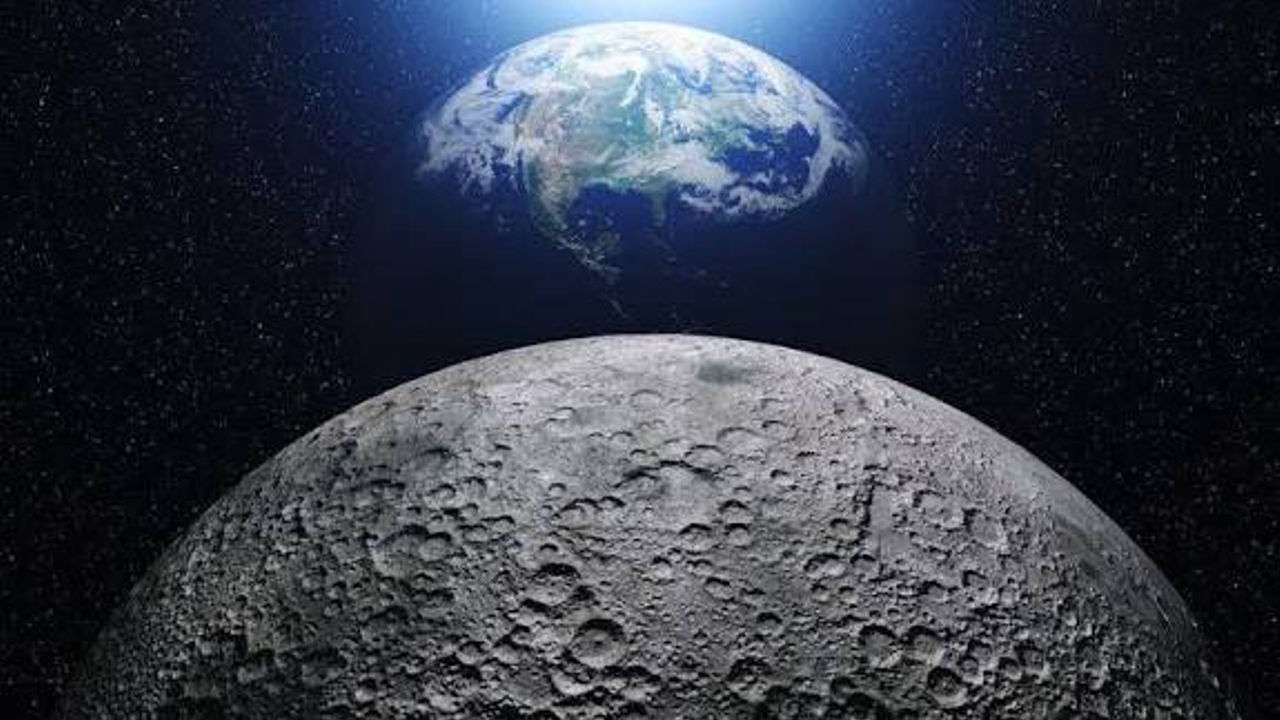
To truly understand whether the Moon can be called a planet, we must begin by revisiting the very definitions of celestial bodies. In astronomy, not everything that shines or orbits in space can be called a planet. There are moons, dwarf planets, asteroids, comets, and stars—all with their own unique characteristics. At first glance, the Moon seems like it could qualify as a planet: it is spherical, has a layered interior with a crust, mantle, and core, and even exerts gravitational influence on Earth. In fact, if the Moon orbited the Sun directly instead of Earth, many scientists argue it would indeed be classified as a planet. And yet, because it orbits Earth, it is officially called a “natural satellite.”
But why does this matter? Why debate whether the Moon is a planet or not? The significance lies not only in scientific curiosity but also in how humans understand their place in the cosmos. The Moon is humanity’s first stepping stone into space exploration. It influences tides, stabilizes Earth’s tilt, and may have even been essential for life to flourish here. Understanding its classification is more than a technical debate; it is a journey into how humans define the universe and themselves.
Before reaching a conclusion, we must explore several key areas: the definitions of a planet and a moon, the history of how astronomers have classified celestial bodies, the Moon’s formation, its physical properties, and its role in Earth’s history. We must also consider the scientific arguments that suggest the Moon could be treated like a planet, as well as the counterarguments that firmly reject this idea. Only then can we approach an informed answer to the question: Is the Moon a planet, or is it not?
Long before telescopes revealed the secrets of the cosmos, ancient civilizations looked up at the Moon and wondered what it truly was. To early humans, the Moon was not just a celestial object but a source of mystery, inspiration, and even fear. It influenced calendars, guided farmers in planting and harvesting, and served as a light in the dark. For thousands of years, people did not differentiate between stars, planets, and moons. To them, anything that shone in the night sky was part of a divine tapestry. In this early period, the Moon was often treated as a planetary body, because there was no clear system of classification.
The ancient Babylonians, Egyptians, Greeks, and Chinese all had their own myths about the Moon. In many cultures, the Moon was seen as a god or goddess, a living entity rather than a lifeless rock. The Greeks, for example, associated the Moon with Artemis (or Selene), while the Romans linked it to Diana. These mythological identities show that the Moon was perceived as something more than just a satellite—it was a powerful celestial being.
It was not until the classical age of philosophy that people began asking scientific questions about the Moon. Philosophers like Aristotle suggested that the Moon was a “heavenly sphere” made of a special, unchanging substance called “aether,” different from the corruptible materials found on Earth. At the same time, other thinkers such as Democritus speculated that the Moon might be made of rock, perhaps even containing mountains and valleys. However, without telescopes, such ideas remained unproven.
The turning point came with Nicolaus Copernicus in the 16th century. His revolutionary heliocentric model placed the Sun at the center of the universe instead of Earth. In this new picture of the cosmos, planets orbited the Sun, while the Moon orbited Earth. This was one of the earliest formal distinctions between a planet and a moon. Under this model, the Moon lost its status as a possible planet and became Earth’s satellite. Still, Copernicus’s work did not settle the question completely—after all, people still debated whether Earth’s Moon should be considered a “secondary planet.”
The debate intensified in the 17th century with the invention of the telescope. Galileo Galilei made one of the most important discoveries when he turned his telescope toward the Moon in 1609. He observed craters, mountains, and shadows ac

Информация по комментариям в разработке