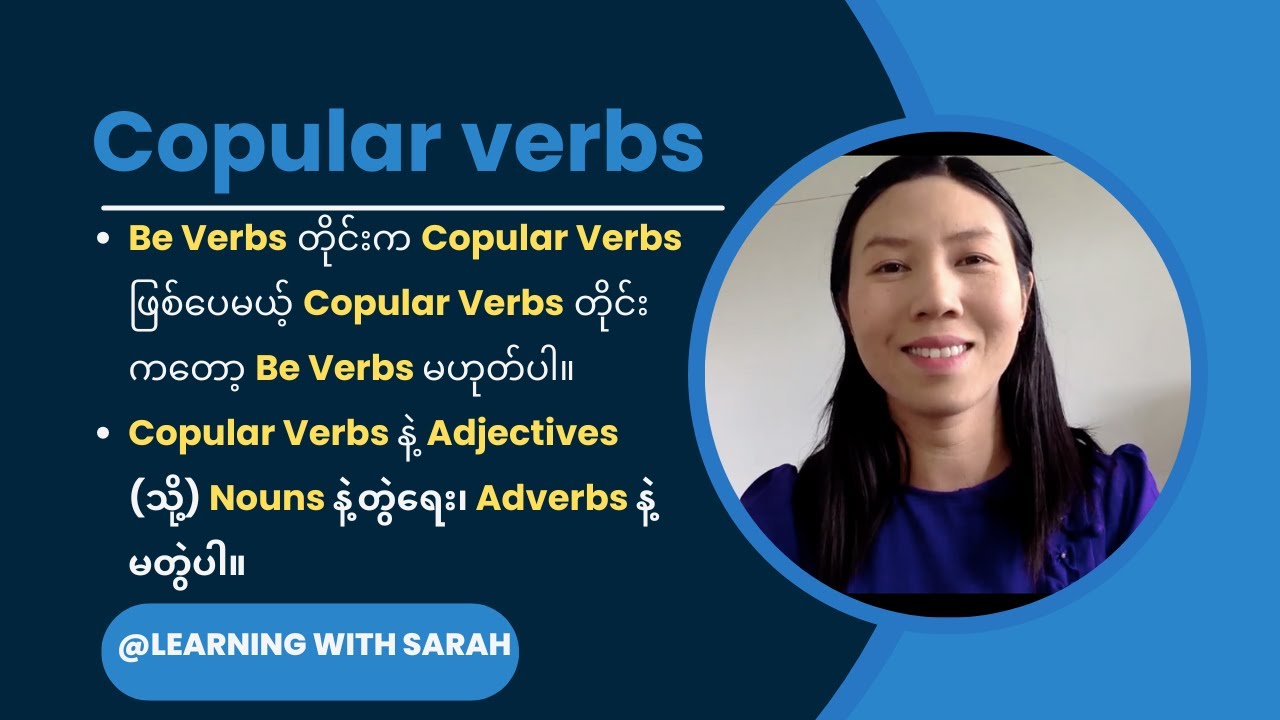
ဒီနေ့သင်ခန်းစာမှာတော့ ပြုလုပ်သူ (Subject) နဲ့ အဖြည့်ပုဒ် (Complement) ကို ချိတ်ဆက်ပေးတဲ့ copular verbs (linking verbs) အကြောင်းကို လေ့လာသွားပါမယ်။
“Be” verbs တိုင်းက copular verbs ဖြစ်ပြီး — am, is, are, was, were, been, being စတဲ့ verb မျိုးတွေဟာ အခြေအနေ (state) သို့မဟုတ် သက်ဆိုင်မှု (identity) ကို ဖော်ပြပေးပါတယ်။
ဒါပေမဲ့ copular verbs တွေဟာ “be verbs” တွေပဲ မဟုတ်ပါဘူး။
အခြေအနေ (state) ကို ဖော်ပြပေးတဲ့ state verbs တွေ၊
အာရုံခံစားမှုကို ဖော်ပြပေးတဲ့ sense verbs တွေ (look, feel, smell, taste, sound စတဲ့ verb မျိုးတွေ) ကိုလည်း
လုပ်ဆောင်မှု (action) မဖော်ပြဘဲ အခြေအနေ (state) ဖော်ပြဖို့ သုံးတဲ့အခါ copular verbs အဖြစ် သုံးနိုင်ပါတယ်။
ဒါကြောင့်
👉 Be verbs အားလုံးက Copular verbs ဖြစ်ပေမဲ့, Copular verbs အားလုံးကတော့ Be verbs မဟုတ်ပါဘူး။
🧩 သတိထားရမယ့်အချက်
Copular verbs သုံးတဲ့အခါ Complement နေရာမှာ Adjective (သို့မဟုတ်) Noun ရေးနိုင်တယ်။
Action ဖော်ပြချင်တဲ့အခါတော့ Adverb သုံးရမယ်။A copular verb (also called a linking verb) is a verb that links the subject of a sentence to a complement (a word or phrase that gives more information about the subject).
👉 It does not show an action, but rather a state, condition, or identity of the subject.
The main copular verb: “be”
am, is, are, was, were, been, being
Verbs of “Senses” (see, hear, feel, smell, taste, look)
These act as copular verbs when they describe a state (not an action).
Verbs of “Change or State”
become, get, turn, go, grow, remain, stay, seem, appear, prove.
#englishgrammar
#copularverbs
#linkingverbs
#beverbs
#stateverbs
#sensesverbs
Информация по комментариям в разработке