A Georgia hospital is facing a lawsuit, alleging it failed to prevent the suicide of a 35-year-old man who sought emergency psychiatric care and blames a lack of staff and oversight for his death.
The suit, filed by the family of Michael Sharadin, claims Memorial Health University Medical Center in Savannah and its staff did not provide the supervision required for patients experiencing a mental health crisis. The wrongful death and medical malpractice complaint names several nurses, a physician, a psychiatric nurse practitioner, and the hospital’s parent companies as defendants.
Sharadin, who had been diagnosed with bipolar disorder, called 911 from a Savannah hotel on Jan. 12, 2024, saying he was having a nervous breakdown and needed help.
EMS transported him to Memorial Health’s emergency department, where he was placed on an involuntary psychiatric hold, also known as a 1013.
“I’m having a nervous breakdown,” Sharadin said in a 911 recording. “I’m having suicidal thoughts. I don’t know what I’m doing. Please help me.”
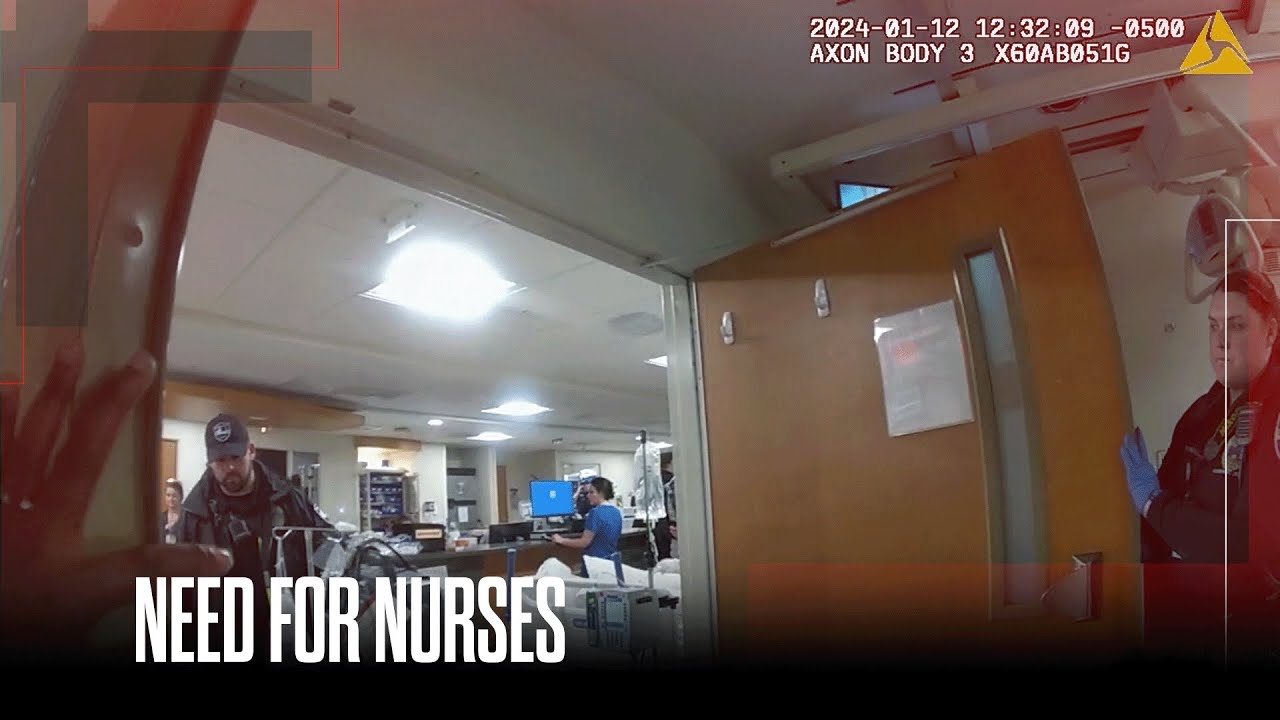
According to the lawsuit and police body camera footage reviewed by InvestigateTV, the hospital’s psychiatric unit — known as “D-pod” — was closed that day due to staffing shortages.
Instead, Sharadin was placed in a general ER room and designated for “line of sight” observation, a level of monitoring that plaintiffs argue was never properly implemented.
A short time later, Sharadin was found hanging from a bathroom handicap rail, using a hospital gown. According to the police report, staff had seen him enter the bathroom with multiple gowns but allowed him in unsupervised, the suit claims. It took nearly 30 minutes before security was called to break down the locked door, according to a security guard interviewed by police the day the incident happened.
Sharadin was revived and placed on life support but never regained consciousness. He died four days later, after his mother, Carol Sharadin, decided to withdraw care.
Carol Sharadin said she asked a doctor, “How could this happen? And he said to me, ‘I don’t know,’” she recalled.
“[Michael Sharadin] did everything right,” said Natalie Woodward, the family’s attorney. “His mom did everything right. This was so preventable. It was just a matter of keeping eyes on him.”
The complaint alleges had the hospital maintained proper staffing levels or followed its own protocols, Sharadin’s death could have been avoided. A supporting affidavit from a medical expert said the hospital’s failure to assign constant supervision amounted to a “gross deviation” from accepted standards of care.
The lawsuit also claims the hospital violated its own policy, which requires a nurse or sitter to accompany psychiatric patients to the bathroom.
“If somebody said to me, ‘Think of your worst nightmare,’ I don’t think I could have imagined anything worse than that,” Carol Sharadin said.
Memorial Hospital declined to discuss the lawsuit but sent a prepared statement.
“The loss of a loved one is devastating and our thoughts remain with this patient’s family and friends,” said hospital spokesperson Bryna Gordon.
“We’re aware of the filing, which we are reviewing, and we will respond through the legal process. Our colleagues have dedicated their professional lives to caring for others and share in this family’s pain.”
Michael Shardin’s case highlights the potential consequences when hospitals don’t have enough nurses to care for patients in need of help.
Georgia is projected to face one of the nation’s largest nursing shortages, with an estimated shortfall of more than 18,000 nurses by 2037, according to the National Center for Health Workforce (NCHW).
A report published in the National Library of Medicine revealed low staffing can lead to 10 percent higher odds of patient deaths. The National Council of State Boards of Nursing released a report this year citing stress and burnout as the top reasons for leaving the profession.
Despite the NCHW’s estimated numbers, the executive director of the Georgia Nursing Workforce Center does not call it a shortage.
“It just ignores the complexities of nursing workforce challenges,” said Chelsea Hagopian, the head of the organization and assistant clinical professor at Emory’s Nell Hodgson Woodruff School of Nursing. “Just saying the nursing shortage doesn’t give you enough information to define the problem correctly and have good solutions.”
Hagopian’s organization is trying to figure out where Georgia’s nurses are working, or not working, to focus resources on medical fields where nurses are needed the most. At the moment, the state doesn’t track the information.
“If you ask a private practice in Atlanta, they might say we have plenty of nurses,” she said. “But a rural community hospital may give you an entirely different story.”
The hospital and health system responded to the allegations in court in late June 2025. They deny any negligence.

Информация по комментариям в разработке