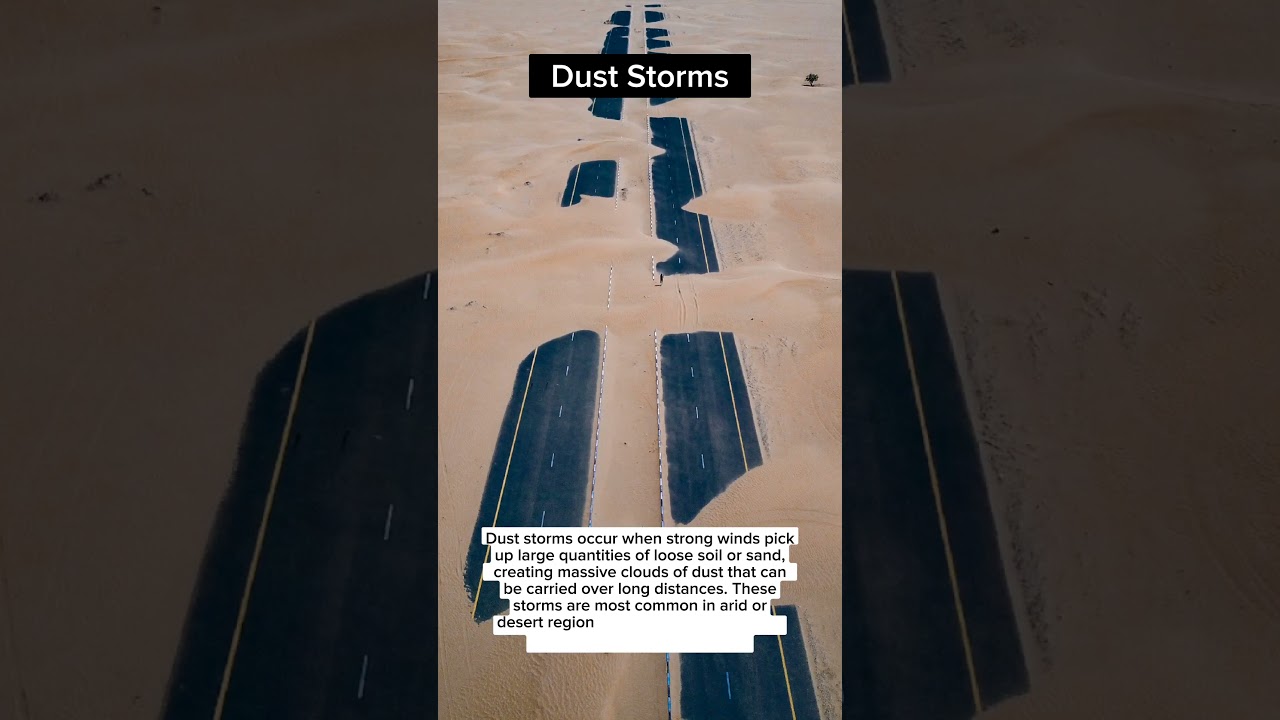
Dust storms are natural phenomena that occur when strong winds sweep across arid or desert regions, picking up loose soil or sand particles from the ground. These winds can reach high velocities, often exceeding 25 miles per hour (40 kilometers per hour), and create massive clouds of dust that can be seen stretching across the landscape.
The primary factor contributing to the formation of dust storms is the presence of vast expanses of dry, loose soil or sand, which is prevalent in arid and desert areas. These regions typically experience low levels of vegetation cover and limited moisture, leaving the soil exposed and vulnerable to erosion by wind. When the wind encounters this loose surface, it can easily lift and transport the particles, creating a dust storm.
During a dust storm, the airborne dust particles can be carried over long distances, depending on the strength of the winds. Dust storms have been known to travel hundreds or even thousands of miles, impacting regions far beyond the source area. These storms can affect both nearby and distant ecosystems, as well as human populations.
Ecologically, dust storms can have significant impacts. The airborne dust particles can deposit over land and water, altering the composition of soils, affecting nutrient levels, and even changing the pH of aquatic environments when they settle into water bodies. Dust deposition can also introduce new species or pathogens to ecosystems, potentially disrupting native plant and animal communities.
Moreover, dust storms can have adverse health effects on humans and animals. The fine particles present in the airborne dust, especially those smaller than 10 micrometers in diameter (referred to as PM10), can be inhaled deeply into the respiratory system. Prolonged exposure to dust particles can lead to respiratory problems, such as coughing, wheezing, and difficulty breathing. Individuals with pre-existing respiratory conditions, such as asthma or allergies, may be particularly susceptible to the health impacts of dust storms.
Efforts to mitigate the ecological and health impacts of dust storms include implementing land management practices that reduce soil erosion, such as planting vegetation or implementing windbreaks. Monitoring and forecasting systems can also help issue warnings and provide early alerts to populations in the path of an approaching dust storm, enabling them to take necessary precautions to protect their health and property.
Overall, understanding the causes, impacts, and mitigation strategies associated with dust storms is crucial for protecting ecosystems, minimizing health risks, and promoting sustainable land management practices in arid and desert regions.
#shorts #dust #dustStorms

Информация по комментариям в разработке