Logo video2dn
  • Сохранить видео с ютуба
  • Категории
    • Музыка
    • Кино и Анимация
    • Автомобили
    • Животные
    • Спорт
    • Путешествия
    • Игры
    • Люди и Блоги
    • Юмор
    • Развлечения
    • Новости и Политика
    • Howto и Стиль
    • Diy своими руками
    • Образование
    • Наука и Технологии
    • Некоммерческие Организации
  • О сайте

Скачать или смотреть Overview of Price Elasticity Modeling 1 1

  • Pricing and RGM Insider
  • 2025-03-12
  • 424
Overview of Price Elasticity Modeling 1 1
  • ok logo

Скачать Overview of Price Elasticity Modeling 1 1 бесплатно в качестве 4к (2к / 1080p)

У нас вы можете скачать бесплатно Overview of Price Elasticity Modeling 1 1 или посмотреть видео с ютуба в максимальном доступном качестве.

Для скачивания выберите вариант из формы ниже:

  • Информация по загрузке:

Cкачать музыку Overview of Price Elasticity Modeling 1 1 бесплатно в формате MP3:

Если иконки загрузки не отобразились, ПОЖАЛУЙСТА, НАЖМИТЕ ЗДЕСЬ или обновите страницу
Если у вас возникли трудности с загрузкой, пожалуйста, свяжитесь с нами по контактам, указанным в нижней части страницы.
Спасибо за использование сервиса video2dn.com

Описание к видео Overview of Price Elasticity Modeling 1 1

I've seen countless companies relying on outdated models or gut instincts for price changes. That often leads to tactical, knee-jerk pricing, missed profits, or constant battles to justify pricing & promotional plans to supply chain partners.

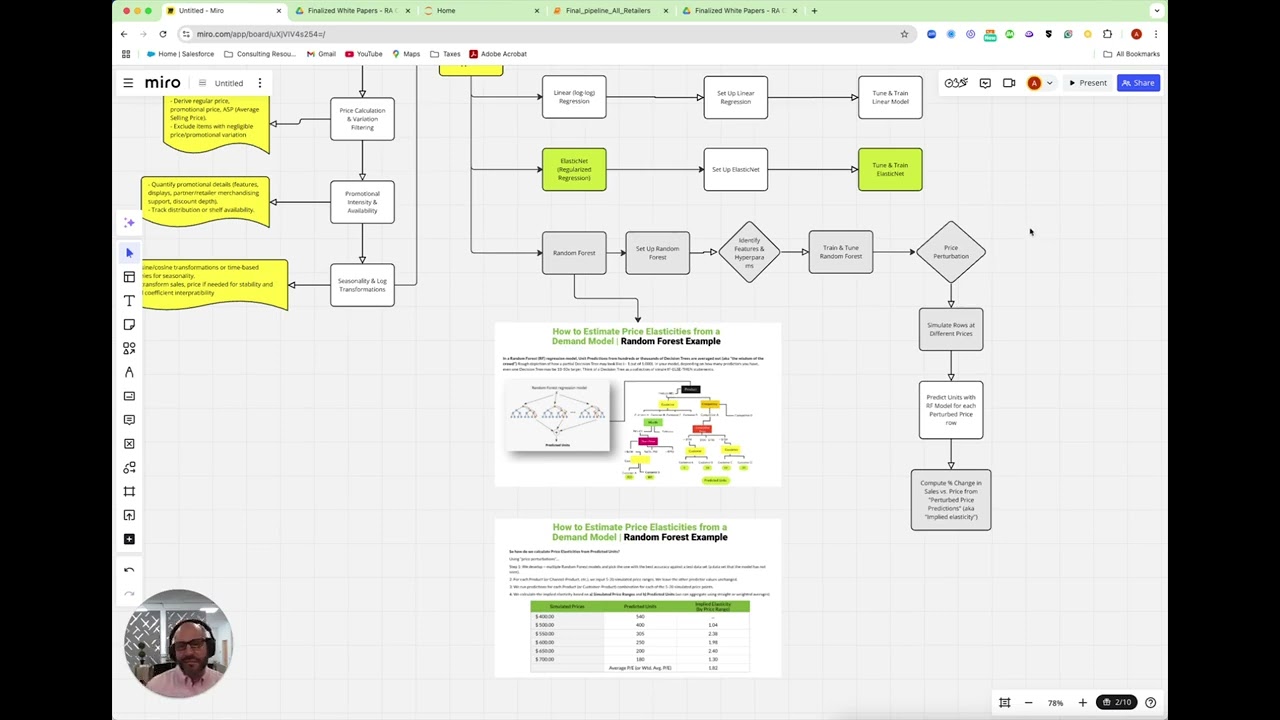
I just recorded a quick video explaining exactly how we combine four different approaches to model elasticity accurately:

1. Double Machine Learning (DML)
Delivers a robust causal estimate by predicting sales and price from confounders, then regressing the residuals.
We typically build one DML model per SKU. In our experience, this often reflects real-world behavior best.

2. Log-Log regression models
It is simple and interpretable - perfect if you have lots of historical data, a high volume of transactions, or price variation.
The log price coefficient directly translates to elasticity. It is quick to implement, though it often oversimplifies and is not a good method for B2B.

3. ElasticNet
A regularized linear model balancing Lasso and Ridge methods.
If you have many variables, such as our promos, competitor promos, distribution, comp distribution, etc., it helps prevent overfitting.

4. Random Forest
Handles non-linearities pretty well without having to do complex data engineering.
We use price perturbation, simulating different price points to see how predicted demand changes, thus estimating implied elasticities.


In the video, I also share how we compare the four methods, track metrics like RMSE or MAPE, and deliver scenario-based recommendations about price, promotions, and competitive moves, helping you go from reactive to proactive pricing.

The real payoff is that you can:
1. Proactively manage pricing: estimate the impact of competitor actions and optimize your strategy.

2. Maximize promotional ROI: estimate what truly drives incremental volume vs. what's wasted spend.

3. Earn insights-backed credibility: support your pricing with robust elasticity metrics that show retailers how you got to your recommendations.

Комментарии

Информация по комментариям в разработке

Похожие видео

  • О нас
  • Контакты
  • Отказ от ответственности - Disclaimer
  • Условия использования сайта - TOS
  • Политика конфиденциальности

video2dn Copyright © 2023 - 2025

Контакты для правообладателей [email protected]