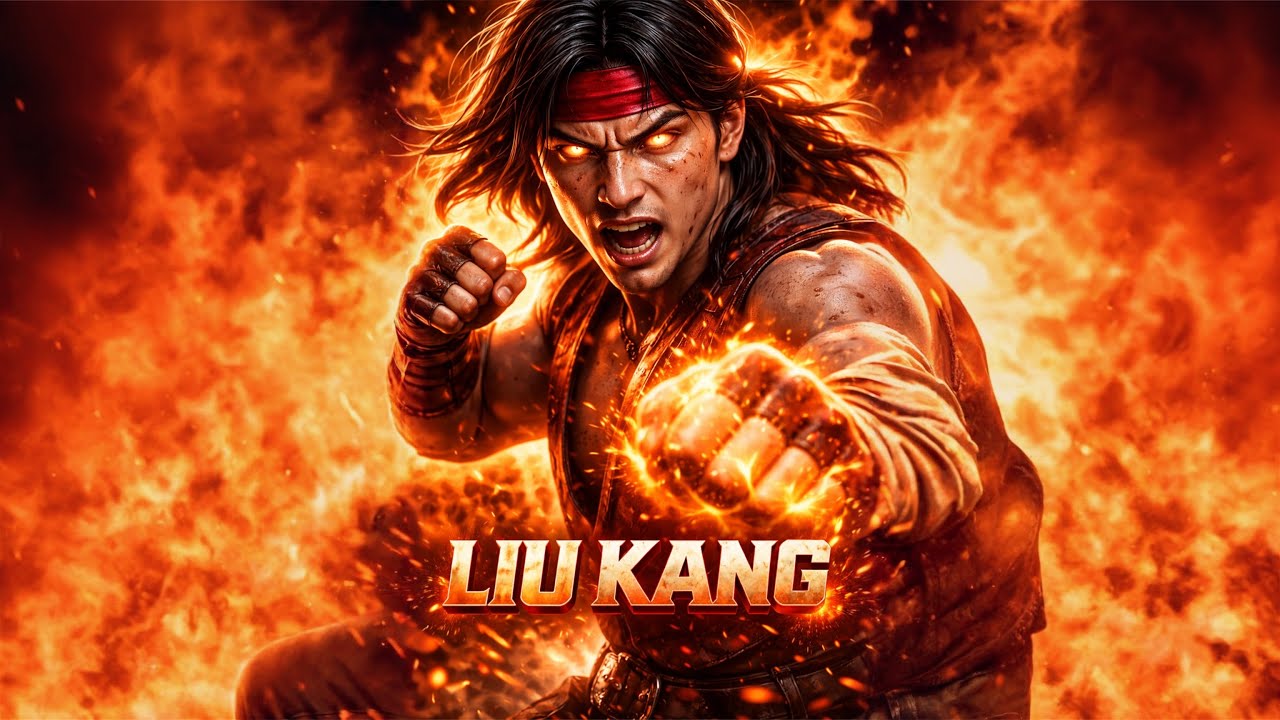
Liu Kang is the heart and soul of the Mortal Kombat universe — a Shaolin warrior whose journey evolves from humble monk to godlike protector of time itself. His lore is one of discipline, sacrifice, rebirth, and destiny, making him one of the most iconic and transformative characters in fighting game history.
Raised in the sacred Shaolin temples of Earthrealm, Liu Kang was trained in martial arts and spiritual balance from a young age. Unlike many warriors driven by vengeance or ambition, Liu Kang was guided by honor and duty. Chosen by Raiden, the thunder god and protector of Earthrealm, Liu Kang became the realm’s greatest champion. His early mission was clear: defend Earthrealm from invasion by Outworld through the Mortal Kombat tournament.
During the original tournaments, Liu Kang rose as a legendary hero by defeating powerful enemies like Shang Tsung and later the emperor Shao Kahn. These victories cemented him as the chosen defender of humanity. Unlike darker fighters, Liu Kang represented hope — a pure-hearted champion rooted in discipline and compassion. His friendship with fellow Shaolin monk Kung Lao and his romance with Kitana added emotional depth, showing a hero grounded in humanity despite endless war.
However, Mortal Kombat’s timeline is never stable. In later events, Liu Kang’s story takes a tragic turn. Manipulated timelines and divine mistakes lead to his death at the hands of Raiden, a shocking moment that reshaped the franchise’s emotional core. Even in death, Liu Kang’s importance only grew. He returned as a revenant — a corrupted undead warrior serving dark forces. This darker version of Liu Kang symbolized the cost of endless conflict and the fragile line between hero and monster.
Everything changed during the timeline-resetting events of Mortal Kombat 11. As reality fractured, multiple timelines collided, bringing together past and present versions of fighters. Through sacrifice and cosmic realignment, Liu Kang merged with Raiden’s divine power, becoming Fire God Liu Kang — one of the most important evolutions in Mortal Kombat lore. No longer just a monk, he ascended into godhood, embodying both mortal compassion and divine authority.
As Fire God Liu Kang, he defeated the titan Kronika and gained control over the Hourglass of Time. This moment elevated him beyond traditional heroes. Instead of merely defending Earthrealm, Liu Kang reshaped reality itself. His role shifted from warrior to architect of history, choosing how timelines would unfold and ensuring balance across realms. This transformation redefined Mortal Kombat’s power structure, placing Liu Kang at the center of the universe’s destiny.
In Mortal Kombat 1’s rebooted era, Liu Kang becomes a benevolent creator figure. Rather than ruling with fear, he builds a new timeline focused on harmony, giving former enemies a chance at redemption. This version of Liu Kang represents wisdom earned through suffering — a hero who understands that strength alone cannot protect reality. His leadership reflects maturity, restraint, and an evolved sense of justice.
Liu Kang’s enduring appeal comes from his layered evolution. He begins as a classic martial arts hero inspired by legends like Bruce Lee but grows into something mythic. His journey spans monk, champion, martyr, revenant, god, and timeline guardian. Each transformation adds emotional weight, making him more than just a fighter — he’s a symbol of resilience and balance.
In the vast Mortal Kombat mythos filled with antiheroes and villains, Liu Kang stands apart as the moral compass of the franchise. His story blends martial arts tradition, spiritual philosophy, and cosmic destiny, creating one of the most compelling character arcs in gaming history. Whether as a Shaolin warrior or Fire God shaping time itself, Liu Kang remains the eternal guardian of Earthrealm and the beating heart of Mortal Kombat lore.
#MortalKombat #Gaming









![Бедный рыцарь участвует в ТУРНИРЕ НА ВЫЖИВАНИЕ, где сражаются ЛУЧШИЕ ВОИНЫ континента [пересказ]](https://i.ytimg.com/vi/dxuvoZ6gyPI/maxresdefault.jpg)

Информация по комментариям в разработке