Nagara
Nagara architecture is a style of temple architecture predominantly found in northern India, defined by a square ground plan and a tall, curvilinear tower called a shikhara. Nagara-style temples are often built on a raised stone platform with steps leading up to them.
It began around the 5th century CE in northern India, during the late Gupta period. It developed alongside Dravida style, which originated in southern India during the same period. Nagara temples typically lack elaborate boundary walls or gateways. The main tower always houses the garbhagriha. Towering over the garbha griha is the shikhara, the most distinguishable aspect of the Nagara style. The term “shikhara” refers to man-made representations of the natural and cosmological order. The Amalaka or Kalash on the Shikhara is a distinctive feature.
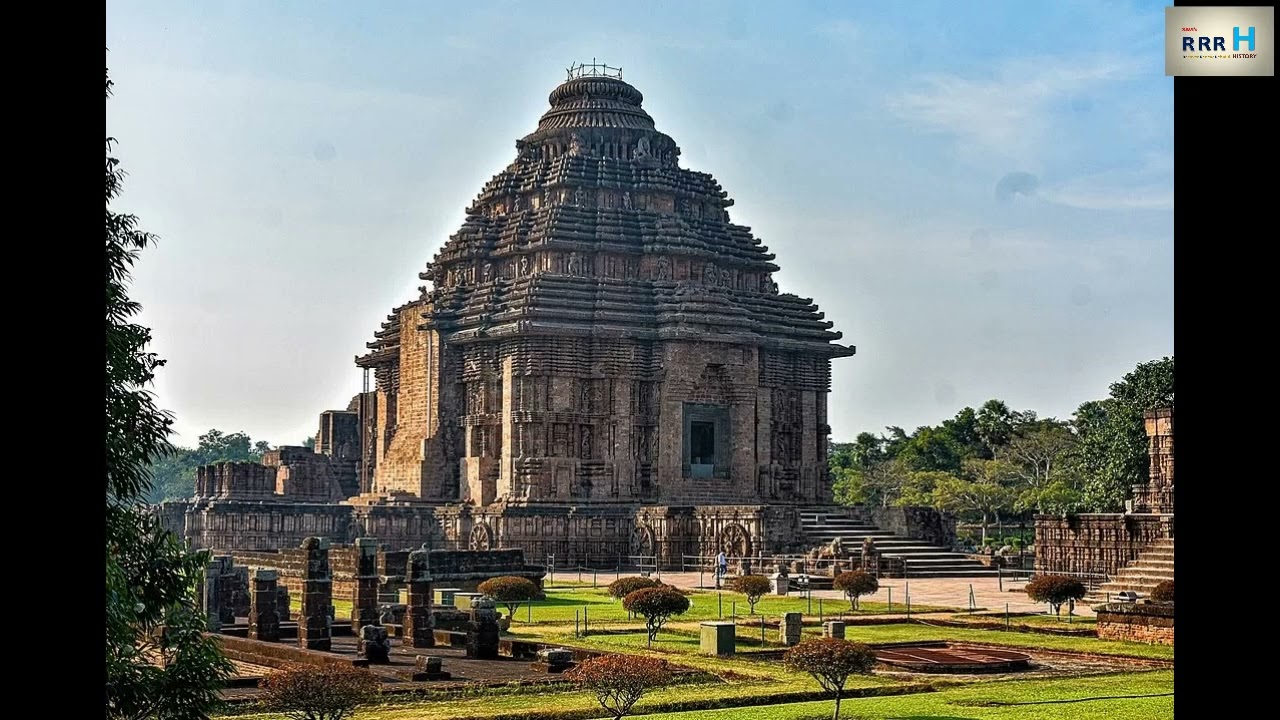
Nagara temples have subdivisions based on the shape of the shikhara. A Nagara-style temple typically includes a circumambulatory passage around the garbha griha, along with one or more mandapas (halls) on the same axis. Elaborate murals and reliefs often decorate its walls. Kandariya Mahadev Temple in Madhya Pradesh, the Sun Temple in Konark, the Sun Temple in Modhera, Gujarat, and the Ossian Temple in Gujarat can be cited as best examples of Nagara type of architecture.
Key characteristics
Shikhara: The most distinguishing feature is the towering, pyramidal shikhara, which tapers inward and represents a mythical mountain peak.
Garbhagriha: The inner sanctum is the sacred core, containing the deity's image, and is always located directly under the shikhara.
Mandapa: One or more pillared halls, or mandapas, are typically located in front of the sanctum, serving as gathering spaces.
Ground Plan: Temples are generally based on a square or rectangular plan.
Amalaka and Kalasha: A distinctive amalaka (a ribbed, cushion-like stone) sits at the top of the shikhara, topped by a kalasha (a finial).
Platform: Temples are often built on a high platform or plinth with steps leading up to them.
Decorations: Walls and pillars are elaborately decorated with intricate sculptures and reliefs depicting deities, mythological scenes, and daily life.
Gateways: Unlike the Dravidian style, Nagara temples usually lack large, ornate gateway towers (gopurams) and boundary walls.
A famous scholar Adam Hardy classifies the Nagara style of temple architecture into five (Vallabhi, Phamsana, Rekha-Prasad or Latina, Shekhari, Bhumija) based on the style of Shikhara. Besides the above Regional sub-styles are made based on the geographical location.
Odisha School: Characterized by towering, rekhapiridical shikharas (e.g., Lingaraja Temple).
Central Indian School: Known for intricate and sensual sculptures (e.g., Khajuraho temples).
Western Indian School: Features detailed carvings and often includes a water tank or Surya Kund (e.g., Modhera Sun Temple, Dilwara Jain Temples).
The Nagara style temples display a unique blend of indigenous elements and influences from central Asia. This style of architecture is closely associated with the Shaivite and Vaishnavite sects of Hinduism, reflecting their spiritual aspirations is the main component.

Информация по комментариям в разработке