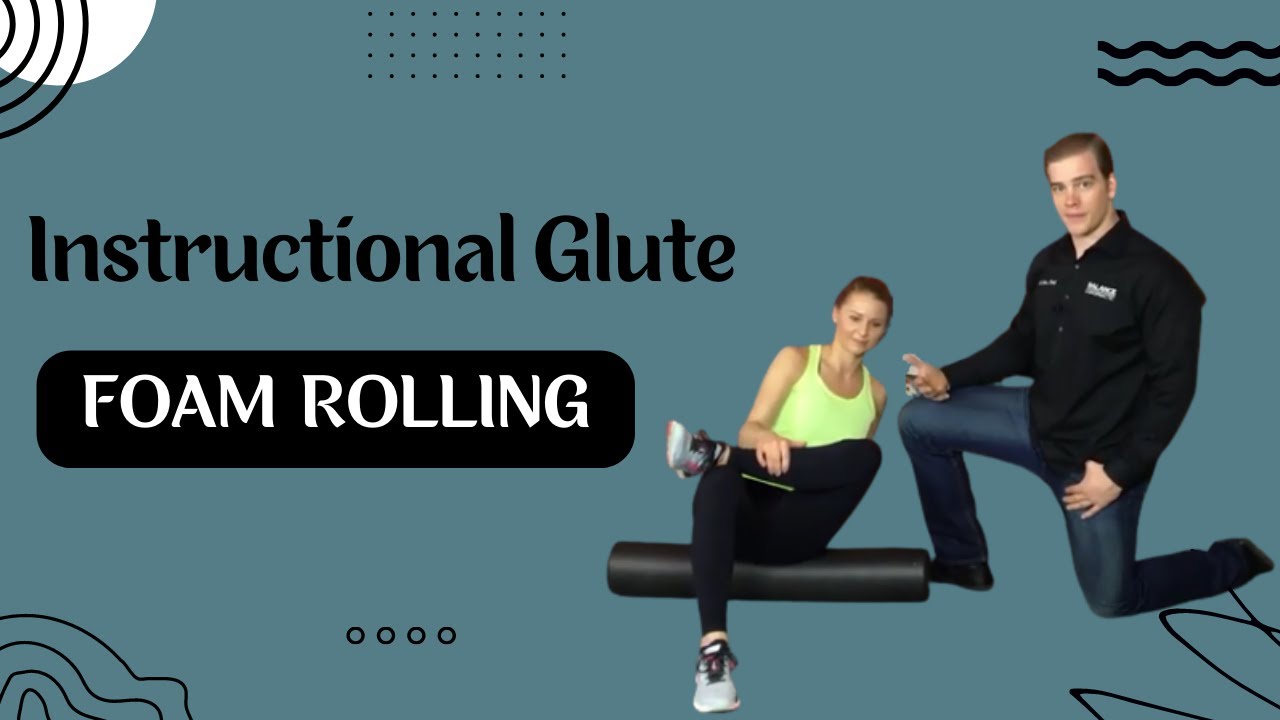
Hey everybody! Dr. Max & Paige from Balance Chiropractic Colorado Springs. Welcome to the first portion of our foam roller series. Now for the first portion we're going to focus on the most important portion, being the gluteal region. We're going to hit glute max, glute meat, and glute min, which are all tissues that are incredibly important for stabilizing the hip, pelvis, spine, knees, and ankles. If you are on a foam roller, your goal is to look for tender tissues. Healthy tissues feel good, dysfunctional tissues are tight, tender or painful. So what we'll do is we'll find those tight painful tissues, and roll over them five or six times, move on to the next one and then change our angles. And the angles are important because we'll have three different angles for each region. The three different angles are important because we're three dimensional beings. If you're only getting one or two sides of the tissue and you're leaving up to 66% of the region uncorrected, if you will. So to get started, what Paige is going to do is take her left arm, push it back here as a kickstand. She's going to take her left ankle and cross it over to right knee, and then she's going to ever so slightly come off of neutral and tip over towards the left, because we don't want to be on the sacrum or the spine. From here she's going to search for the tender tissues by slowly rolling up and down between the sit bone in her butt and the dimples of her low back. When she finds something tender, she will roll back and forth five to six times and then move on to the next tender spot. After she's worked on all the tender spots in that angle, she's going to tip over to the next angle. Okay.
Now I want you guys to take note that she's smiling. Now smiling during foam rolling is so important because there's a portion of the brain called the limbic system, and if this system senses pouting or frowning, then that's going to make you feel bad. If you're smiling and you're happy and you're laughing if, it's going to make you feel good, simply enough. Now after she's done angle two, she's going to do the very same thing, search for tender spots by tipping over just a little bit more towards me. On the same region, between the dimples of the lower back and the sit bone on the butt. When she finds something tender or dysfunctional, she’s going to roll back and forth over five or six times. After she's done the other side, which she may notice is more tight or less tight than the first side, she’d move on to the next region, which is going to be the hamstrings.
Chiropractor Colorado Springs
https://www.balancecolorado.com/

Информация по комментариям в разработке