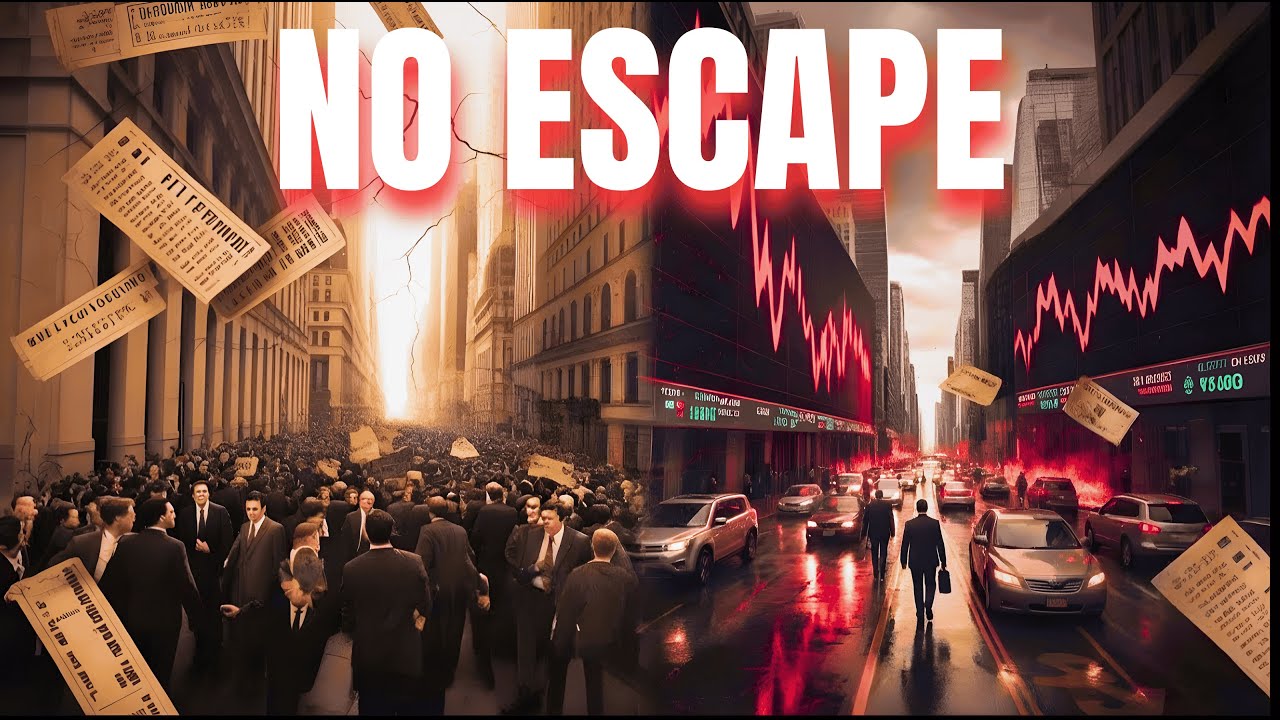
Late 2026: The CRASH That Will Surpass 1929 & 2008
In the autumn of 1929, Yale economist Irving Fisher declared that stocks had reached "a permanently high plateau." Nine days later, the market lost everything.
In the summer of 2008, Federal Reserve Chairman Ben Bernanke assured Congress that the subprime crisis was "contained." Sixty days later, Lehman Brothers ceased to exist.
Now it is 2026.
The Dow has tripled since its pandemic lows. Household wealth has never been higher — at least on paper. Unemployment is manageable. Inflation seems tamed. And once again, the experts are telling you that the system is stable.
But beneath the surface, something is breaking.
Debt levels that dwarf 1929 and 2008 combined. Asset bubbles inflated beyond anything in recorded history. A monetary experiment with no precedent — and no exit strategy.
The pattern is always the same. The blindness is always the same. The ending is always the same.
What if you're living through the final months before the largest financial collapse in human history — and no one is telling you?
Every great collapse announces itself in whispers before it screams.
There is a structure to financial disaster — a blueprint that has repeated with haunting precision across five centuries of economic history. From the Spanish Empire's serial bankruptcies in the 1500s to the British pound's humiliation in 1992, from the Soviet Union's economic disintegration to Wall Street's near-death experience in 2008, the architecture is always the same. Debt accumulates. Confidence inflates. Warning signs are ignored. And then, in a matter of days or weeks, decades of accumulated wealth vanish into nothing.
We are taught to believe that modern economies are different. That central banks have learned the lessons of history. That sophisticated financial instruments have eliminated risk. That the sheer size and complexity of global markets makes them more resilient, not more fragile.
This is the same lie every generation tells itself before the fall.
In 1929, America was the rising power of the world. Its stock market had delivered a decade of extraordinary gains. New technologies — radio, automobiles, electricity — were transforming daily life. Credit was abundant. Optimism was universal. The economist Irving Fisher, one of the most respected minds of his era, declared just days before Black Tuesday that the market had achieved permanent prosperity.
The crash that followed erased $14 billion in market value in a single day — roughly $200 billion in today's money. But that was only the beginning. Over the next three years, the Dow Jones Industrial Average would fall 89% from its peak. Banks failed by the thousands. Unemployment reached 25%. The Great Depression that followed did not merely damage the American economy — it reshaped the political order of the entire world, contributing directly to the rise of fascism in Europe and the outbreak of the deadliest war in human history.
Seventy-nine years later, the pattern repeated.
By 2008, the American financial system had evolved into something unrecognizable from its 1929 predecessor. Global banks held trillions in assets. Derivatives markets had grown to notional values exceeding $600 trillion. Mortgage-backed securities had been sliced, packaged, and sold to investors on every continent. The Federal Reserve commanded tools and resources that its Depression-era counterpart could never have imagined.
And yet, when Lehman Brothers filed for bankruptcy on September 15, 2008, the entire system came within hours of total collapse. Credit markets froze. Money market funds — considered as safe as cash — began breaking the buck. The Chairman of the Federal Reserve and the Secretary of the Treasury, in private meetings with Congressional leaders, warned that without immediate intervention, there might not be an economy left by Monday.
The bailouts that followed were unprecedented in scale. The Federal Reserve's balance sheet exploded. Governments worldwide pumped trillions into failing institutions. The system was saved — or so we were told.
But here is what they did not tell you.
The fundamental imbalances that caused 2008 were never corrected. They were amplified. The debt that nearly destroyed the global economy in 2008 has more than doubled since. The speculative instruments that froze credit markets have grown larger and more complex. The wealth inequality that destabilized societies has accelerated to levels not seen since the Gilded Age.
Every crisis in modern history has been "solved" by creating the conditions for a larger crisis to follow.
Disclaimer:
This video is for educational and informational purposes only. The events, patterns, and scenarios discussed do not guarantee that similar outcomes will occur in the future. Nothing in this documentary should be interpreted as financial advice. Always consult a qualified professional before making financial decisions.

Информация по комментариям в разработке