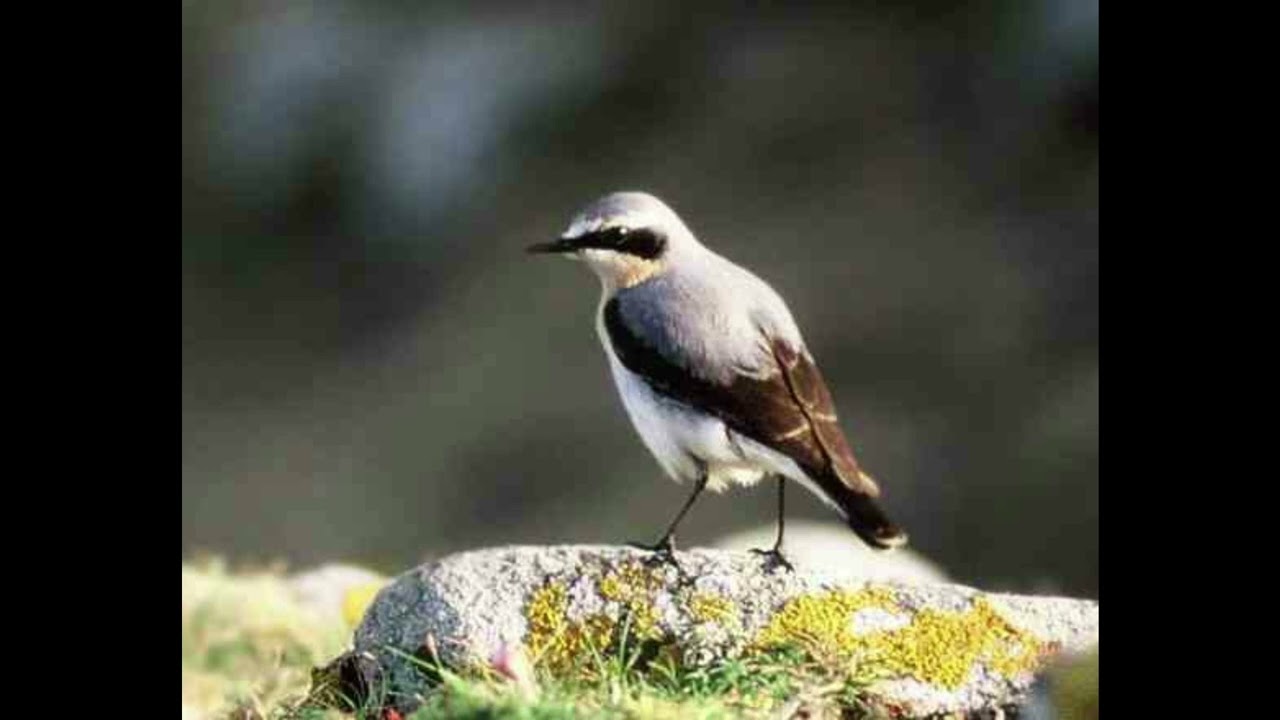
The British Wheatear (Oenanthe oenanthe) is a small, migratory songbird that breeds in open habitats such as moorland, heathland, and coastal cliffs. It is a common sight in many parts of the UK, particularly in the north and west. Wheatears are known for their distinctive black and white plumage and their beautiful song.
Appearance
The British Wheatear is a small, plump bird with a long tail. The male has a black head, throat, and upper breast, with a white rump and tail. The female is similar, but with a brown head and upper breast. Both sexes have a white belly and undertail coverts.
Habitat
The British Wheatear breeds in open habitats such as moorland, heathland, and coastal cliffs. It also frequents other open areas, such as farmland, golf courses, and quarries. In the winter, Wheatears migrate to sub-Saharan Africa.
Diet
The British Wheatear's diet consists mainly of insects, such as beetles, flies, and caterpillars. It also eats some seeds and berries. Wheatears forage for food on the ground and in the air.
Breeding
The British Wheatear breeds in the spring and summer. The male builds a nest in a hole in the ground or in a rock crevice. The female lays 4-7 eggs, which she incubates for about 13 days. The chicks hatch blind and naked, but they quickly develop and fledge after about 14 days.
Behavior
The British Wheatear is a solitary bird, except during the breeding season. It is a territorial bird and will defend its territory from other Wheatears. Wheatears are also known for their aggressive behavior towards other small birds.
Conservation
The British Wheatear is not currently considered to be a threatened species. However, its populations have declined in recent years due to habitat loss and fragmentation. Wheatears are also vulnerable to climate change.
Threats
The main threats to the British Wheatear are habitat loss and fragmentation, climate change, and predation.
Habitat loss and fragmentation: Wheatears rely on open habitats such as moorland and heathland. However, these habitats are increasingly being lost to development and agriculture.
Climate change: Wheatears are also vulnerable to climate change. Climate change is causing the UK to become warmer and drier, which is making it more difficult for Wheatears to find suitable breeding and wintering habitats.
Predation: Wheatears are also preyed upon by other birds, such as hawks and owls.
Conservation efforts
There are a number of conservation efforts underway to protect the British Wheatear. These include:
Habitat protection and restoration: Organizations such as the Royal Society for the Protection of Birds (RSPB) are working to protect and restore open habitats such as moorland and heathland.
Climate change mitigation: Organizations such as the Wildlife Trusts are working to mitigate the effects of climate change on wildlife. This includes planting trees and restoring wetlands.
Predation control: Organizations such as the Game & Wildlife Conservation Trust (GWCT) are working to control predators of Wheatears, such as hawks and owls.
How to help
There are a number of things that individuals can do to help the British Wheatear:
Support conservation organizations: You can support organizations such as the RSPB, the Wildlife Trusts, and the GWCT by donating money or becoming a member.
Volunteer your time: You can volunteer your time to help with conservation projects such as habitat restoration and predator control.
Reduce your carbon footprint: You can reduce your carbon footprint by making changes to your lifestyle, such as driving less, eating less meat, and using less energy.
Conclusion
The British Wheatear is a beautiful and important bird. It is a symbol of the UK's open countryside. We all have a role to play in protecting this iconic species.
In-depth look at the British Wheatear
Migration
The British Wheatear is a long-distance migratory bird. It breeds in the UK and migrates to sub-Saharan Africa in the winter. Wheatears begin their migration in August and September. They travel south across Europe and the Mediterranean Sea. They arrive in their wintering grounds in October and November. Wheatears begin their return migration in March and April. They arrive back in the UK in April and May.
Song
The British Wheatear has a beautiful and distinctive song. The male's song is a complex and musical warble. The female's song is simpler, but still pleasant to hear. Wheatears sing from exposed perches, such as fence posts and rocks.

Информация по комментариям в разработке