How One Welder's 'Illegal' Pre-Fab Method Made Tank Production Jump From 100 To 2,000 Monthly
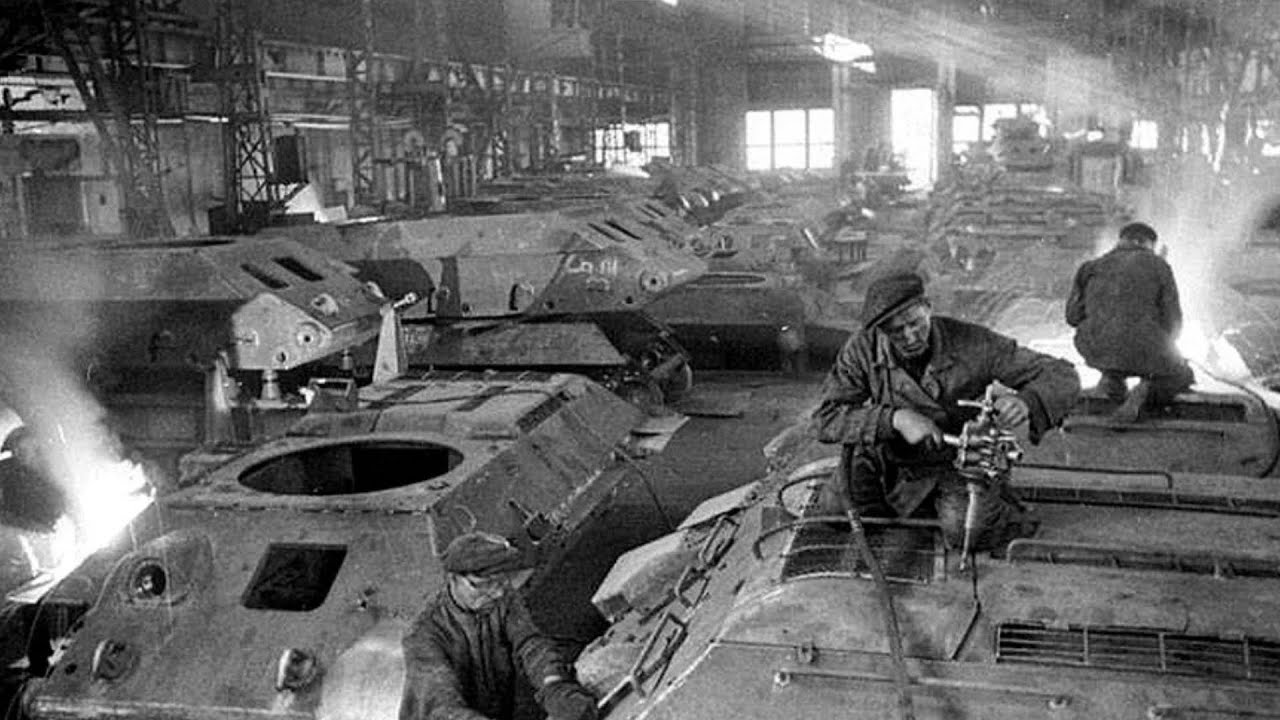
July twelfth, nineteen forty-two. The floor of Factory Number One Eighty-Three in Nizhny Tagil trembled with the rhythm of industrial war. Nineteen automatic welding machines screamed in synchronized chaos, their arcs blazing beneath mounds of granular flux. Each machine moved along the seam of a T-34 tank hull, depositing metal at speeds that seemed impossible. The air hung thick with ozone and the bitter smell of molten steel. Then, without warning, one of the hulls split.
The crack started at the forward glacis plate where armor met armor. It propagated diagonally across the weld seam, racing through hardened steel like lightning through summer sky. Within seconds, a fifteen-hundred-millimeter fracture had consumed what should have been the strongest section of the tank. The hull was ruined. Three days of work, several tons of precious armor plate, and one desperately needed tank, all rendered useless. Workers stood frozen, watching their efforts disintegrate before the metal had even cooled.
This was not an isolated incident. Throughout the summer of nineteen forty-two, crack formation plagued Soviet tank production with epidemic ferocity. At Factory One Eighty-Three alone, between twenty and thirty percent of hulls developed structural failures during or immediately after welding. Some cracks appeared while the metal still glowed orange. Others materialized hours later, snaking through armor that appeared perfect moments before. The hardened steel designated as Eight S armor, chosen specifically for its resistance to German anti-tank rounds, was tearing itself apart under its own internal stresses.
The timing could not have been worse. The German sixth Army was pushing toward Stalingrad. Panzer divisions were cutting deep into Soviet territory, destroying tanks faster than factories could replace them. The Red Army needed two thousand T-34s per month to maintain numerical superiority on the Eastern Front. In July nineteen forty-two, they were barely producing nine hundred. And of those nine hundred, nearly three hundred were being rejected or failing in the field due to welding defects.
Traditional hand welding could not meet the demand. A skilled welder, working methodically with stick electrodes, required twelve hours to complete the hull seams on a single T-34. Factory One Eighty-Three employed over three hundred welders working in rotating shifts, and still production crawled. The mathematics were brutal and unforgiving. At current rates, Soviet factories would need eighteen months to produce enough tanks for a single major offensive. The war would not wait eighteen months.
In Kiev, before the German invasion, Professor Evgeny Oskarovich Paton had been perfecting a technology that military engineers considered experimental at best, reckless at worst. Automatic submerged arc welding, developed at his Institute of Electric Welding in nineteen thirty-nine, used a continuously fed electrode buried beneath a blanket of granular flux. The flux melted, protected the weld pool from oxidation, and then solidified into a slag cap that could be chipped away. The process was fast, consistent, and required minimal operator skill. A single machine could deposit weld metal at five times the rate of the most experienced hand welder.
But there was a fundamental problem that had prevented military adoption. Automatic welding was designed for mild steel, the soft, ductile material used in bridges and pipelines and civilian construction. Tank armor was the opposite of mild steel in every way that mattered. Eight S armor was heat-treated to surface hardness approaching sixty Brinell, making it resistant to penetration but also brittle and prone to cracking under thermal stress. The rapid heat cycling of automatic welding, with its sustained high amperage and continuous feed, created precisely the conditions that made hard armor fail.
#WWII #WorldWar2 #WWIIHistory #WWIIDocumentary #WWIIWeapons #WWIIEngineering #WWIIInnovation #WWIITanks #TankProduction #WarIndustry #ArsenalOfDemocracy #WWIIManufacturing #IndustrialRevolution #WWIITechnology #WWIIWeaponry #WWIIStories #WWIIHeroes #WWIIFactories #WWIIIndustrialPower #WWIIWarEffort #MilitaryHistory #WWIIWeaponFacts #WWIIEngineeringMarvel #WWIIProduction #WWIIFacts #WWIIDiscovery #WWIISecrets #WWIIIndustrialHistory #WWIIInventions #WarDocumentary










Информация по комментариям в разработке