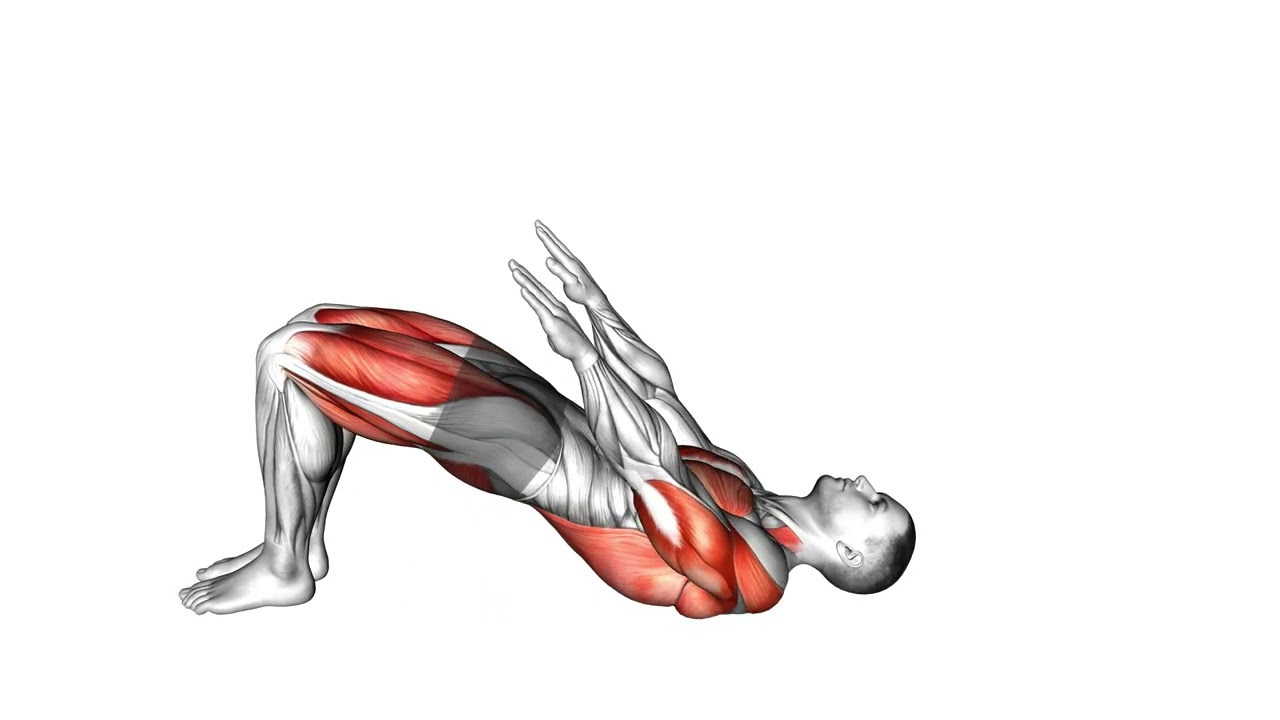
The Bridge Pose (Setu Bandhasana) is a foundational yoga posture that strengthens the back, glutes, and legs, while opening the chest and stretching the spine. It’s excellent for improving posture, relieving tension in the back, and calming the mind.
How to Perform Bridge Pose (Setu Bandhasana):
Starting position:
Lie flat on your back with your arms resting by your sides, palms facing down.
Bend your knees and place your feet flat on the floor, hip-width apart, with your heels close to your sitting bones. Your toes should be pointing forward.
Make sure your feet are firmly planted and aligned with your knees.
Engage your core:
Gently engage your core to protect your lower back.
Press your feet and arms into the mat, and begin to lift your hips toward the ceiling.
Lift your hips:
As you inhale, press through your feet to lift your hips off the ground.
Engage your thighs and glutes as you lift your pelvis, creating a straight line from your shoulders to your knees.
Keep your inner thighs engaged to avoid letting your knees splay out.
Position your shoulders:
Roll your shoulders underneath you to open your chest.
If comfortable, clasp your hands together underneath your back for additional support, keeping your arms straight and shoulders grounded.
Hold the pose:
Hold the Bridge Pose for 5 to 10 deep breaths, keeping your hips lifted and your chest open.
Focus on steady, deep breathing, and feel the stretch along your spine and chest.
Release the pose:
To release, unclasp your hands (if clasped), exhale, and slowly lower your hips back to the floor, one vertebra at a time.
Rest with your back flat on the ground and take a few breaths before repeating the pose or moving into another posture.
Tips:
Avoid straining your neck: Keep your head neutral and avoid turning it from side to side to prevent straining your neck.
Knees in alignment: Keep your knees aligned with your hips and ankles. Avoid letting them splay outward or inward.
Use a block for support: If you need extra support, you can place a yoga block under your sacrum to make the pose more restorative.
Benefits:
Strengthens the glutes, legs, and back: This pose builds strength in the lower body, especially the glutes and hamstrings.
Opens the chest and shoulders: It stretches the chest, shoulders, and spine, improving posture and counteracting the effects of sitting or slouching.
Improves spinal flexibility: Bridge Pose gently stretches and lengthens the spine, promoting flexibility.
Stimulates the thyroid and lungs: By lifting the chest and opening the front body, this pose stimulates the thyroid gland and promotes deep breathing.
Reduces stress: Holding Bridge Pose with deep breathing can help calm the mind and relieve stress.
Variations:
Supported Bridge Pose: Place a block under your sacrum for a more passive, restorative version of the pose.
One-Legged Bridge Pose: For a more advanced variation, lift one leg off the ground while maintaining the pose, increasing the intensity for the glutes and core.
Bridge Pose (Setu Bandhasana) is a versatile and accessible pose that can be modified for different levels, making it beneficial for both beginners and experienced practitioners.

Информация по комментариям в разработке