C.
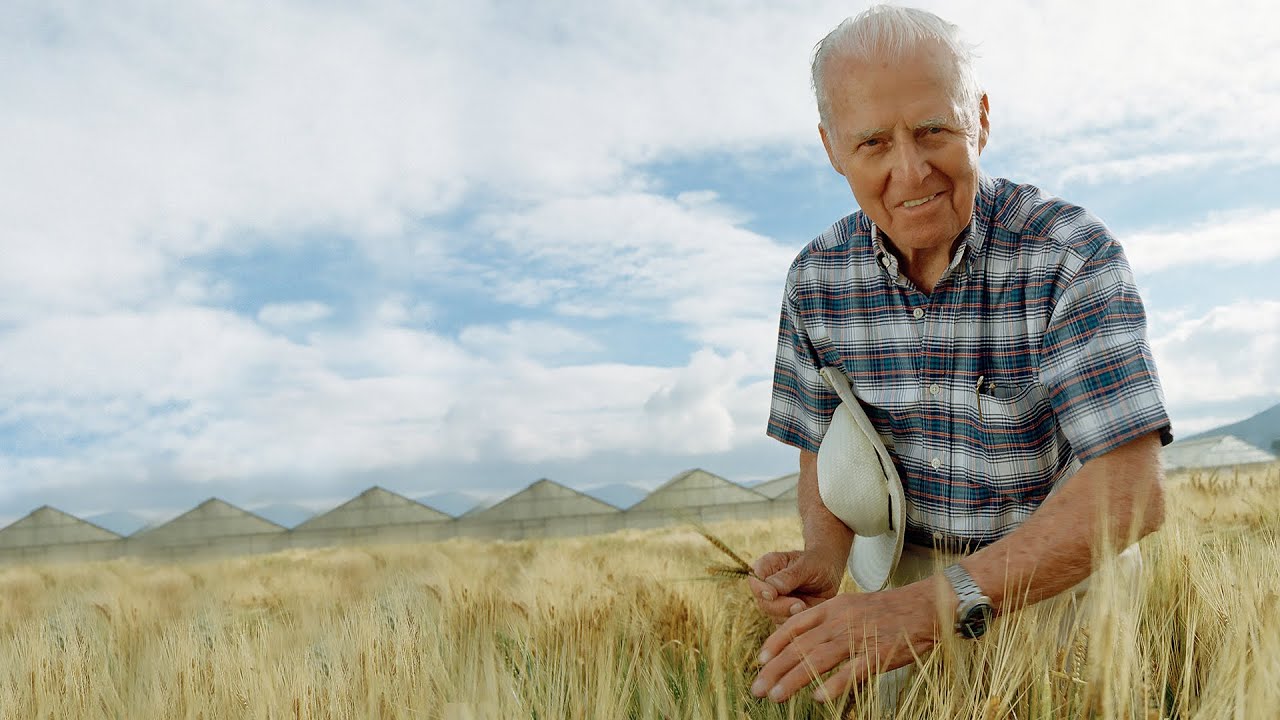
From the 1950s to the early 1960s, rice production was also suffering: India was on the brink of famine, and China was already experiencing one. In the late 1950s, Norman Borlaug, an American plant pathologist, began advising Punjab State in northwestern India to grow a new semidwarf variety of wheat. This was so successful that, in 1962, a semidwarf variety of rice, called IR8, developed by the Philippine International Rice Research Institute (IRRI), was planted throughout Southeast Asia and India. This semi-dwarf variety heralded the Green Revolution, which saved the lives of millions of people by almost doubling rice yields: from 1.9 metric tons per hectare in 1950-64, to 3.5 metric tons in 1985-98.
D.
IR8 survived because, as a semi-dwarf, it only grows to a moderate height, and it does not thin out, keel over, and drown like traditional varieties. Furthermore, its short thick stem is able to absorb chemical fertilisers, but, as stem growth is limited, the plant expends energy on producing a large panicle of heavy seeds, ensuring a greater crop.
E.
However, even with a massive increase in rice production, semi-dwarf varieties managed to keep up with population growth for only ten years. In Africa, where rice consumption is rising by 20% annually, and where one-third of the population now depends on the cereal, this is disturbing. At the current rate, within the next 20 years, rice will surpass maize as the major source of calories on that continent. Meantime, even in ideal circumstances, paddies worldwide are not producing what they once did, for reasons largely unknown to science. An average 0.8% fall in yields has been noted in rich rice-growing regions; in less ideal ones, flood, drought and salinity have meant yields have fallen drastically, sometimes up to 40%.
#ieltsreading #ieltslistening #ieltsreadingtest81 #ieltschallenge #matgocielts #ieltsspeaking #theplightofrice #rice #nandoi
Информация по комментариям в разработке