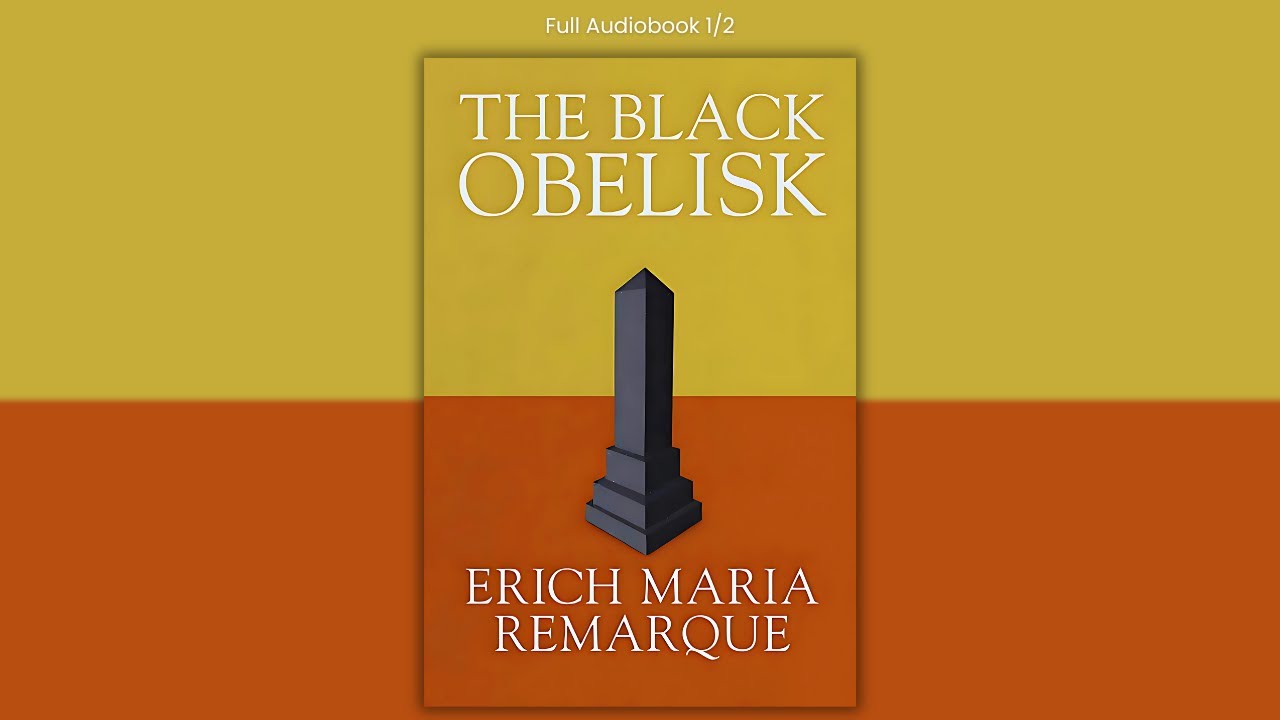
Title: The Black Obelisk
Author: Erich Maria Remarque
Genre: Historical Fiction, Philosophical Novel, Semi-Autobiographical
Published: 1956
Full Playlist (Chapters): • The Black Obelisk - Erich Maria Remarque (...
The Black Obelisk is a profound and reflective novel set in post-World War I Germany, during the era of hyperinflation and economic turmoil. With a blend of humor, tragedy, and philosophical insight, the novel explores themes of survival, identity, and the search for meaning in a fractured society. Through its richly drawn characters and vivid depiction of a crumbling world, it offers a compelling narrative about resilience and humanity.
Setting:
Post-WWI Germany: A vivid portrayal of the Weimar Republic’s struggles with political instability, economic collapse, and social disarray.
Small Town Cemetery and Funeral Business: The protagonist works in the business of funeral monuments, symbolizing the pervasive presence of death and loss in post-war Germany.
A Country in Flux: The setting highlights the societal transformations and existential crises faced by individuals during this turbulent period.
Characters:
Ludwig Bodmer: The protagonist, a reflective and somewhat disillusioned World War I veteran, who navigates the complexities of love, friendship, and purpose.
Genevieve Terhoven: A mysterious and mentally unstable young woman whose relationship with Ludwig is central to the story’s emotional depth.
Johann Kroll: Ludwig’s employer, a pragmatic and sardonic businessman in the funeral industry.
Friedrich: A friend of Ludwig, representing the intellectual and philosophical debates of the time.
Supporting Cast: A variety of townsfolk, veterans, and eccentrics who reflect the diverse responses to the post-war era.
Themes:
War and Its Aftermath: The novel delves into the lingering physical and psychological scars of World War I.
Economic Despair: The hyperinflation and financial chaos of the Weimar Republic serve as a backdrop for personal and societal struggles.
Love and Loneliness: Relationships are portrayed with a mix of tenderness and tragedy, exploring human connections in a broken world.
The Search for Meaning: Through its philosophical undertones, the novel questions the purpose of life in the face of loss and uncertainty.
Humor and Irony: Despite its somber themes, the novel often employs dark humor and irony to underscore the absurdities of life.
Style:
Philosophical Reflections: The narrative is rich with introspection and existential musings, offering deep insight into the human condition.
Blending Humor and Tragedy: The prose masterfully juxtaposes lighthearted moments with profound sorrow.
Lyrical Descriptions: Remarque’s evocative writing brings the setting and characters to life with vivid detail.
Autobiographical Elements: The novel draws on Remarque’s own experiences as a World War I veteran and observer of the Weimar Republic.
Teaching Points:
Historical Context: Provides a lens to examine the social and economic challenges of the Weimar Republic.
Philosophical Exploration: Offers an opportunity to discuss existentialism, morality, and the human response to crisis.
Character Study: The richly developed characters serve as a platform to explore themes of resilience, disillusionment, and identity.
Literary Techniques: Analyze Remarque’s use of irony, humor, and lyrical prose to convey profound ideas.
Comparative Literature: Pairs well with other post-war novels, such as All Quiet on the Western Front, for a broader understanding of Remarque’s exploration of war and its aftermath.
The Black Obelisk is a masterful exploration of post-war disillusionment and the enduring human spirit. Through its poignant narrative and philosophical depth, it captures the essence of a world struggling to rebuild itself while offering timeless reflections on life and meaning.
#The_Black_Obelisk
#Erich_Maria_Remarque
#audiobook
#pustok_kit

Информация по комментариям в разработке