Did you know that the cost of milk in India is one of the lowest in the world? 😲 While people in other countries pay a premium for a simple glass of milk, Indians enjoy this daily staple at an unbelievably affordable price. Let's dive into the fascinating comparison of milk prices across the globe and understand why this disparity exists!
---
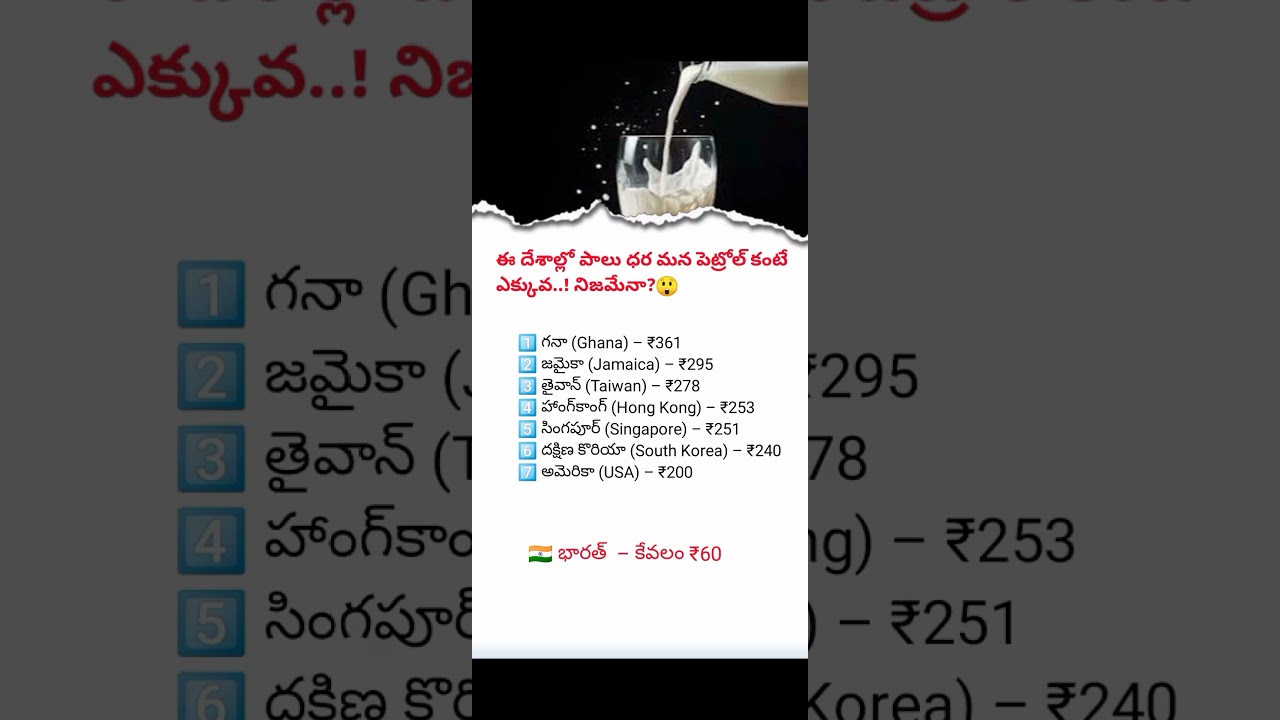
🌍 Global Milk Price Comparison (Per Litre in ₹ Rupees):
1️⃣ Ghana – ₹361
2️⃣ Jamaica – ₹295
3️⃣ Taiwan – ₹278
4️⃣ Hong Kong – ₹253
5️⃣ Singapore – ₹251
6️⃣ South Korea – ₹240
7️⃣ USA – ₹200
🇮🇳 India – Just ₹60!
This means in some countries, the price of 1 liter of milk is equivalent to 6 liters in India! 😲
---
🥛 But Why Is Milk So Cheap in India?
India ranks among the largest producers of milk globally, thanks to its massive dairy farming community and cooperative structures like Amul, Mother Dairy, and countless small-scale milk producers. Here's why prices remain low:
✅ Strong Rural Dairy Network: Millions of farmers across villages contribute directly to milk production, reducing overhead and middlemen costs.
✅ Government Support: The Indian government actively supports dairy farmers with subsidies, veterinary services, and infrastructure.
✅ Efficient Distribution: India's local supply chains are highly optimized for mass milk distribution through local vendors, dairies, and cooperatives.
✅ Low Labor Costs: Labor costs are comparatively lower, enabling dairy operations to run at lower expense than in developed nations.
✅ Vegetarian Majority: High demand for milk-based products like curd, paneer, and ghee also keeps the ecosystem strong and cost-effective.
---
💸 Why Is Milk So Expensive in Other Countries?
Contrary to India, developed or import-dependent nations face several challenges:
❌ High Labor and Operational Costs: Countries like the USA and Singapore have higher wages, increasing production and delivery costs.
❌ Import Dependence: Some nations don't produce enough milk locally and rely on costly imports, raising prices.
❌ Strict Regulations: Quality control, packaging, refrigeration, and transport standards add up significantly.
❌ Lower Dairy Consumption: In some places, dairy is not a staple, so limited demand doesn't drive mass production efficiency.
---
🌟 Fun Facts About Milk and India:
🥇 India is #1 in global milk production since the White Revolution (1970s), thanks to Dr. Verghese Kurien.
🐄 The country has over 300 million bovines, supporting a self-sufficient dairy economy.
🚚 Milk reaches even remote villages within hours due to efficient cold-chain logistics.
🧈 India is also the largest consumer of dairy products in the world.
---
💬 What This Means for You:
While we often take our daily glass of milk for granted, it's important to realize how fortunate we are in India. From school-going children to fitness enthusiasts, milk is a nutritional powerhouse — rich in calcium, protein, and essential vitamins — and it's incredibly affordable here.
In comparison, people abroad spend 4 to 6 times more for the same nutritional benefits! This shows the strength of India's agricultural economy and the success of cooperative dairy models.
---
🔄 Final Thought:
So next time you pour a glass of milk, remember — it’s not just a beverage. It’s the result of a well-oiled, people-powered economy that’s making nutrition affordable for every Indian. 🇮🇳
Do you think we should support our dairy farmers more? Or encourage youth into ethical dairy farming for sustainable development? Comment your thoughts below! 👇
---
🔥 Don't Forget to Like, Share, and Subscribe for More Shocking Facts!
Stay tuned for more amazing comparisons and eye-opening data that will make you see everyday things in a whole new light!
#MilkPriceComparison #IndianDairy #CheapestMilk #IndiaVsWorld #GlobalMilkPrices #AffordableNutrition #WhiteRevolution #DairyFacts #MilkEconomy #AmulIndia #IndianFarming #MilkInIndia #CostOfLiving #IndianPride #FoodPricesWorldwide #ViralFacts #IndiaInfo #DailyMilk #SupportFarmers #MotivationalFacts #TeluguYouTube

Информация по комментариям в разработке