Become a member or donate to help keep these birds flying: https://www.soaringbythesea.com/donate
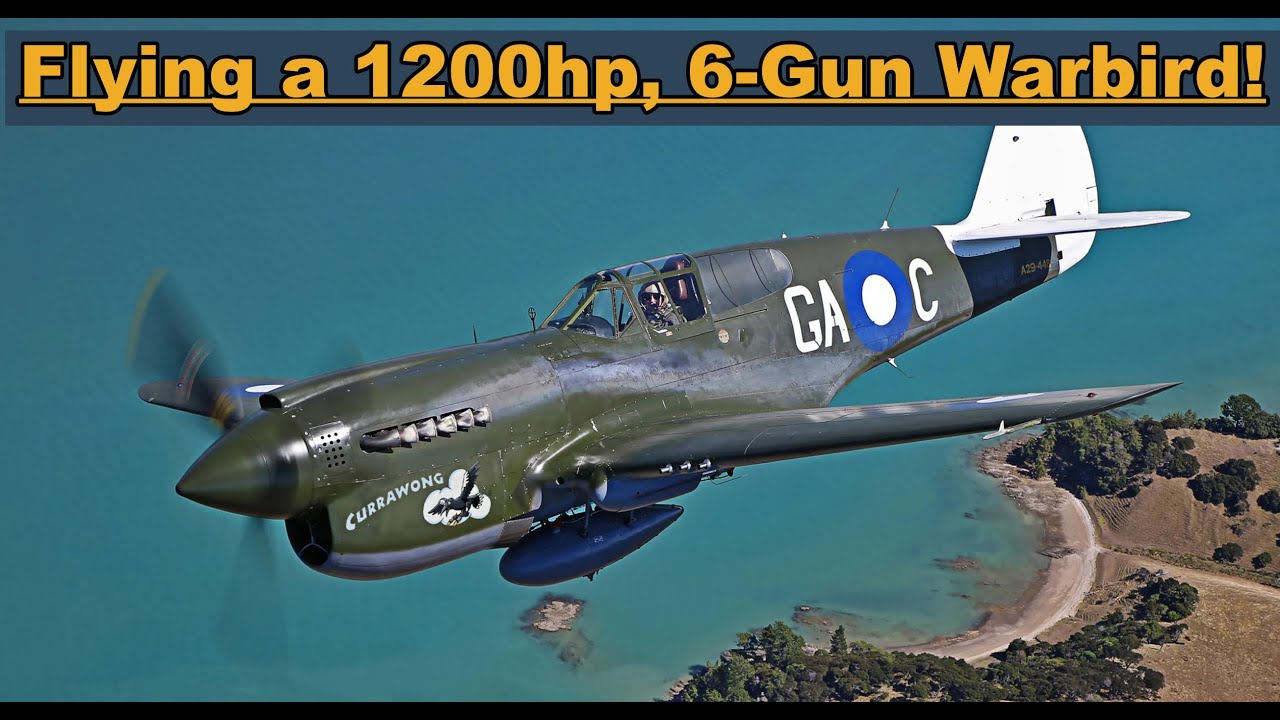
1943 P‑40N‑1 Kittyhawk ("Currawong")
1. Origins & Combat Service (1943)
Built by Curtiss‑Wright in Buffalo, New York, this particular P‑40N‑1 Warhawk carries serial number 42‑104730 (Constructor’s Number 28492). It was delivered to the USAAF, disassembled for shipment, reassembled in Australia, and entered RAAF service in August 1943 as Kittyhawk A29‑448, also marked (on the opposite tail) as A29‑1050
Vintage Aviation News
.
Assigned to No. 75 Squadron RAAF on 17 September 1943, bearing the squadron code GA‑C, it saw combat particularly at Milne Bay and operated from airfields including Turnbull, Nadzab, and Tadji
soaringbythesea.com
Vintage Aviation News
.
2. Combat Incidents & Decline
13 March 1944: Suffered a landing mishap at Nadzab; repaired and returned to service.
8 April 1944: Another landing accident at Cape Gloucester.
4 May 1944: Experienced hydraulic and electrical failure, resulting in a wheels-up belly landing at Tadji. The damage was severe—by October 1944, the aircraft was declared beyond repair and abandoned at Tadji
Vintage Aviation News
soaringbythesea.com
.
3. Rediscovery & Restoration
Rediscovered in 1973 at the abandoned Tadji airfield, the plane was recovered (with assistance from Charles Darby and funding from David Tallichet’s Yesterday’s Air Force), shipped to New Zealand, and stored in Auckland
soaringbythesea.com
.
In the mid‑1990s, restoration was undertaken by Pacific Aircraft Ltd and completed by Pioneer Aero Restorations, co-led by Charles Darby and Garth Hogan. The aircraft was rebuilt in authentic No. 75 Squadron camouflage as “Currawong” GA‑C, returning to flight in 2000 at the Warbirds Over Wanaka air show
Vintage Aviation News
soaringbythesea.com
.
4. Technical Specifications & Modern Adaptation
Type: Single-seat fighter (later converted to a dual-seat cockpit for training/ride-alongs)
Engine: Allison V‑1710 V12 (~1,360 hp)
Performance:
Top speed: ~378 mph (609 km/h)
Range: ~750 miles (1,200 km)
Service ceiling: ~25,000 ft (7,620 m)
Armament: Six .50 cal M2 Browning machine guns; capability for three hardpoints (~700 lbs of ordnance)
soaringbythesea.com
.
Restoration included dual controls and instrumentation, functional (blank-firing) guns, and faithful repaint into ANZAC-era RAAF livery
soaringbythesea.com
.
5. Nose Art – The “Currawong”
During restoration, the aircraft lacked its original cowling and any trace of nose art. Research led to a historically plausible naming and design choice: "Currawong", after the black‑and‑white magpie emblem on No. 75 Squadron's patch
Vintage Aviation News
.
Aviation artist Chad Hill of Django Studios developed a vibrant design inspired by vintage Disney-style cartoons—a stylized magpie brandishing six-shooters, rendered in period fonts and colors sourced from a 1941 typeface book
Vintage Aviation News
.
The painting process was methodical: base colors and principal elements were applied first, followed by refined outlines, depth, and highlights. Hill finalized the design with precision and even signed it subtly
Vintage Aviation News
.
6. Living History & Current Role (Soaring by the Sea Foundation)
The Soaring by the Sea Foundation acquired the restored Kittyhawk and imported it to the U.S. in 2024, where it continues flying—serving as an airshow performer and educational platform
soaringbythesea.com
.
The Foundation promotes veteran outreach, STEM-focused youth engagement, and living history, using aircraft like Currawong to inspire future aviators while honoring ANZAC and Allied heritage
Start: 00:00 -, Preflight
07:45 - Start Up
10:29 - Take Off
11:49 - In Flight
18:02 - Landing
20:00 - In Depth About the P40
26:19 -How you can Help.
#warbird #ww2 #aircraft

Информация по комментариям в разработке