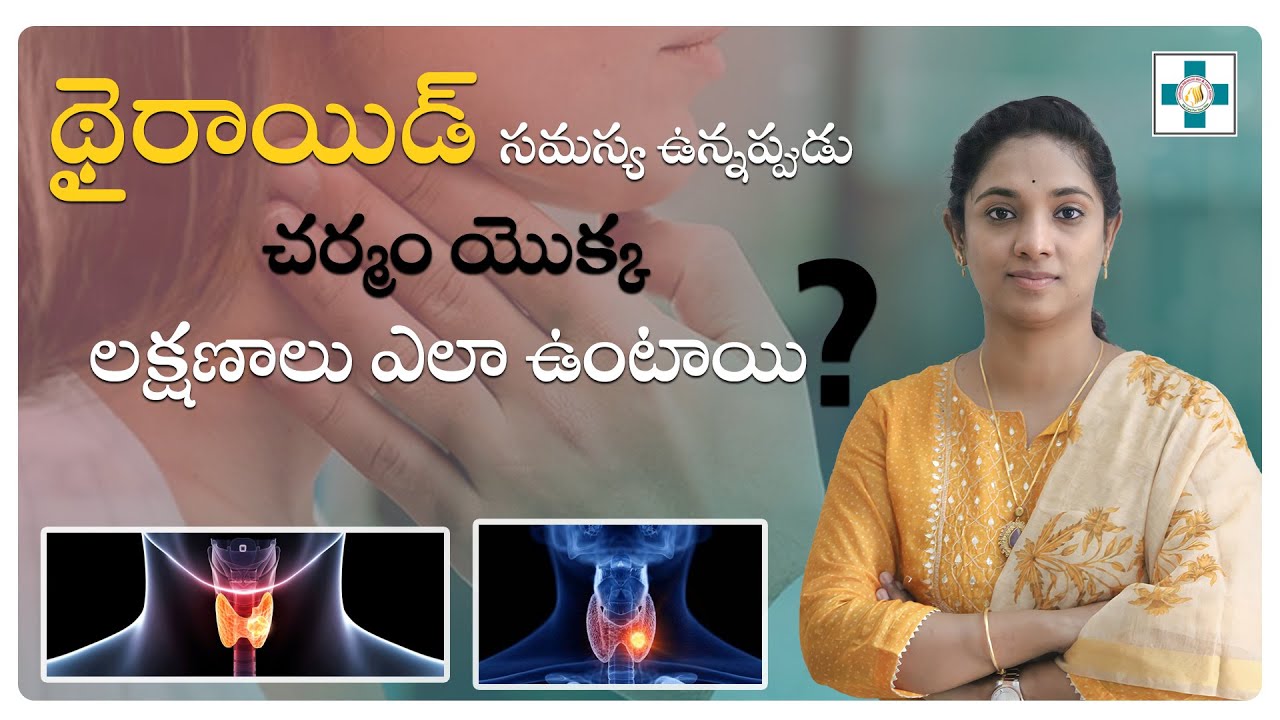
Thyroid Disorders and Skin Problems | Doctor Talk | Dr.Kavya Chennamsetty Dermatologist | Leelavathi Advanced Skin and Laser Centre
#Thyroid #SkinProblems #Hyperthyroidism #Hypothyroidism #LeelavathiAdvancedSkinandLaserCentre #DrKavyaChennamsetty
Consult : Dr. Kavya Chennamsetty M.D., DVL, (Gold Medalist)
to know more about
Call : +91 9392930422
Leelavathi Advanced Skin and Laser Centre
Follow us on :
/ leelavathi-a. .
https://www.practo.com/leelavathi-adv....
https://www.justdial.com/.../9999PX86....
https://drlogy.com/.../leelavathi-adv....
Thyroid hormone is an important regulator of epidermal homeostasis. The skin in hypothyroidism is rough and covered with fine scales, notably on the extensor extremities.9 Xerosis may resemble an acquired ichthyosis. Palms and soles may be quite dry.10 Histologic examination reveals epidermal thinning and hyperkeratosis.11
At the same time, clinical examination reveals the thyrotoxic epidermis to be thin but not atrophic. Relatively little formal study has been done to explain the clinical findings in thyrotoxic states. Clinical observations have been complicated by the fact that most thyrotoxicosis results from Graves disease which may include autoimmune mediated glycosaminoglycan deposition with resulting thickened dermis. Indeed, there is one report of thickened epidermis in biopsies of thyrotoxic humans.12
In tissue culture studies using surrogates for DNA expression, T3 has been shown to stimulate growth of both epidermal keratinocytes and dermal fibroblasts.13–15 However, thyroid hormone mediated inhibition of keratinocyte growth has been observed when the keratinocytes were co-cultured with dermal fibroblasts.14 Thus, in vivo, skin proliferation directly stimulated by T3 may be offset by inhibiting factors dependent on the systemic T3. The research suggests that systemically induced inhibiting factors may be bypassed with topically administered T3.
In addition to the thyroid hormone mediated growth noted above, in vitro keratinocyte studies have shown that depletion of T3 results in elevated levels of transglutaminase, which is involved in the formation of the cornified envelope. Further in vitro analysis has suggested that T3 depleted keratinocytes have diminished levels of plasminogen activator, an enzyme implicated in the corneocyte shedding process.16
Studies of thyroidectomized rats have suggested that sterol synthesis is altered in epidermal keratinocytes deprived of thyroid hormone.17 Thyroid hormone accelerates barrier formation by increasing the activity of enzymes in the cholesterol sulfate cycle. Thus, hypothyroidism may hinder the epidermal barrier function.18 Hypothyroidism also may affect the development of the lamellar granules (Odland bodies), which are vital in the establishment of a normal stratum corneum.19
As noted above, a number of thyroid hormone responsive genes have been identified including the following: the keratin genes, the “hairless” (hr) gene and ZAKI-4.20–24 The keratin genes encode the intermediate filaments which make up about 30% of the protein of the epidermis. Thyroid hormone exerts direct control over keratin genes at the nuclear level through thyroid hormone response elements in their upstream promoters.20,21 Although thyroid hormone stimulates expression of proliferation associated keratin genes both in vivo and in vitro,25 only negative thyroid hormone response elements have been identified for these genes.20 It is not known whether the above reflects thyroid hormone induction of indirect keratin gene stimulating pathways or the existence of unidentified positive thyroid hormone response elements for the keratin genes.
How many of these signs and symptoms do you have?
Skin
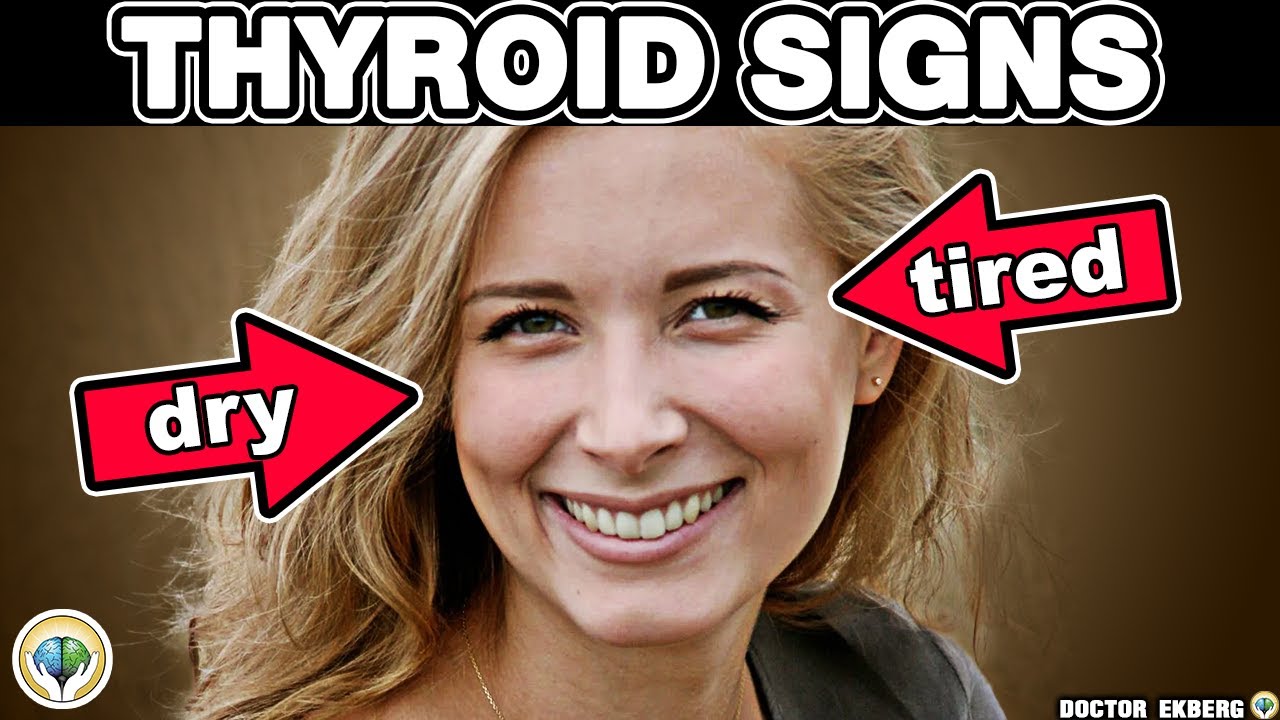
☐ Dry, pale, and cool skin
☐ Moist, velvety, and warm skin like a baby’s
☐ Dry skin with deep cracks and scale
☐ Deep, noticeable lines on your palms and soles
☐ Yellowish-orange color on your palms and soles
☐ Doughy and swollen face, especially on your eyelids, lips, and tongue
☐ Widening nose
☐ Slow-healing wounds
☐ Sweating less (or more) than before
☐ Goiter (swelling in the neck)
☐ Protruding eyes
☐ Flushing on your face and red palms
☐ Darker skin in the creases of your palms, on your gums, or elsewhere in your mouth
☐ Rashes, especially in the creases of your skin
☐ Painless lumps and patches of scaly, discolored skin, and the affected skin feels hard and waxy
☐ Reddish spots on the skin that come and go











Информация по комментариям в разработке