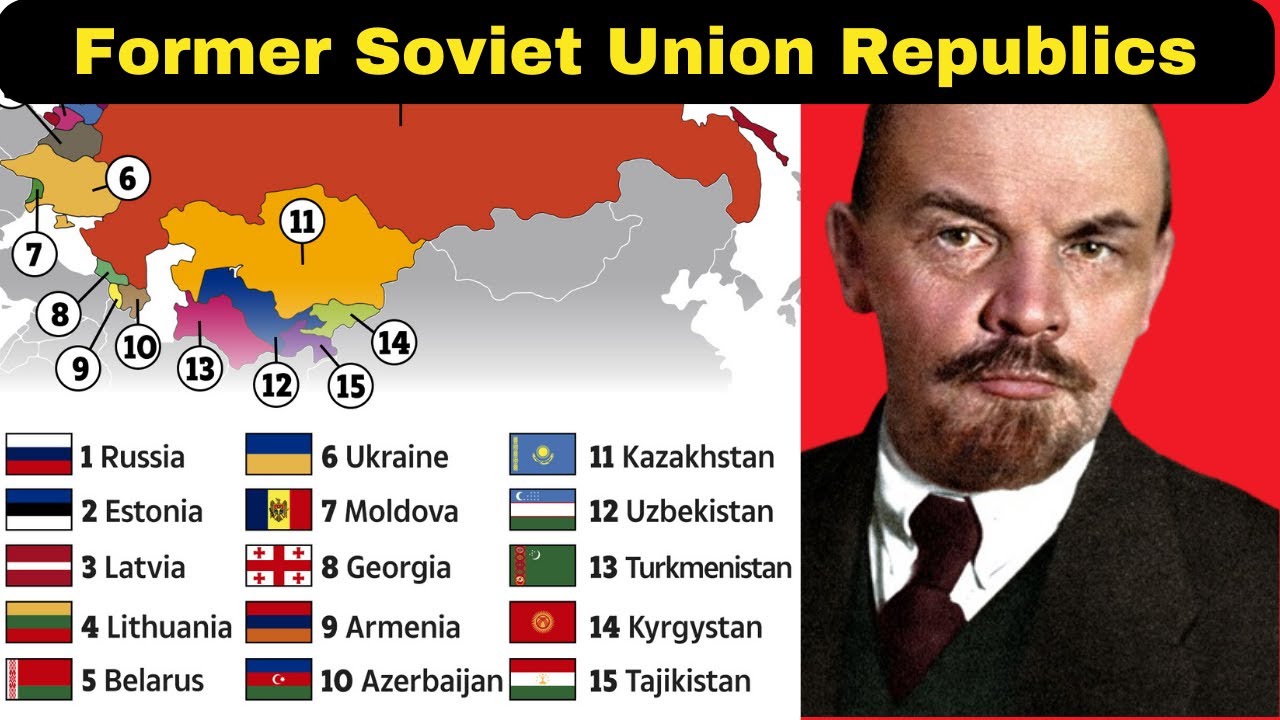
In 1921, after the centuries-old Romanov monarchy had been overthrown, Russia emerged from a civil war as the newly created Soviet Union. Before its decline and eventual breakup in 1991, the first Marxist-Communist state in history would grow to be one of the largest and most powerful countries in the world, claiming roughly one-sixth of the planet's land area. There were 15 republics that made up the United Socialist Soviet Republic, or U.S.S.R. : Armenia, Azerbaijan, Belarus, Estonia, Georgia, Kazakhstan, Kyrgyzstan, Latvia, Lithuania, Moldova, Russia, Tajikistan, Turkmenistan, Ukraine, and Uzbekistan.
The 1917 Russian Revolution gave rise to the Soviet Union. Russia's Czar Nicholas II was overthrown by radical leftist revolutionaries, ending centuries of Romanov monarchy. In the former Russian Empire's territory, the Bolsheviks founded a socialist nation.
A protracted and brutal civil war ensued. The White Army, which represented a sizable coalition of loosely united troops including monarchists, capitalists, and proponents of alternative versions of socialism, was defeated by the Red Army, which was supported by the Bolshevik government.
The Bolshevik secret police, known as Cheka, carried out a campaign of mass murders against supporters of the czarist regime and against Russia's upper classes during a period known as the Red Terror.
The Union of Soviet Socialist Republics was established by a 1922 treaty between Russia, Ukraine, Belarus, and Transcaucasia (modern Georgia, Armenia, and Azerbaijan) (USSR). The newly formed Communist Party, headed by Vladimir Lenin, a Marxist revolutionary, seized power. 15 Soviet Socialist Republics would make up the USSR at its height.
Информация по комментариям в разработке