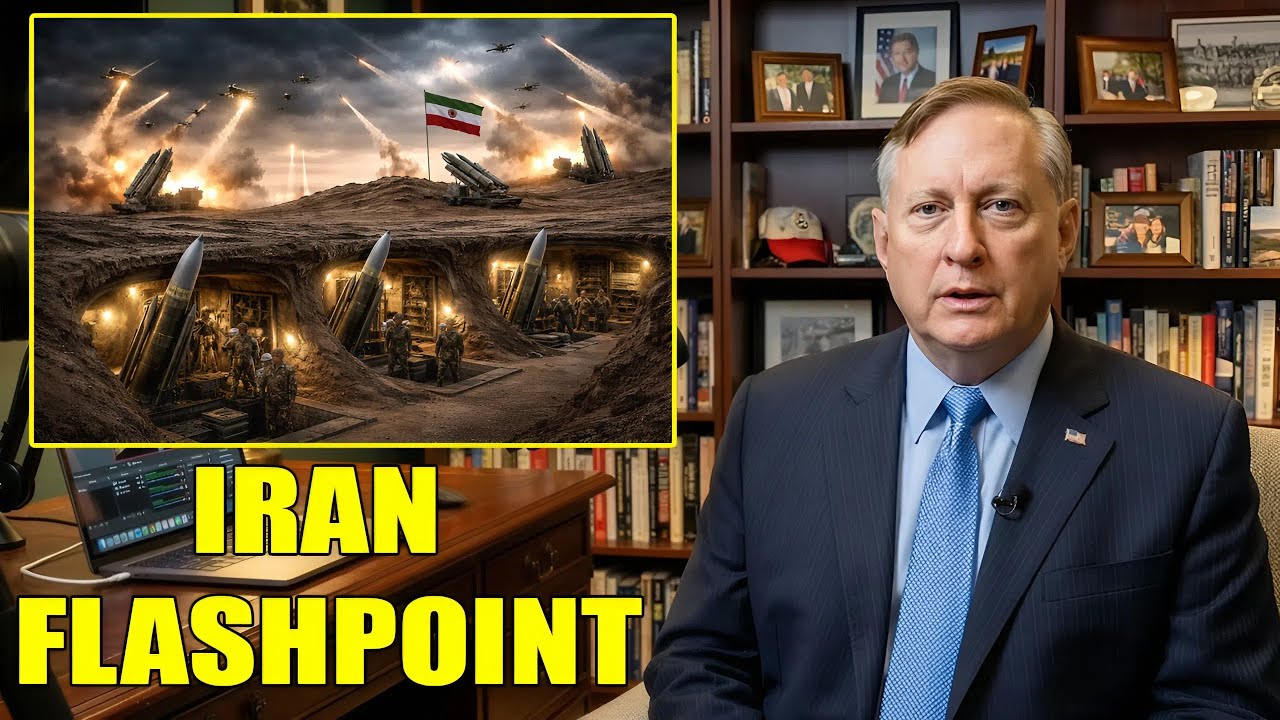
A new war drumbeat is shaking West Asia as U.S. forces surge toward Iran in what sources describe as a rapidly forming “strike window.” The language is blunt: options, decisive action, assets converging—code words that often precede fire. Iranian officials, watching the buildup, insist they are prepared. Analysts warn the more the armada tightens its circle, the harder it becomes to “decock the gun” without humiliation, and the greater the temptation to pull the trigger simply because the trigger is there.
At the center is a familiar script: Iran is framed as an imminent threat, while critics argue the threat is being inflated to sell confrontation to an exhausted public. The stated rationale is protection of U.S. people, bases, and “assets” across the region—yet skeptics say the real objective is pressure, leverage, and regime change by another name. As carrier groups, fighters, and support aircraft position for sustained operations, the political story and the military reality begin to fuse into a single dangerous countdown.
The retaliation scenario is what turns this into a regional tinderbox. Experts outline a chain reaction: immediate strikes on U.S. facilities, a move to choke the Strait of Hormuz, and a shockwave through global oil markets. Close the chokepoint and the world economy doesn’t merely wobble—it seizes. Meanwhile Israel, already rattled by lessons from a recent short war, could face a heavier missile storm if Iran concludes the fight is existential. The more openly “regime change” is implied, the less incentive Tehran has to show restraint.
There is also a deeper strategic shadow: the West’s crisis of power. From Venezuela to Greenland to the Gulf, critics argue Washington is chasing short, theatrical wins—resource leverage, alliance tribute, and optics-driven dominance—while China’s rise continues largely untouched. In this reading, chaos becomes the instrument: destabilize, intimidate, extract, repeat. Europe is depicted as the shaken junior partner, pressured into concessions while its security architecture frays and its leaders struggle to respond.
The risk is not just a strike—it’s an escalation spiral. Once bombs fall, control becomes an illusion, and political leaders can find themselves trapped by their own rhetoric. The debate inside the West is described as a split between those who believe time is running out and want action now, and those who see the nuclear age as a hard stop—an era where miscalculation is fatal. With fleets on the move, air defenses rising, and deadlines whispered in the background, the region is bracing for impact. In war, the countdown is often the loudest sound before the blast.

Информация по комментариям в разработке