Perhaps I will explore the concept of “book” as an object in my work.
When I think of a book as an object, the first image that comes to mind is that of women from both East and West, balancing books on their heads as they practiced maintaining a graceful posture.
These women didn’t simply place books atop their heads—they used them as symbols of discipline and training, ways to refine their bodies and steady their minds.
In the East, noblewomen in their secluded chambers; in the West, aristocratic young ladies—all practiced walking with books atop their heads.
This was a form of ritual and training to maintain proper posture and poise, but beneath this lay social norms and constraints that defined the lives of women.
The book atop the head symbolized not just physical weight, but also the repression and refinement of women’s bodies, as well as the fortification of their inner selves and the capacity to dream.
I am Korean, East Asian, and above all, a woman with an East Asian face.
However, in the past, I lived as an East Asian dancer aspiring to a Westernized body.
From a young age, I studied ballet, and I was drawn more to foreign instruments, cultures, novels, and visual arts than to traditional Korean arts such as pansori or minyo.
Because of this, I always felt a mixture of awe and distance when facing Korean and traditional Eastern elements.
It was as if I were looking at the East through a Western gaze, and perhaps, I was externalizing myself, trying to observe myself from the outside.
Now, however, I am absorbing a variety of cultural elements and forming a new sense of self.
Whereas in the past I pursued Western aesthetics, I am now stepping beyond that perspective to reawaken my body and senses, and to construct a new identity.
Ironically, though, with a contemporary female body and gaze, I still find it difficult to fully face and engage with the beauty of Korea.
—
Thus, I choose to identify myself with women of the past, seeking to discover my own Korean femininity.
This is a journey to overcome an externalized gaze, and to genuinely confront the Eastern essence within me—the Korean sensibility, and the body and mind of a woman.
The book is not merely an object; it symbolizes the duality of oppression and liberation, weight and freedom.
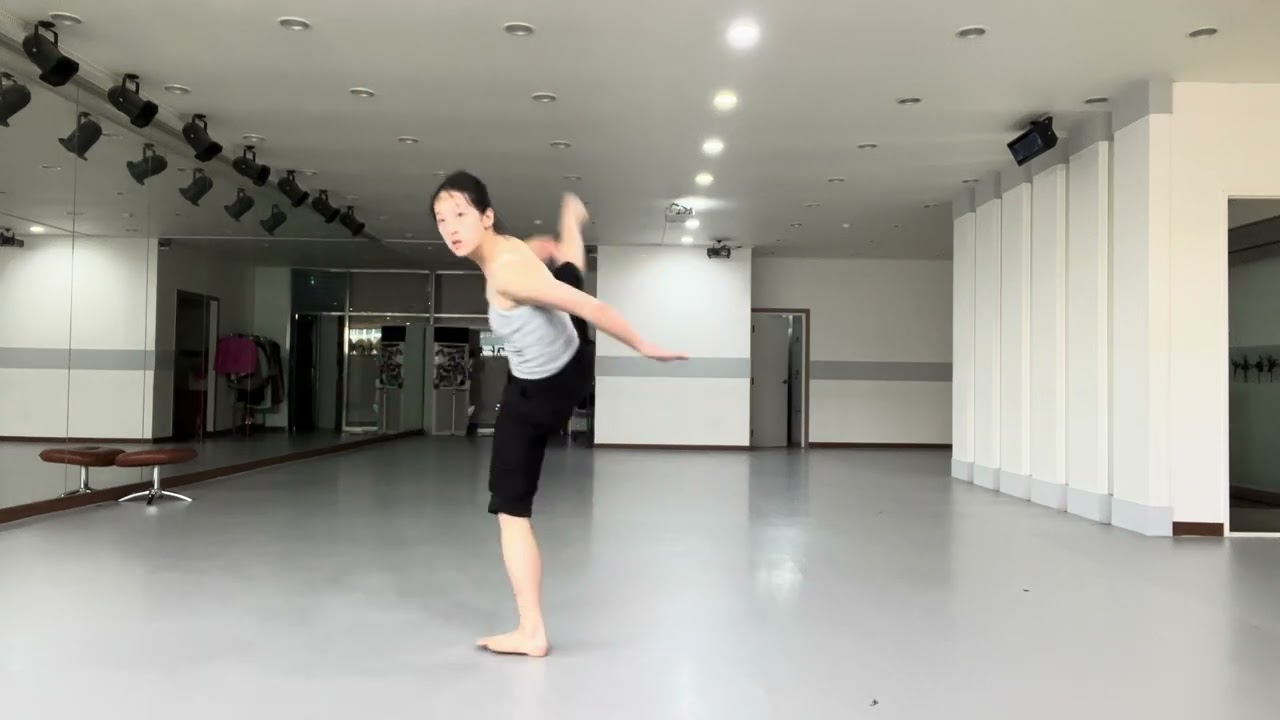
Recalling the image of women balancing books on their heads, I begin a journey to release the restrained body, awaken the inner resistance, and express cascades of sensations and emotions through movement.
This process ultimately becomes a journey to explore Korean identity, and to rediscover myself—Jeong Bin Seo—as a Korean woman.







Информация по комментариям в разработке