🎥 The Story of Poland Under Nazi Occupation: Preserving Dignity Under Oppression
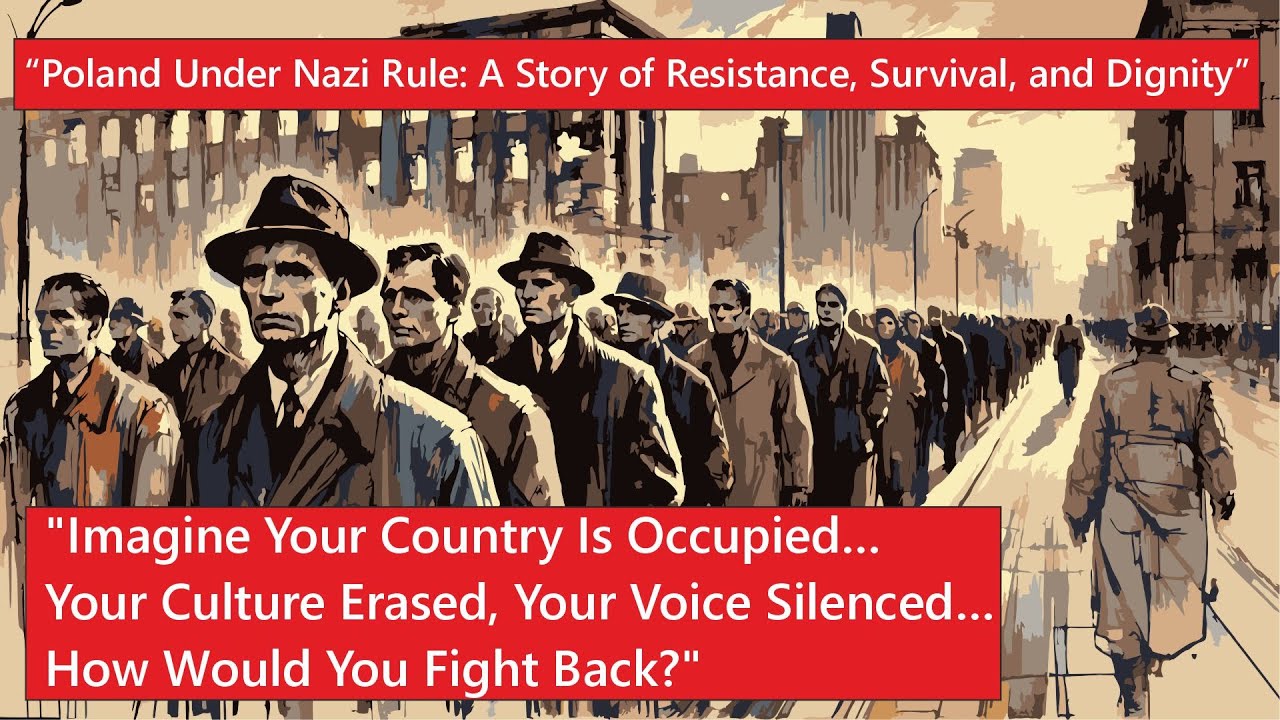
Imagine your country has been occupied. Your national culture is suppressed, your identity is under threat, and any form of resistance is met with brutal consequences. How do you maintain your dignity and stay true to your values in such a reality?
In this video, we dive into the tragic yet heroic experience of Poland during the Nazi occupation in World War II. Poland was the first victim of Nazi aggression in 1939, and its citizens faced unprecedented challenges: the destruction of national institutions, the elimination of the intelligentsia, and relentless attempts to crush their spirit of resistance.
Key Points Covered in the Video:
The Beginning of Occupation:
Following Germany’s invasion of Poland in September 1939, the country was divided between Nazi Germany and the Soviet Union. The German authorities dismantled any semblance of national governance, suppressing Polish culture and identity by closing universities, theaters, and libraries, and banning Polish literature.
Repression of the Intelligentsia:
The Nazis implemented a deliberate policy called Intelligenzaktion, targeting Poland’s intellectual elites for extermination. Professors, journalists, writers, and scientists were either executed or sent to concentration camps.
Life Under Occupation:
Despite harsh conditions, cities continued to function with trams running, cafés open, and people working to survive. However, the constant pressure—from working under the occupiers to the fear of being accused of collaboration—created a tense daily reality.
The "Civil-Patriotic Commandments":
In 1940, the Polish underground resistance introduced the “Ten Civil-Patriotic Commandments.” These rules instructed citizens to minimize contact with the occupiers, avoid collaboration, and preserve their cultural identity. Poles were even encouraged to refuse to speak the German language or assist enemy soldiers.
The Underground State:
Poland developed one of the most extensive resistance networks in the world, often referred to as the "Underground State." This network included political and military structures, its own judiciary, press, and even funding supplied by the Polish government-in-exile.
The Code of Resistance Ethics:
The underground resistance drafted a Code of Civil Ethics, condemning active collaboration with the enemy. Severe penalties, including execution, were issued for those who betrayed their countrymen. One notable example was the case of Igo Sym, a popular actor who collaborated with the Nazis and was later executed by the resistance.
Boycott and Silent Resistance:
Polish society resisted even in subtle ways—sabotaging work, boycotting German propaganda, and refusing to attend cinemas showing Nazi-approved films. Despite the occupiers’ attempts to make Poles compliant, they encountered widespread noncooperation and defiance.
The Role of Unity and Morality:
The underground movement became a moral compass, guiding people on how to maintain solidarity and dignity while preserving their national identity. It inspired unity in the face of relentless pressure and served as a blueprint for resistance movements in other occupied countries, like France and Norway.
Why Is This Story Relevant Today?
This story is more than just a history lesson—it’s a powerful reminder of the importance of unity, culture, and moral principles in times of adversity. The Polish experience shows that even under the most difficult circumstances, it is possible to preserve humanity and fight for a brighter future.
Don’t forget to leave your comments and share your thoughts on how this story resonates or inspires you. Subscribe to the channel to explore more incredible moments in history!

Информация по комментариям в разработке