Dholavira’s Lost Reservoirs: India’s Oldest Water Engineering I #AncientEngineering #HarappanCivilization #HistoryShorts #IndiaUncovered #LostCities #WorldHeritage #AncientIndia
Complete story
👇👇👇👇👇👇
Hidden deep inside the arid landscape of Gujarat’s Rann of Kutch lies one of the greatest engineering marvels of the ancient world—Dholavira, a Harappan city that mastered the art of water conservation over 4,000 years ago. Long before modern dams, modern pipelines, and modern hydrology, the people of the Indus Valley Civilization built an extraordinary system of reservoirs, channels, and stone-lined tanks that allowed an entire city to survive in one of the driest regions of South Asia.
This documentary explores the astonishing story of India’s oldest and most advanced water engineering system, discovered through decades of archaeological work led by experts of the Archaeological Survey of India, beginning with J.P. Joshi in 1967. What excavations revealed at Dholavira shocked researchers around the world.
The city, occupied from around 3000 BCE to 1500 BCE, faced a brutal natural challenge—extreme water scarcity. The Rann of Kutch receives minimal rainfall, and freshwater sources are seasonal. Yet Dholavira did not collapse or migrate. Instead, its people engineered a system of giant reservoirs, some stretching 30 meters or more, carved with precision-cut sandstone blocks. These were not simple storage pits. They formed an integrated water network that captured monsoon rainwater and even diverted flash floods from the Manhar and Mansar seasonal streams.
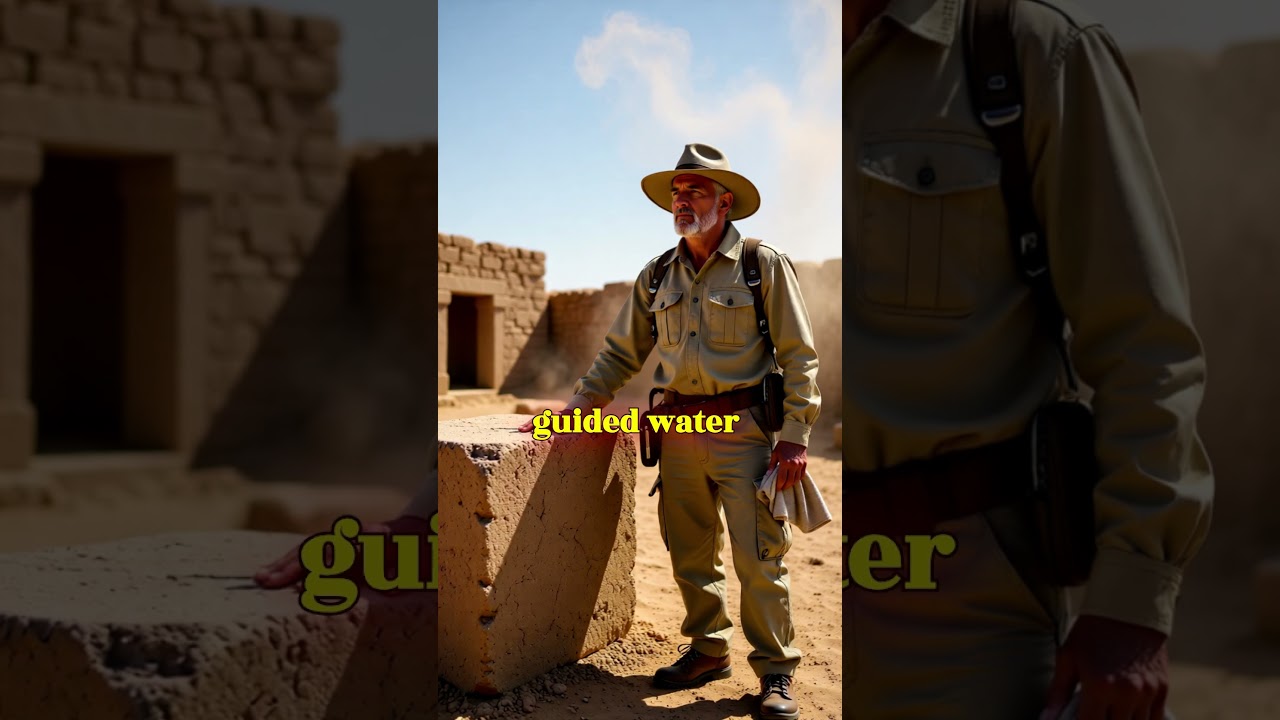
Archaeologists have identified at least 16–19 reservoirs, distributed around the city’s citadel and middle town. Their careful placement shows urban planning at a level rarely seen in Bronze Age civilizations. The city’s drainage channels, slope gradients, and stone bunds all ensured that every drop of water was guided, filtered, and stored for the harsh months ahead.
One of the most impressive discoveries was the presence of settling tanks, designed to remove silt before water entered the larger reservoirs—evidence of an advanced understanding of hydrology, filtration, and sustainability. This level of engineering was centuries ahead of contemporary civilizations in Mesopotamia, Egypt, or Europe.
Dholavira’s water system wasn’t just a technological achievement—it shaped life, culture, and survival. In periods of climate change and prolonged droughts around 2000 BCE, when many Harappan cities declined, Dholavira adapted. Its reservoirs allowed it to function long after surrounding regions struggled.
Today, the site stands as a UNESCO World Heritage location, offering a rare look into a world where ancient Indian engineers turned a hostile desert into a thriving urban centre. The empty stone tanks, wide channels, and towering reservoir walls remind us of a powerful truth: the knowledge of sustainable water management isn’t new—it’s thousands of years old. And Dholavira perfected it.
This documentary invites you to rediscover how one forgotten city built one of the world’s earliest, largest, and most sophisticated water conservation systems—an achievement modern engineers still study with awe.
#Dholavira #IndusValleyCivilization #IndianHistory #ArchaeologyIndia #AncientEngineering #HarappanCivilization #HistoryShorts #IndiaUncovered #LostCities #WorldHeritage #AncientIndia #DocumentaryShorts #HistoricDiscovery #ASIIndia #RannOfKutch #AncientTechnology #WaterEngineering #HistoryFacts #BronzeAgeIndia #viralhistoryshorts
Thanks for watching❤️❤️

Информация по комментариям в разработке